• November 27-29

    Happy Thanksgiving!

    We had Thanksgiving dinner at the home of Jackson and Meagan’s regional manager. They both work for United Rentals. Dinner was delicious and all the people were welcoming and down to earth. Wes, our host, cooked the turkey for 7 hours at low temperature in a Traeger barbecue. Best turkey ever.

    Friday we drove around the Reno area, up to Mt Rose and Lake Tahoe. I didn’t take pictures as being in familiar territory, I wasn’t as compelled to do so. It was a beautiful day for a drive.

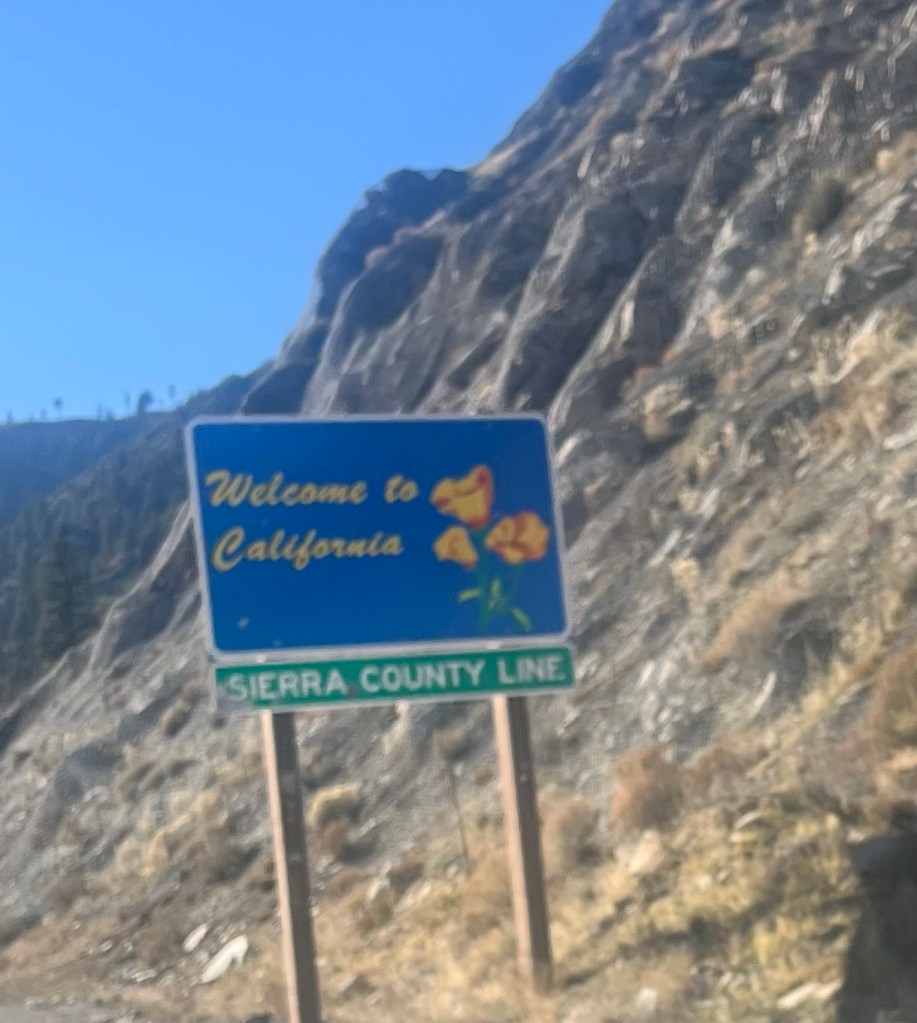
    Meaghan made a wonderful dinner Friday evening Jackson made us breakfast this morning before we headed home. We left on September 11 and are now returning after 80 days and roughly 14,000 miles of an incredible adventure.

    Thank you for being on this journey with us. The trip was beyond our expectations. So glad we decided to embark on it. We have an incredibly gorgeous geologically and topographically diverse country. There is beauty everywhere. People are pretty much the same.— they get up in the morning, go to work, take care of their families, attend church and go about their daily lives. It is only opinions (some misguided or misinformed)that creates the division we are seeing in our country. We all love this country in our own ways.

    It has been great to see how well the national, state, and county campgrounds are being used by people. A large proportion of them are retired, but there are lots of other people on their own journeys. In some campgrounds, there’s a small percentage of people who live there for a longer period of time either out of necessity or the transitory nature of their jobs. I am so glad we have our little Casita. It’s made the journey so comfortable and easy.

    The highlights of our trip were the friends and family that we visited and stayed with along our route.

    Steve did more than 90% of the driving and I am most grateful.
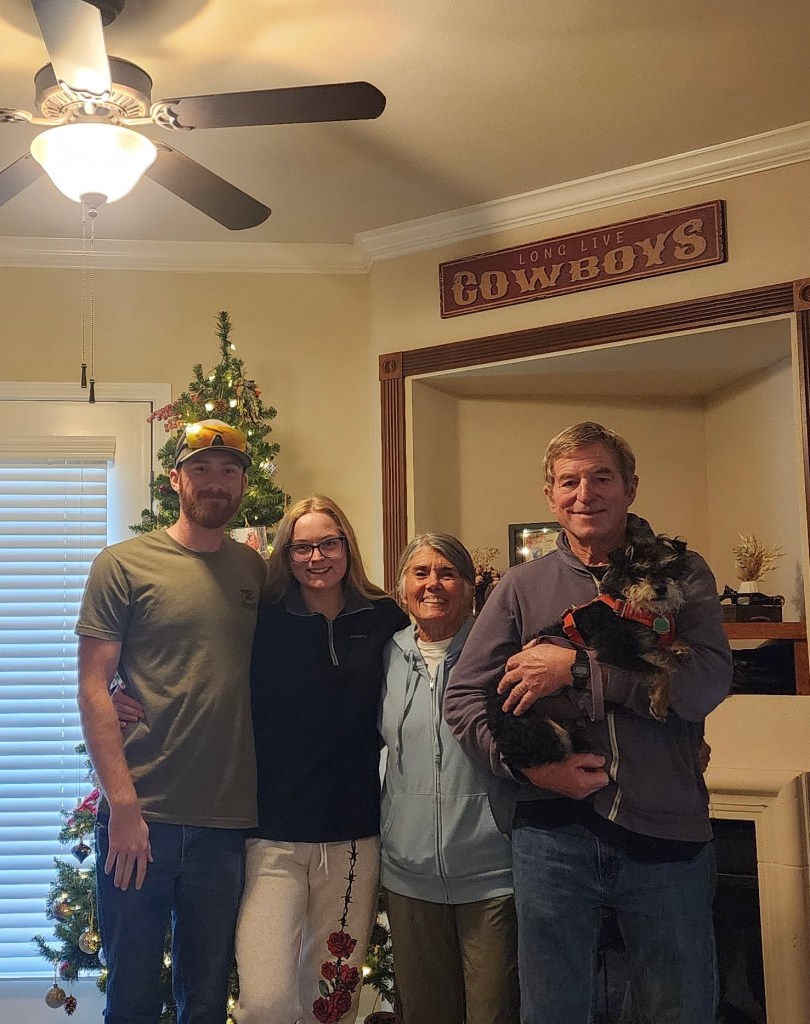
    Welcome back.

  •  November 26

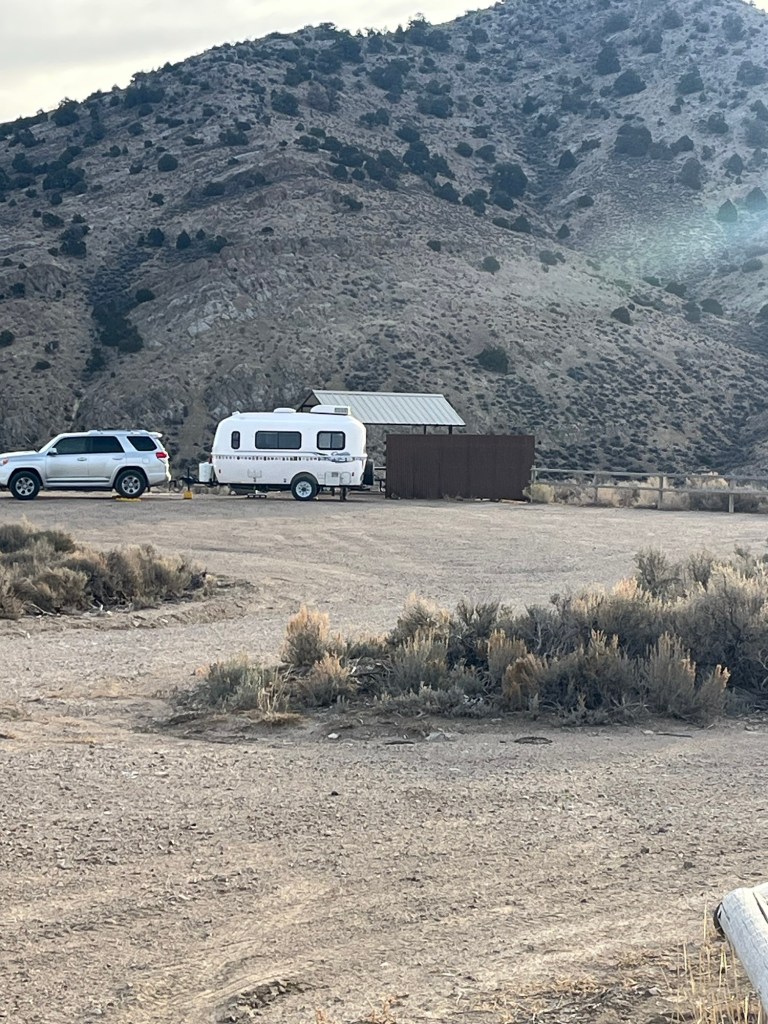
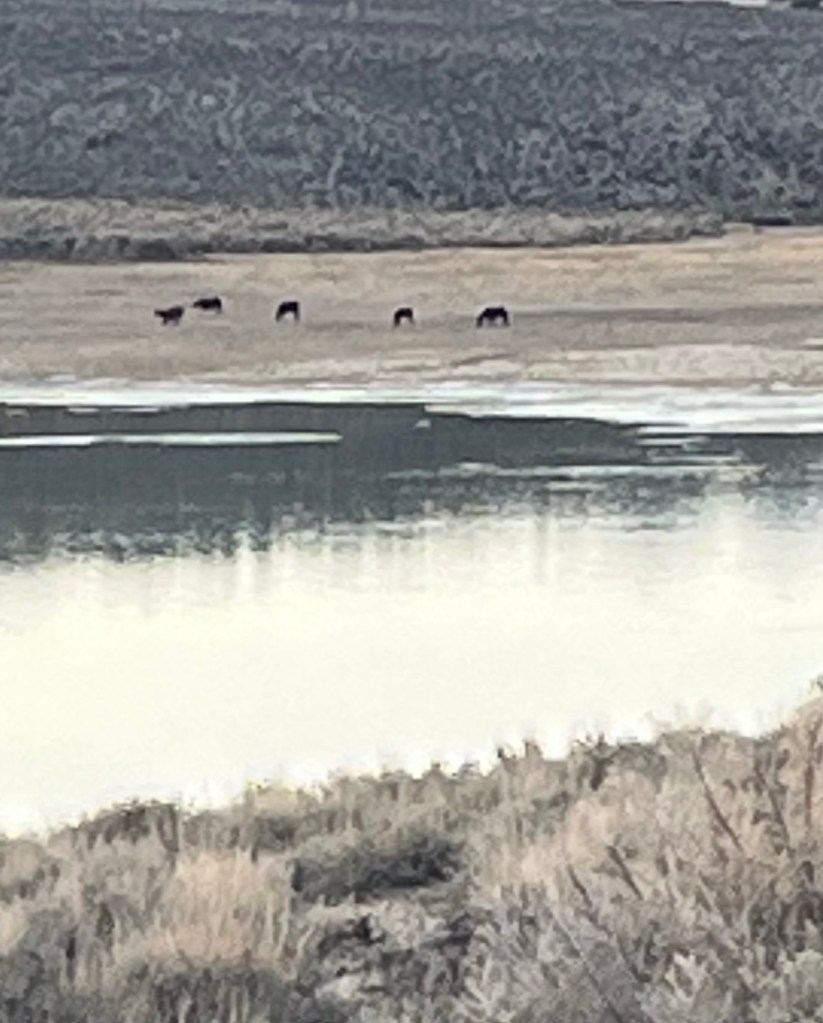
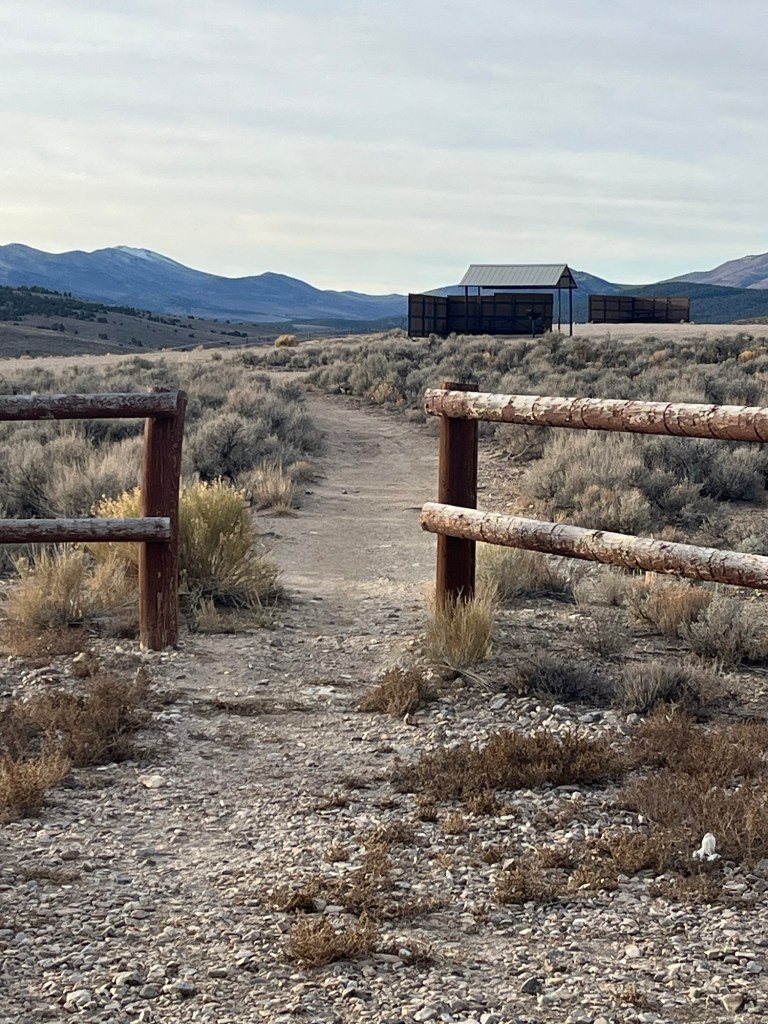
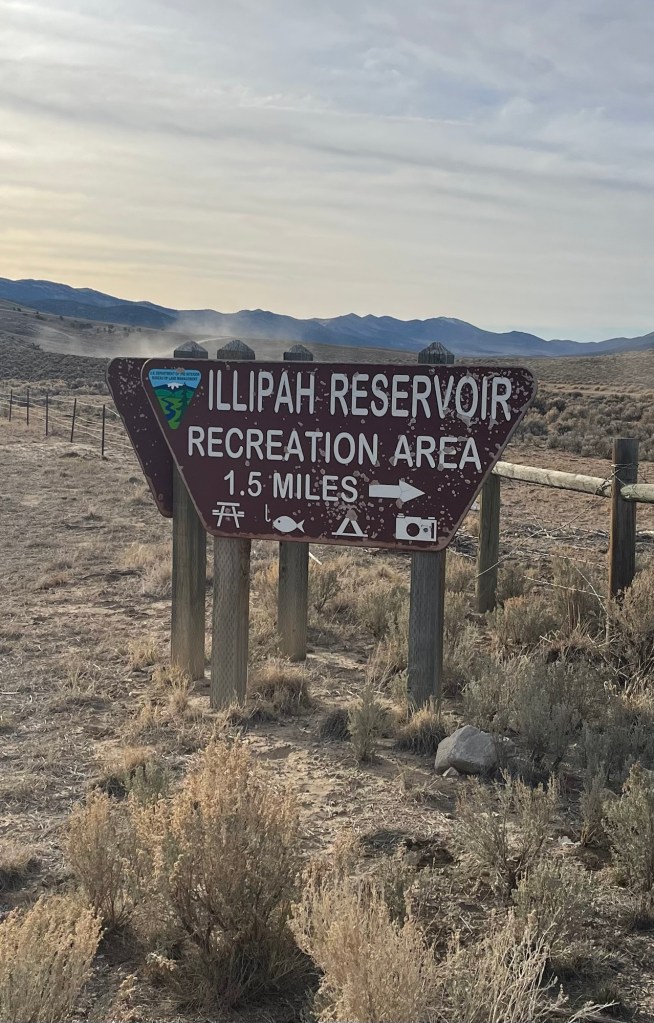
    We covered lots of miles yesterday so we pulled into Illipah Reservoir campground, a Bureau of Land Management site, after dark. This morning we woke to 22 degree weather, a realization that we were the only ones in the campground, and a pretty location. The campground is 2 miles off Highway 50 on a dirt road and free.

    Wild horses at the reservoir
    Sunrise
    The wild driver

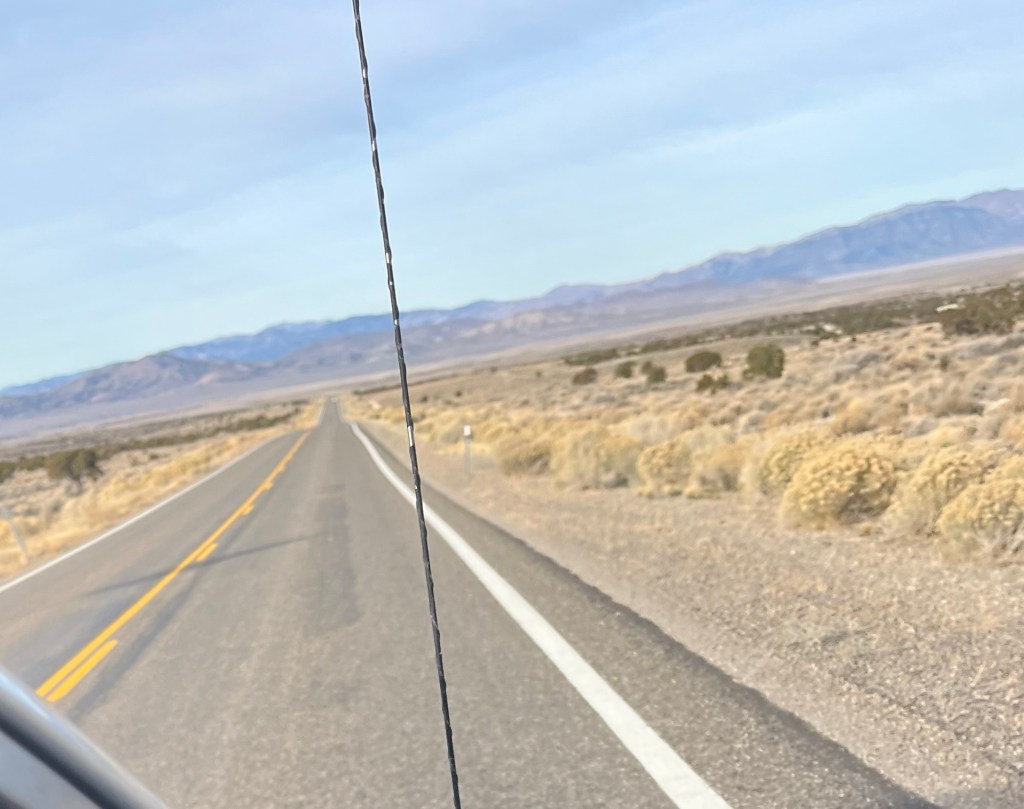
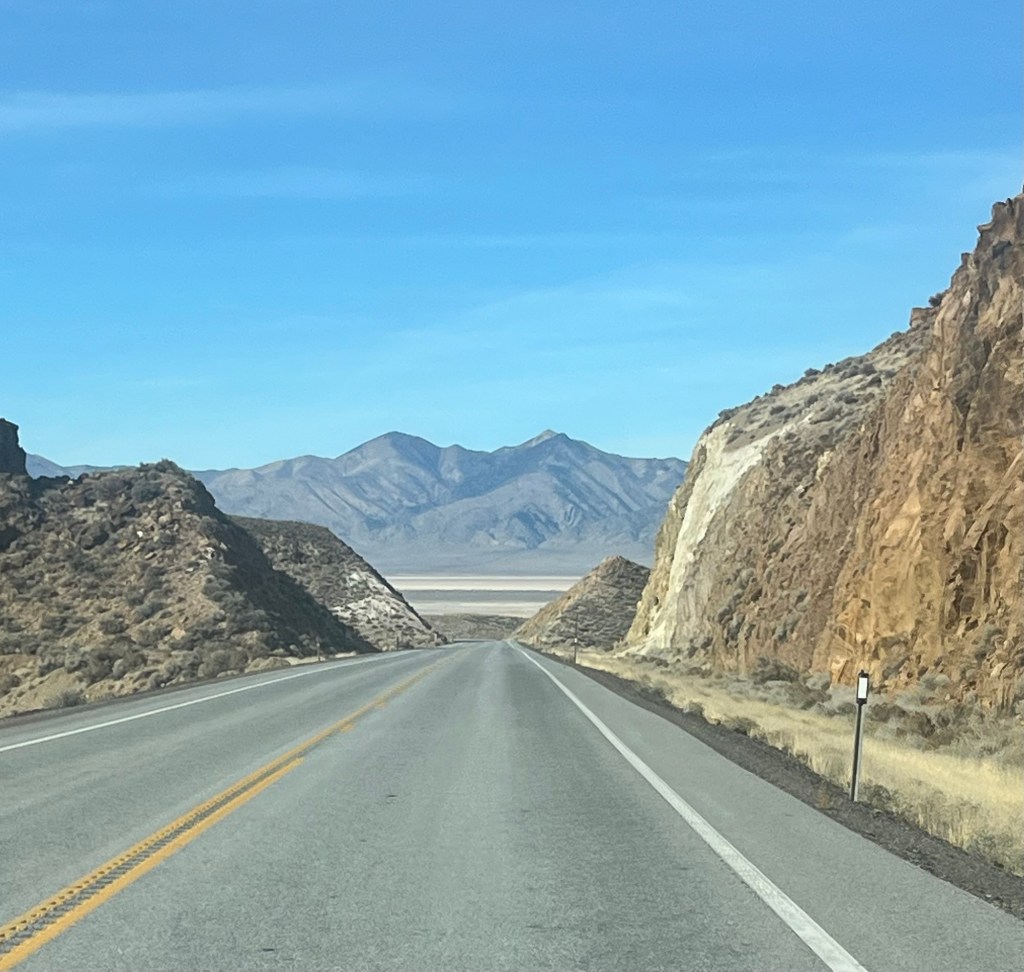
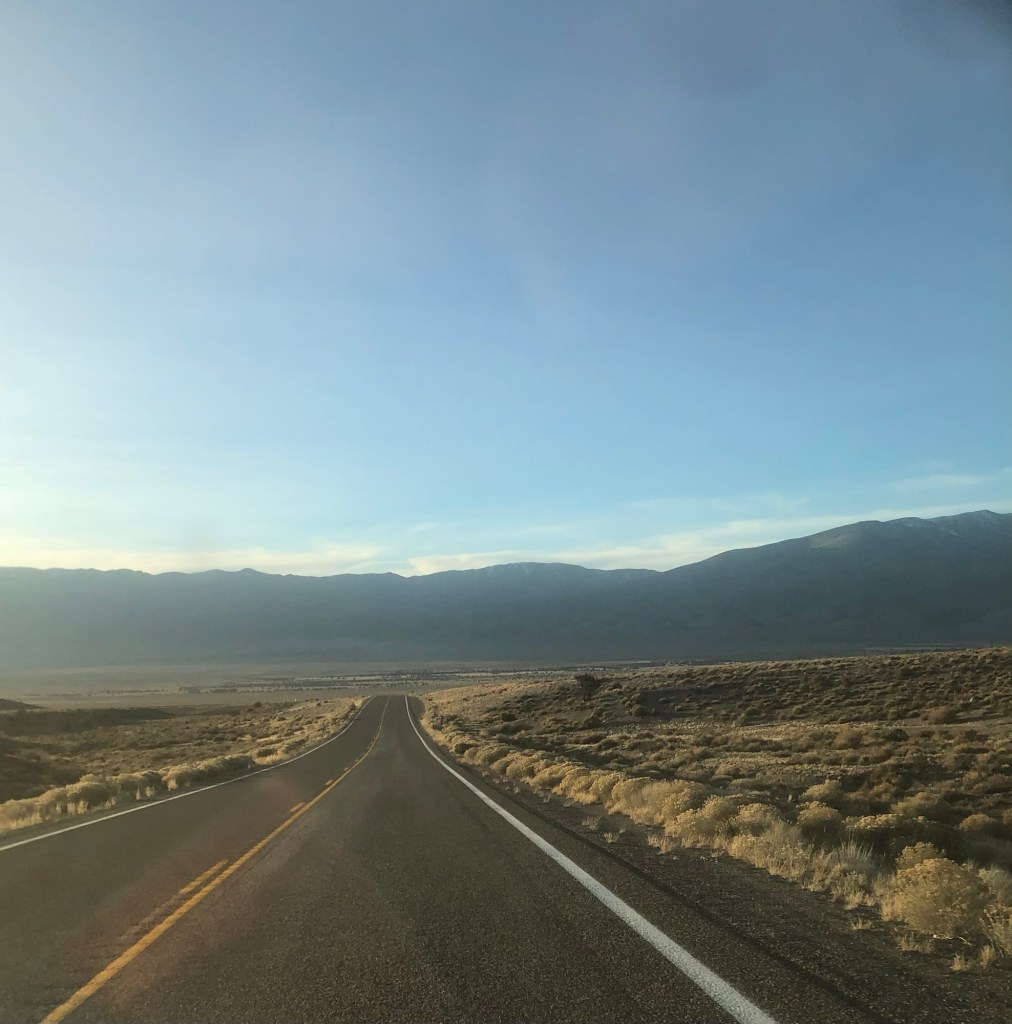
    Highway 50 is such a nicer highway than 80. About 15 minutes longer in travel time but less miles and prettier.

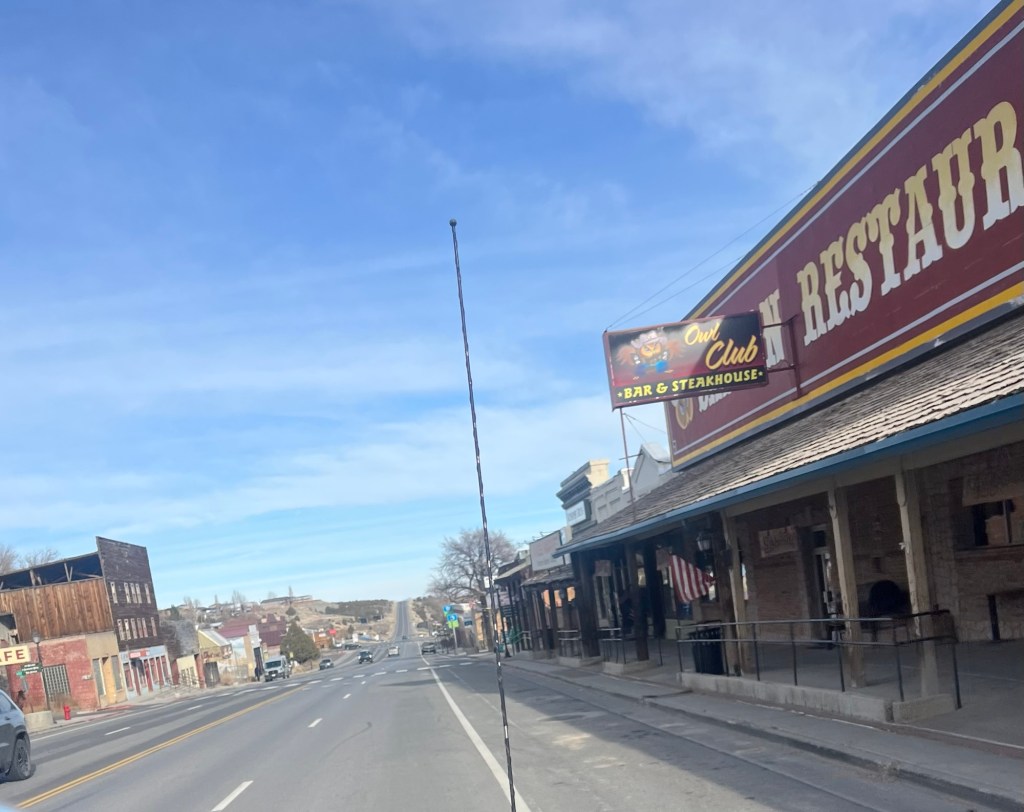
    Eureka Nevada

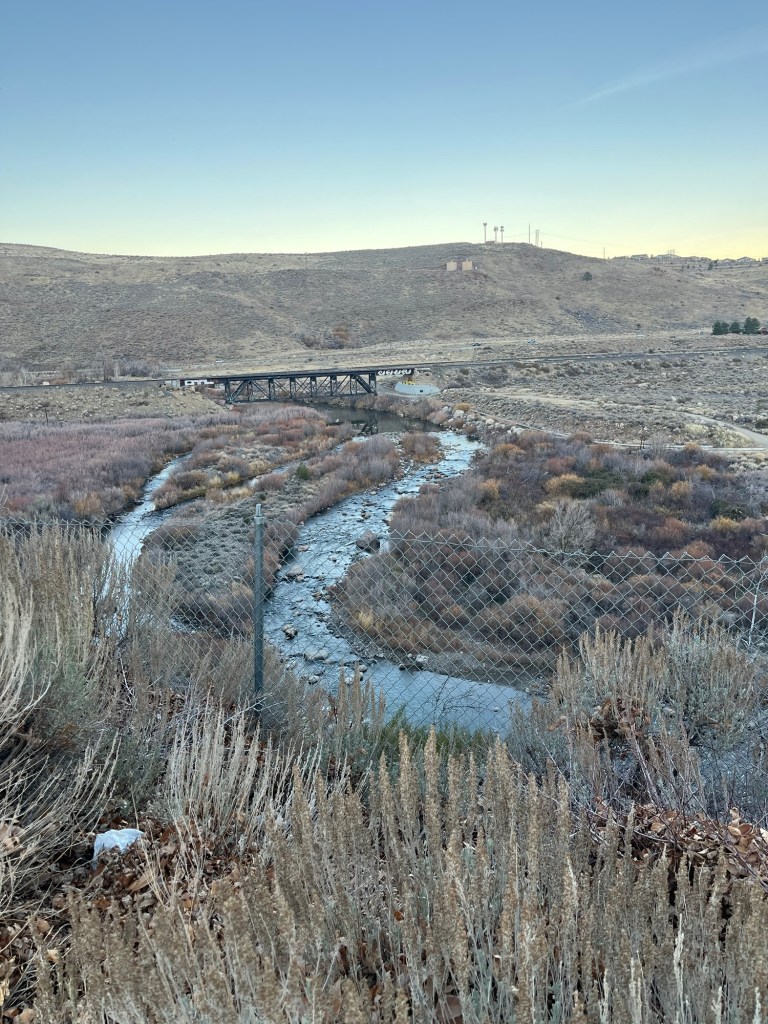
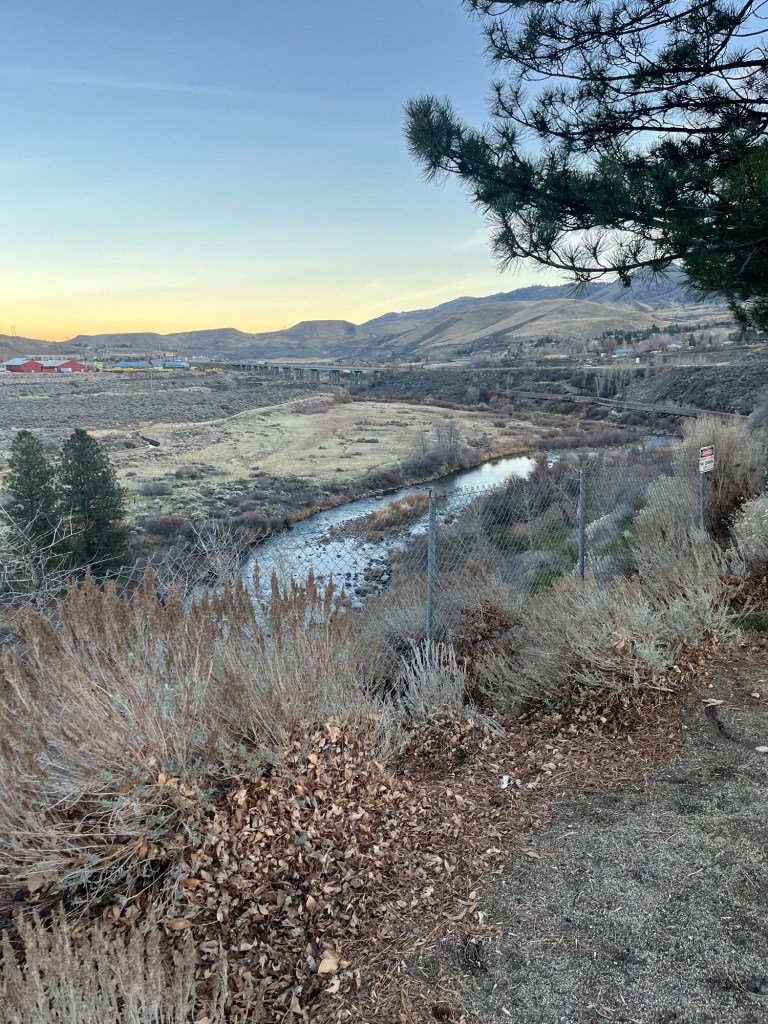
    We are camped just outside Reno in the KOA campground in Verdi/Boomtown next to the Truckee River.

    We had a great dinner catching up with Jackson and Megan at Chop 40 restaurant in Verdi. The food was delicious only surpassed by the company.

  • November 25

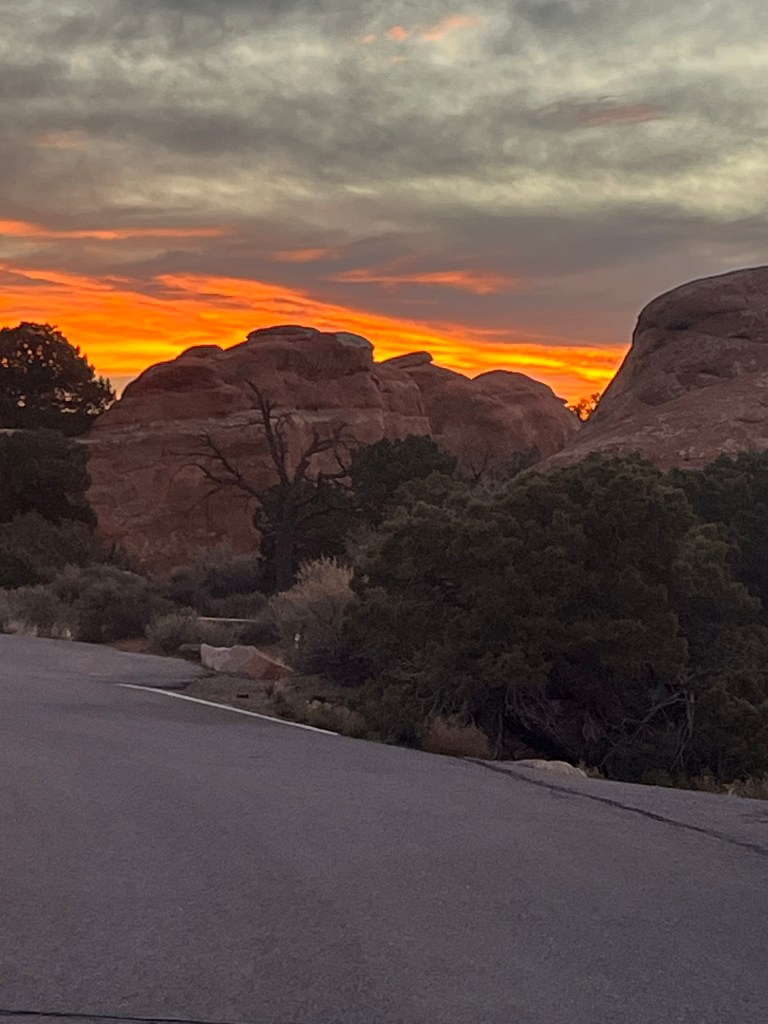
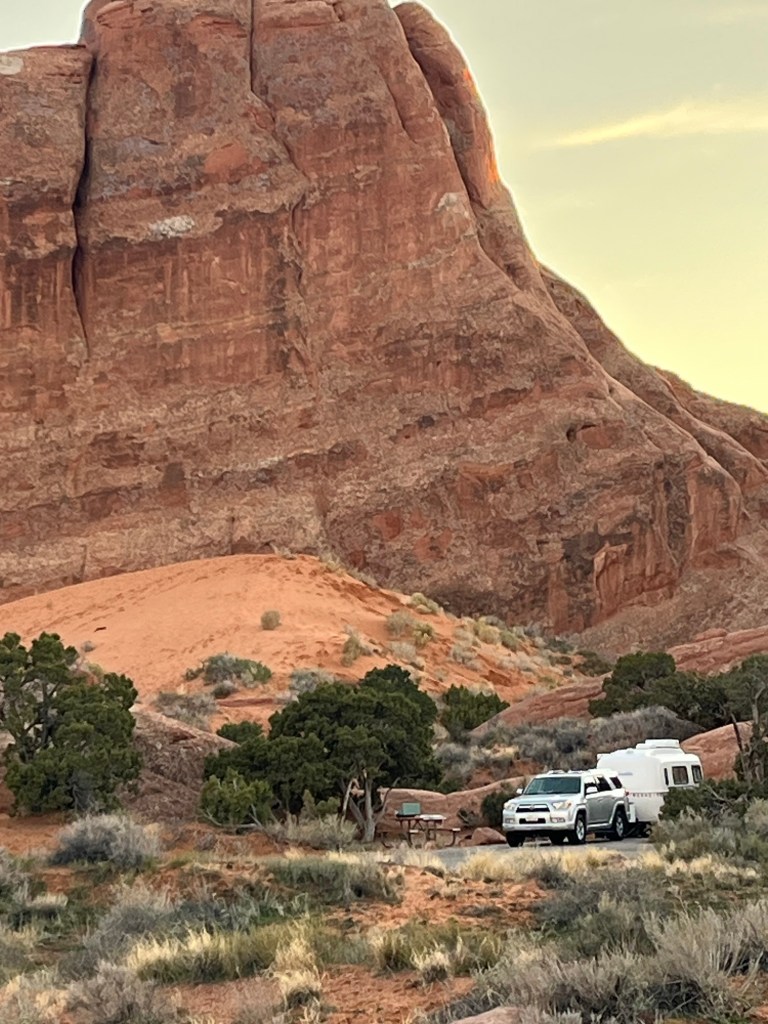
    Sunrise at Arches National Park as we pack up to head out.

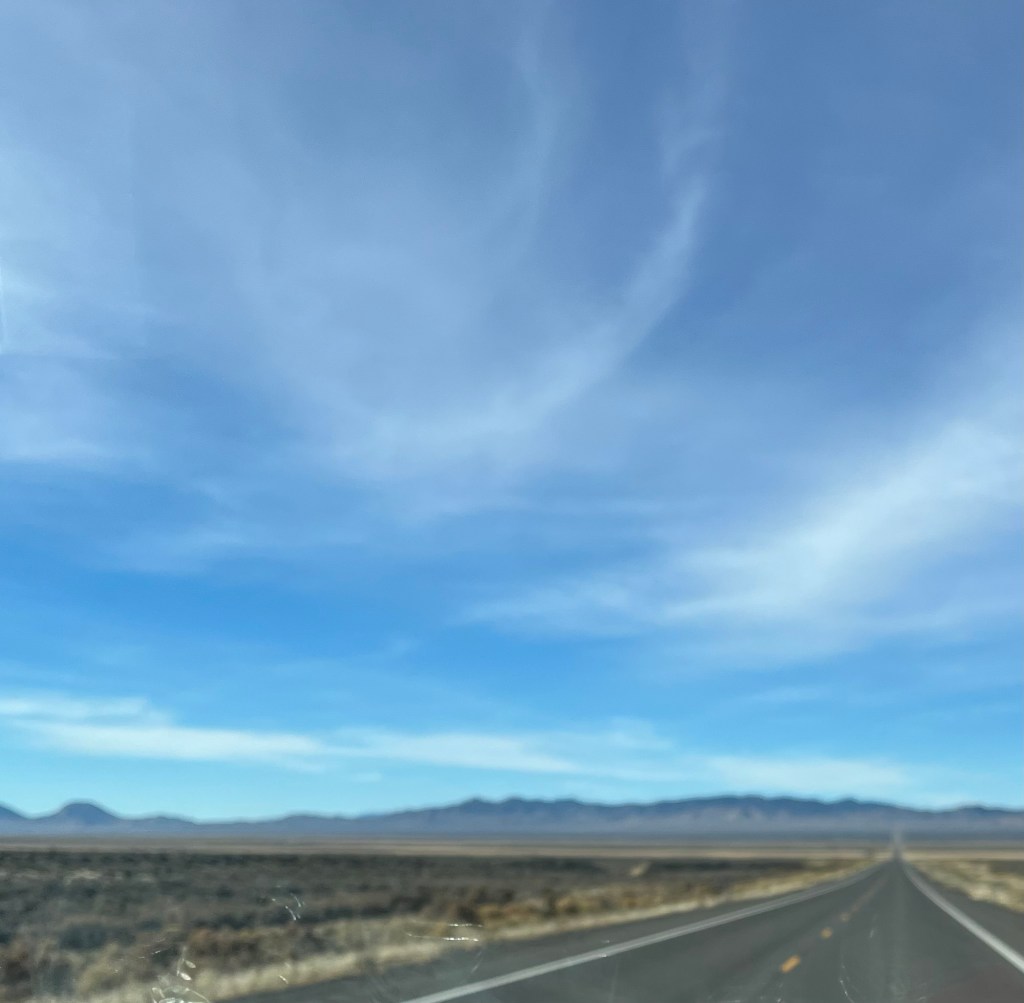
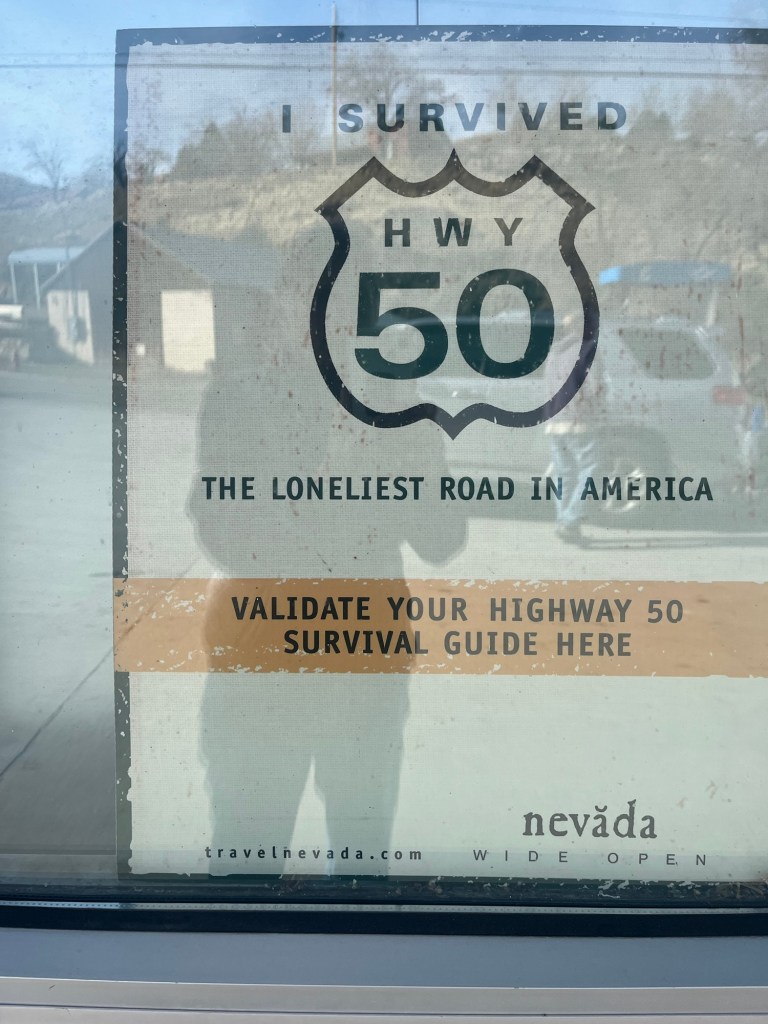
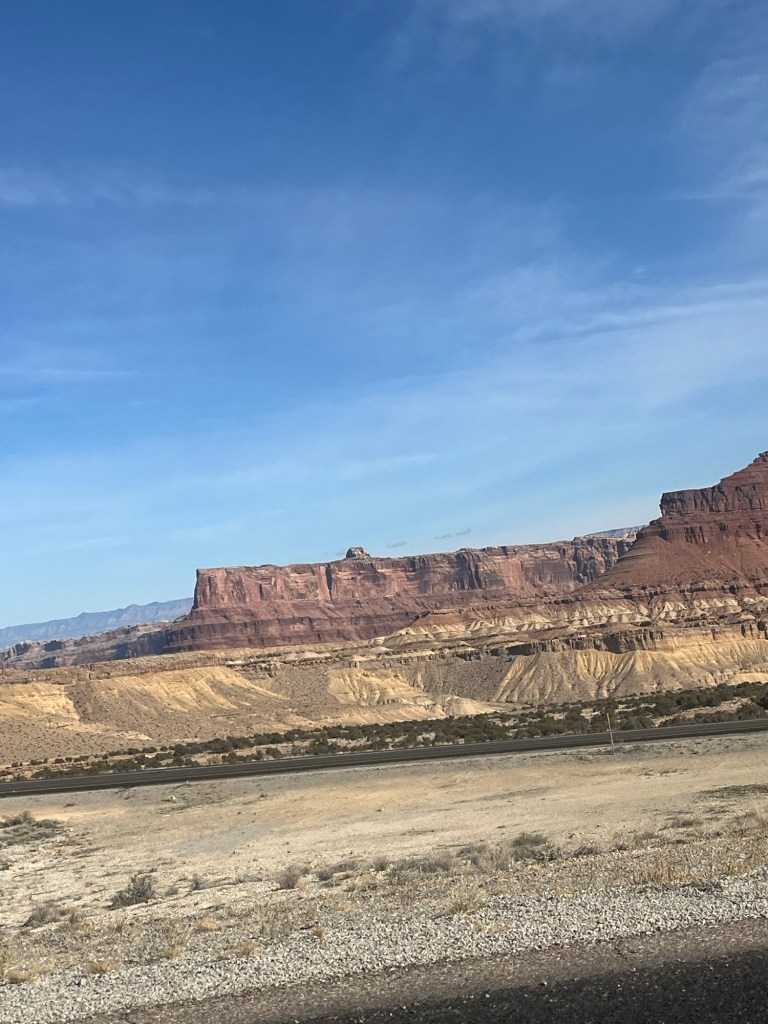
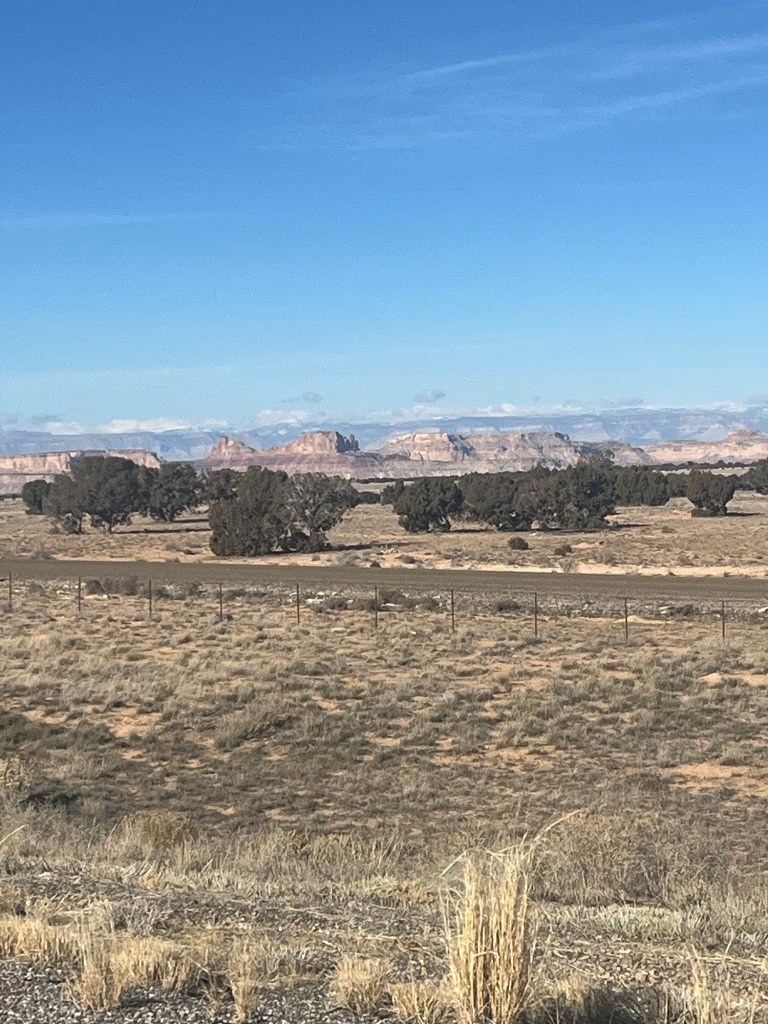
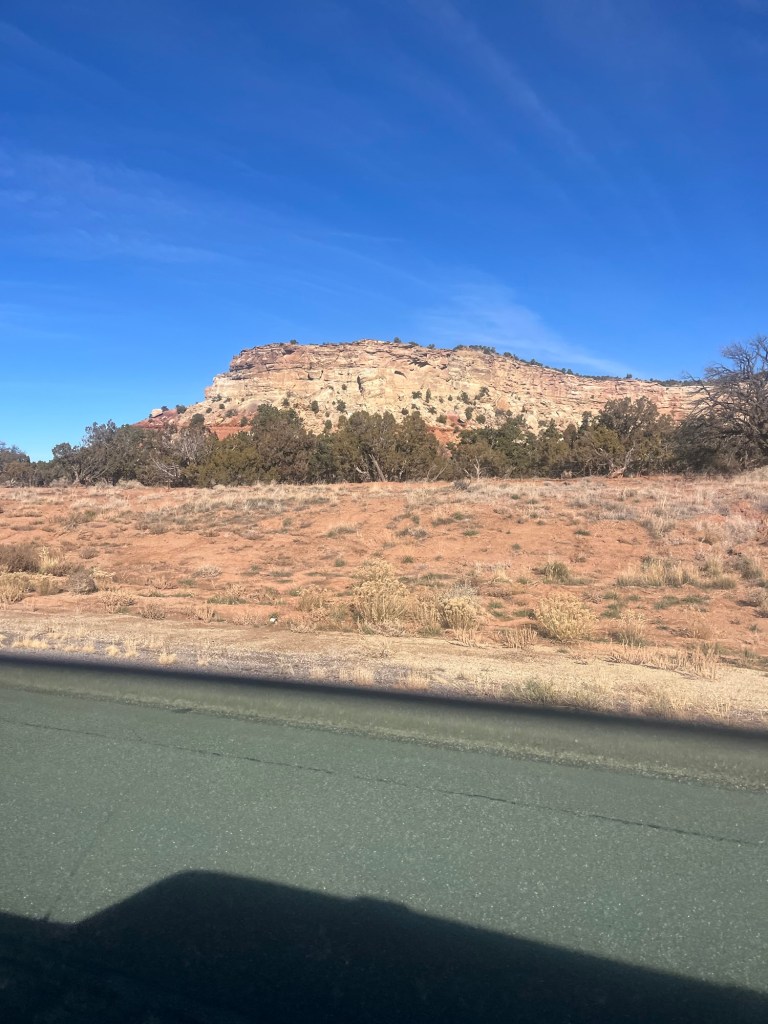
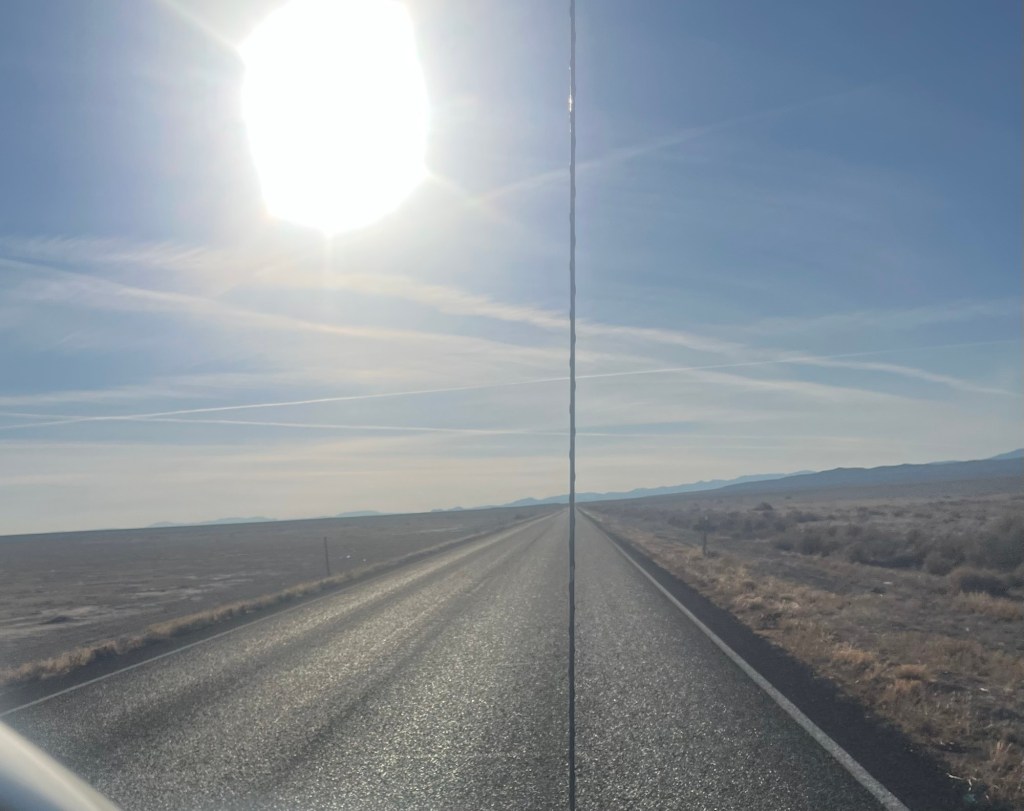
    Today we are headed across Utah to Nevada. Much of south west Utah is sparse and looks like Nevada. We are on Highway 50–the “loneliest highway”—and we can attest to that. Not much traffic but saw a herd of antelope and a coyote.

    Leaving Moab Utah area
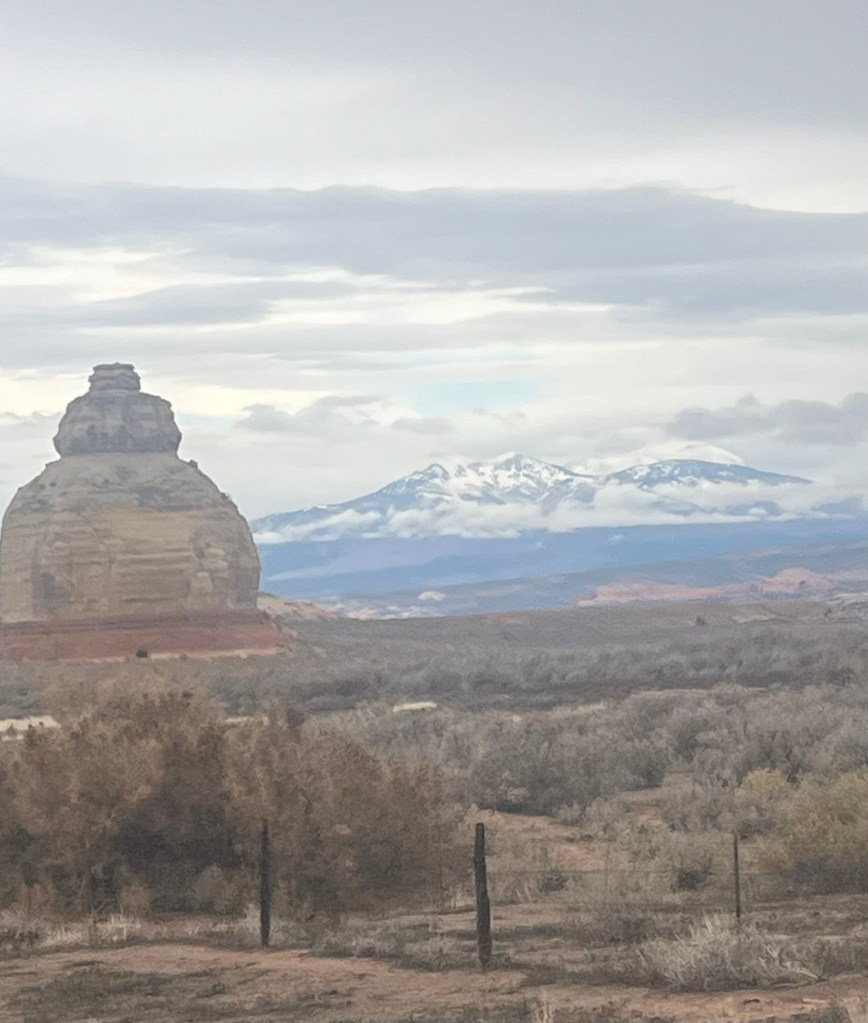
    Southwest Utah
    Highway 50
    Highway 50
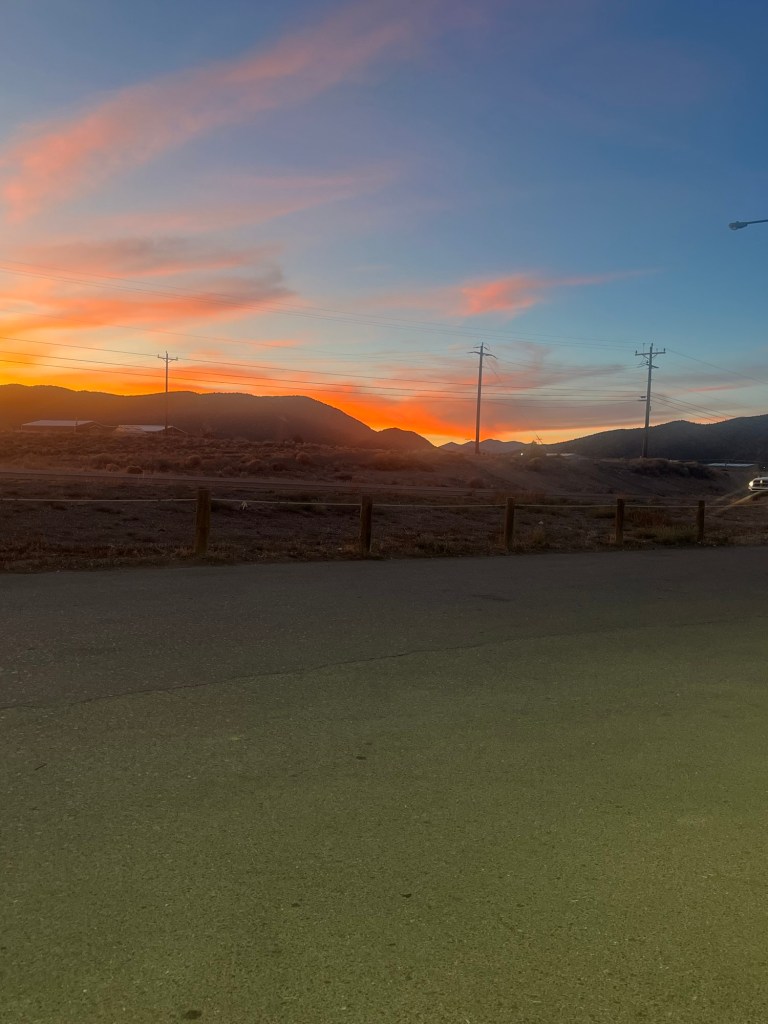
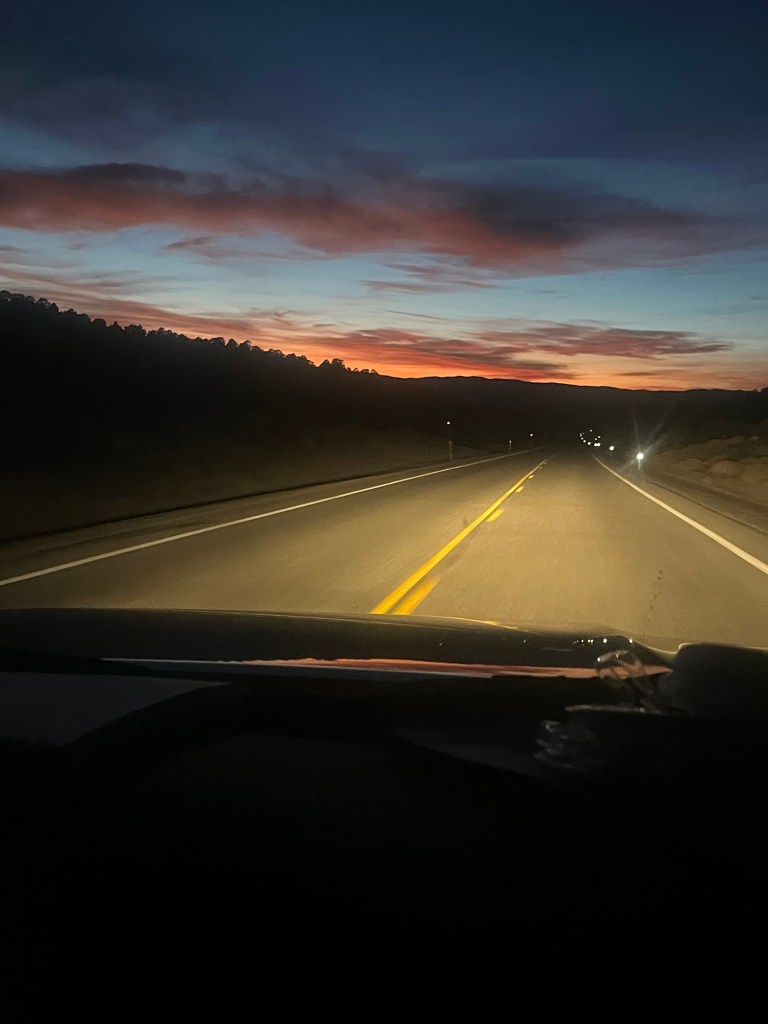
    Sunset outside Ely, Nevada

    Tomorrow we head to Reno to see Jackson and Megan.

  • November 24

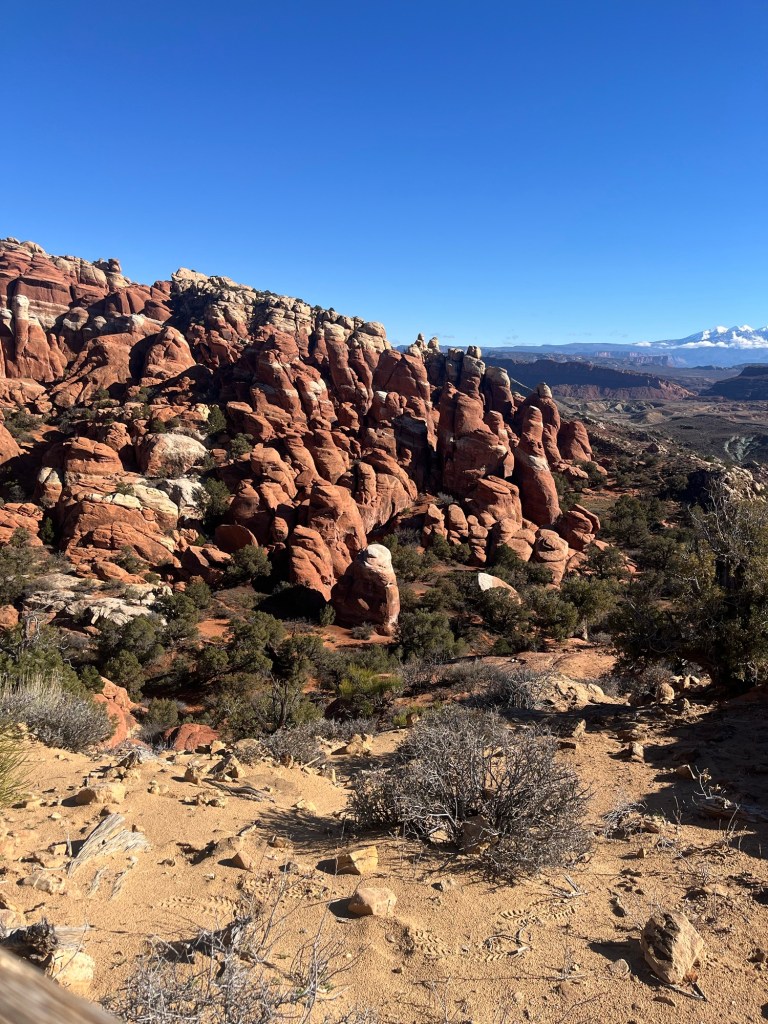
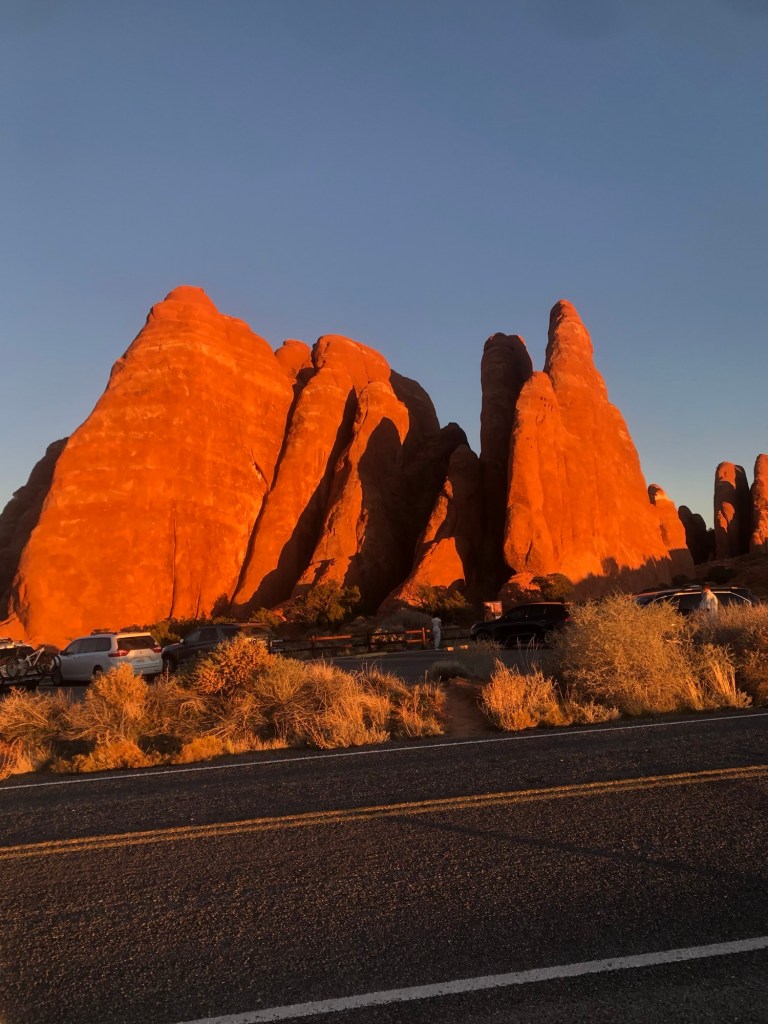
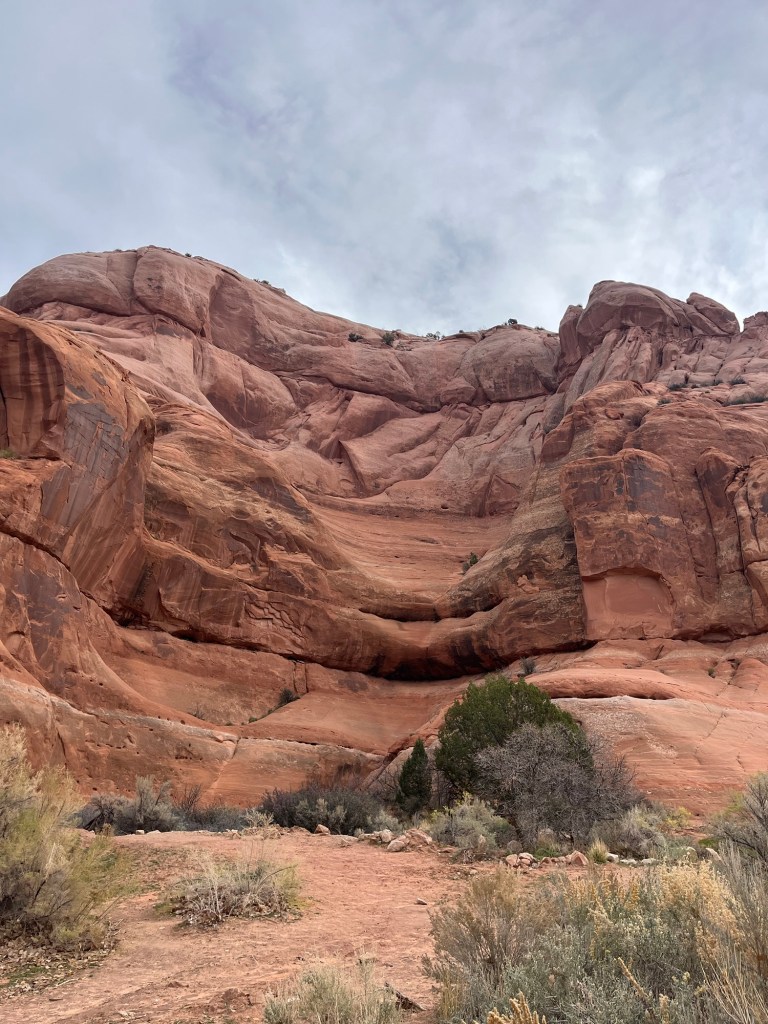
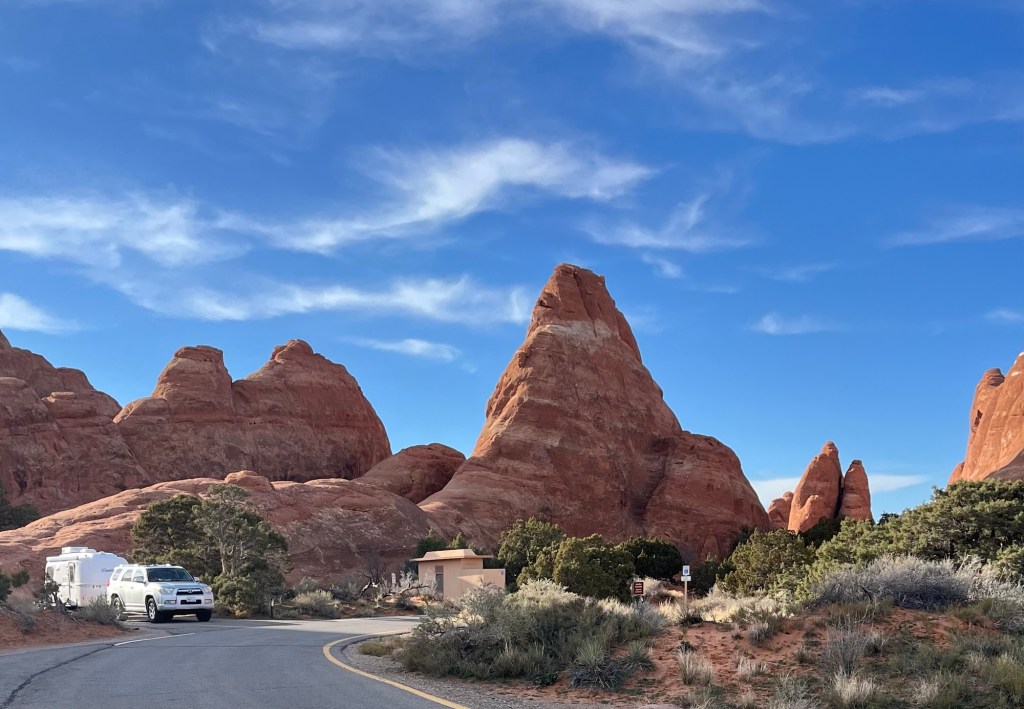
    Arches National Park has over 2000 arches— the greatest concentration of natural arches in the world. There are arches and fins. Fins are giant walls of rock that were once part of one flat layer of sandstone. Forces deep underground cause the rock to bulge upward and crack in a series of roughly parallel lines. Rainwater seeped into the cracks, dissolving the minerals that bond the stone together. Fins may become arches. Arches eventually collapse.

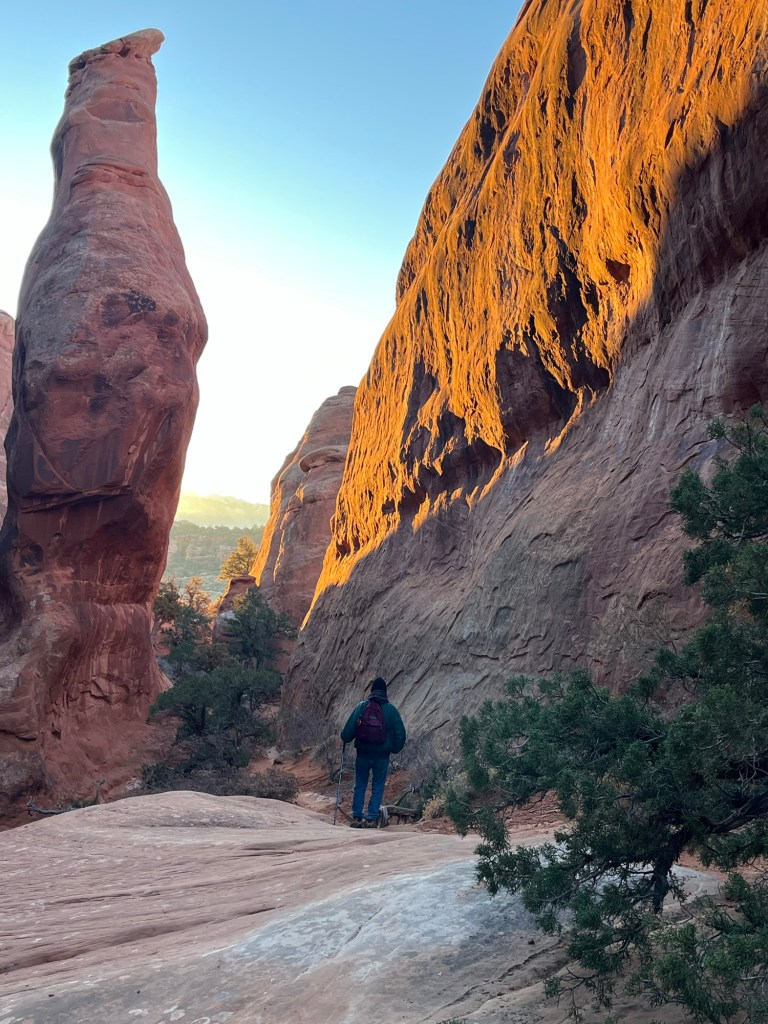
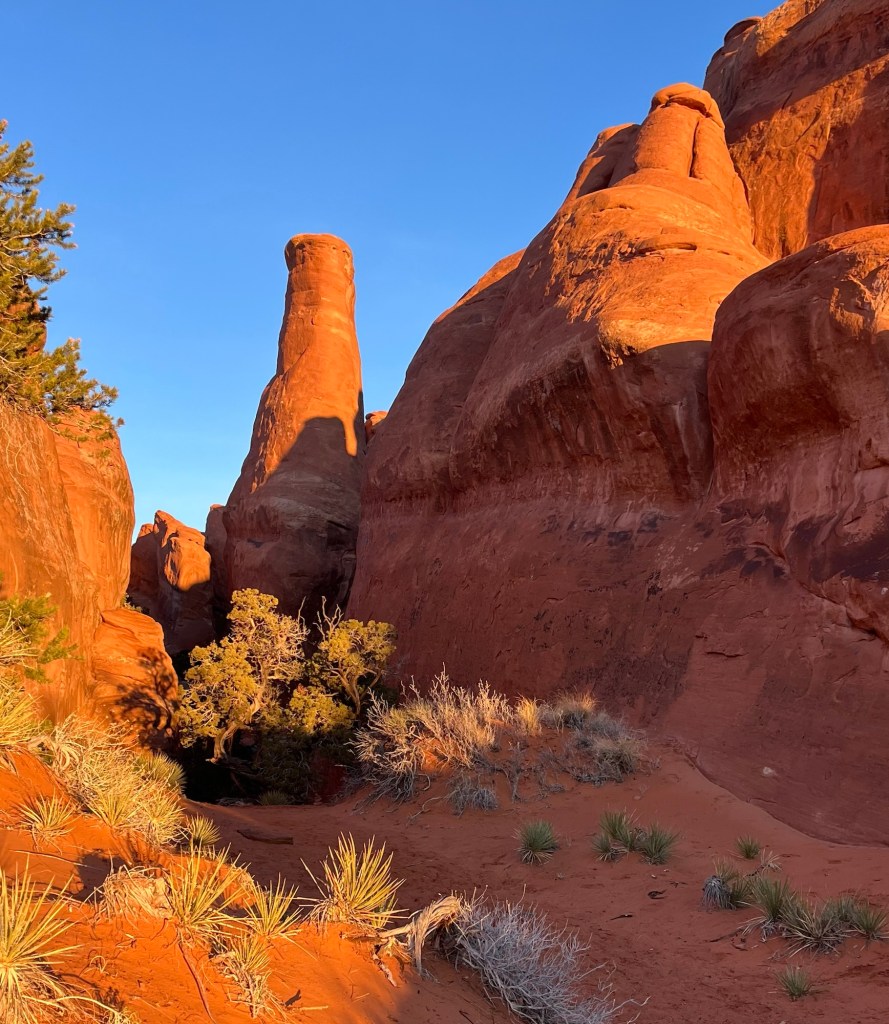
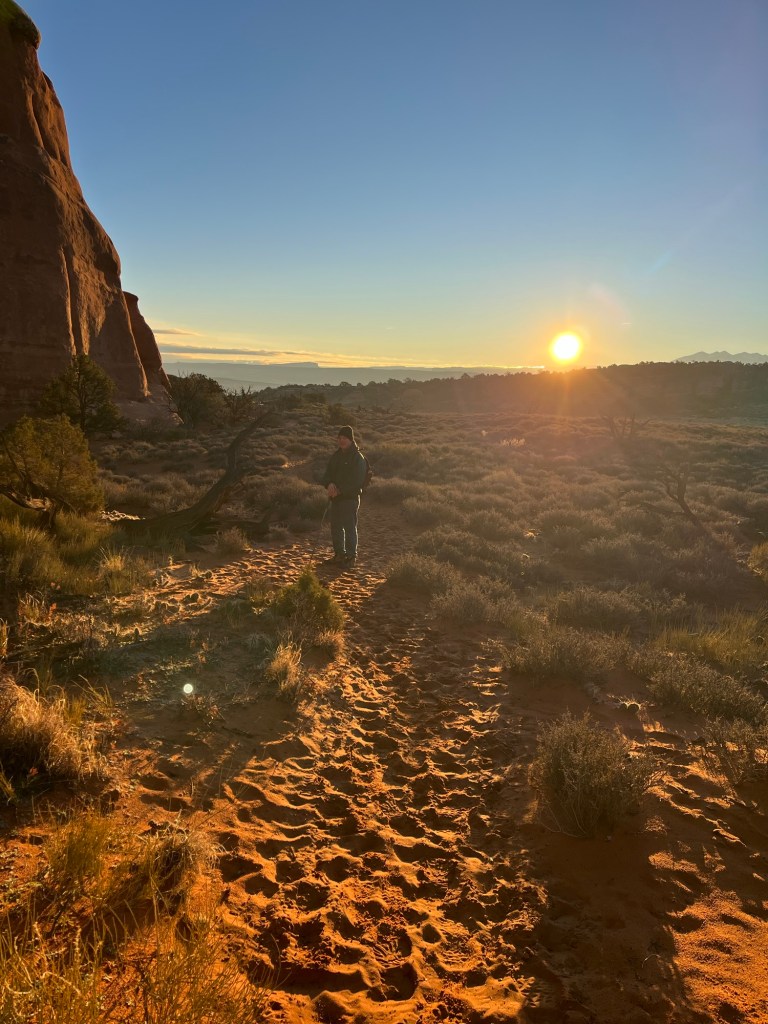
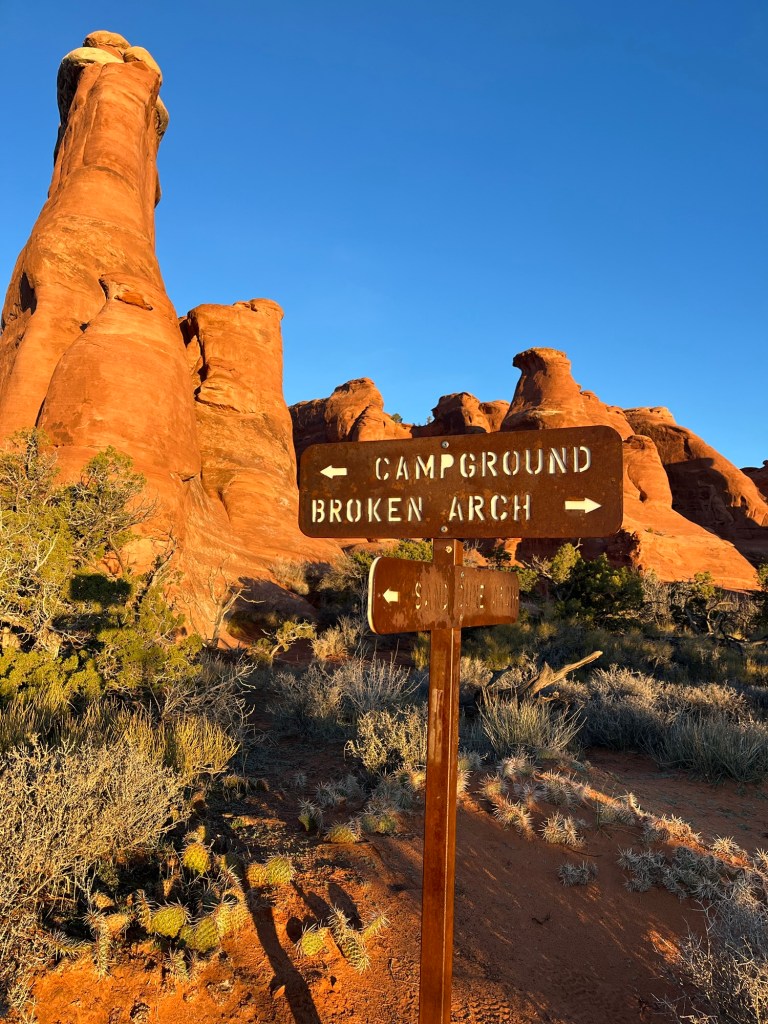
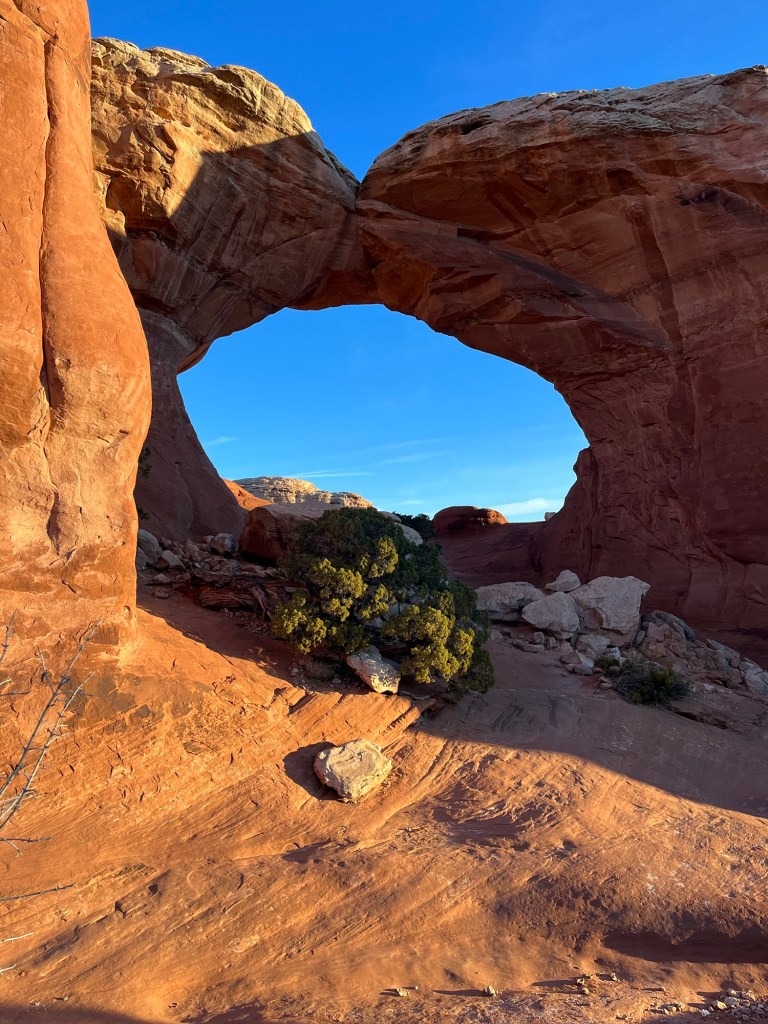
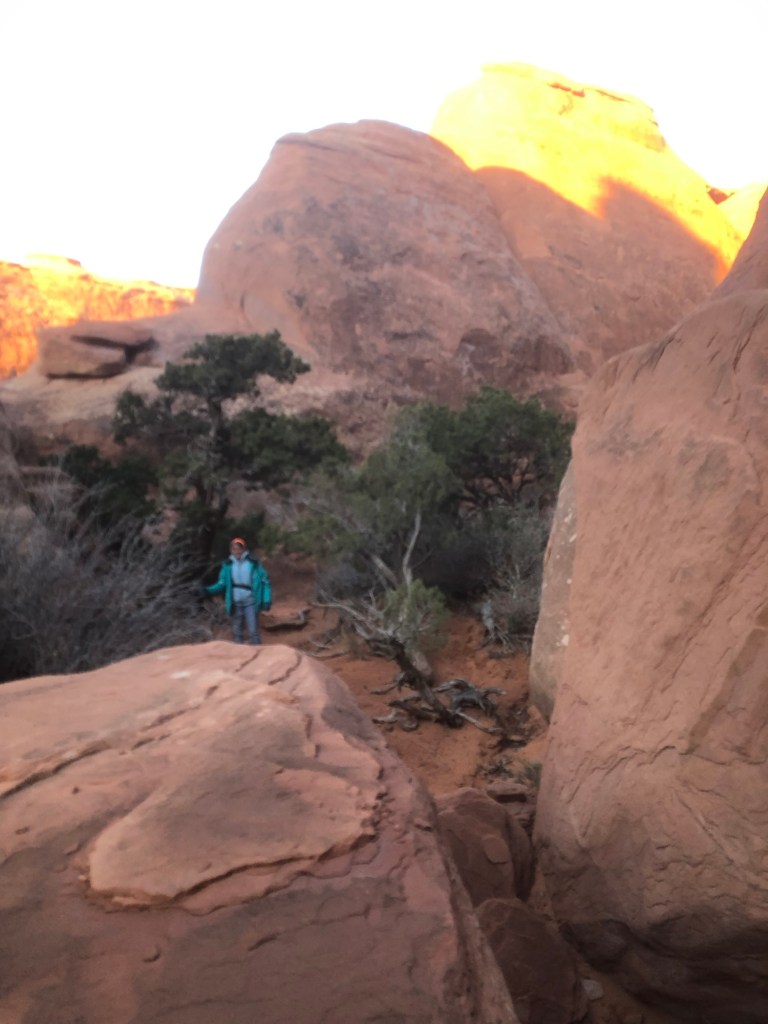
    We started the day with a hike to Broken Arch. There were only two other people on the trail, and the sunrise light on the rocks was beautiful.
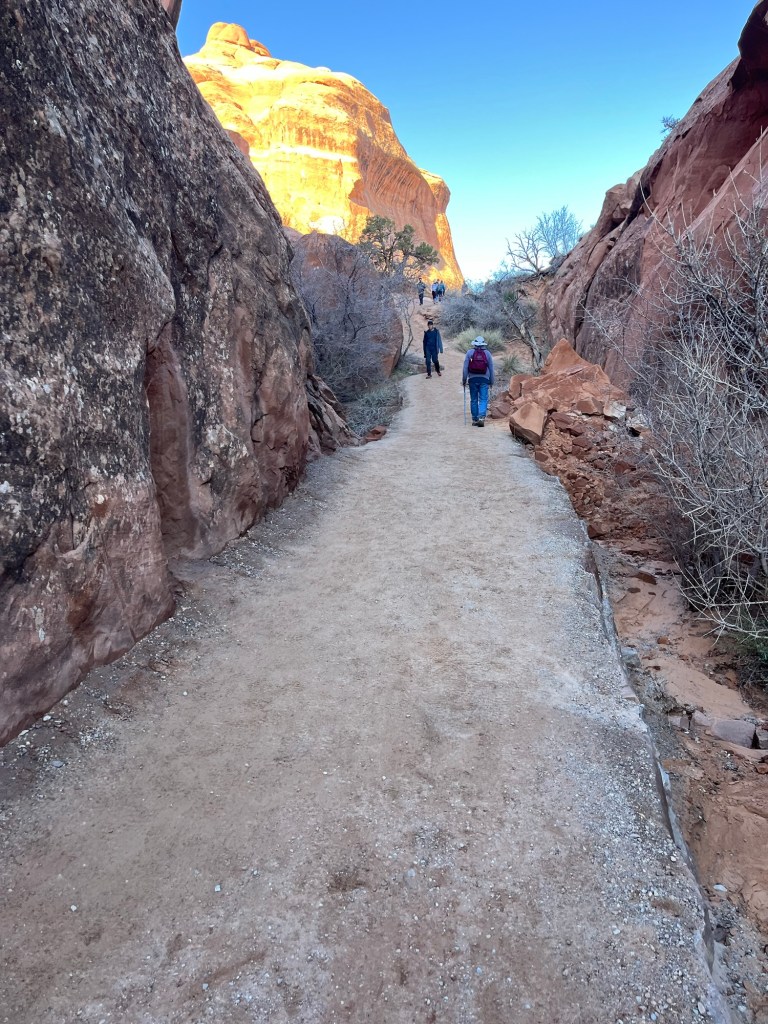
    Broken Arch
    Hiking back to camp from Broken Arch
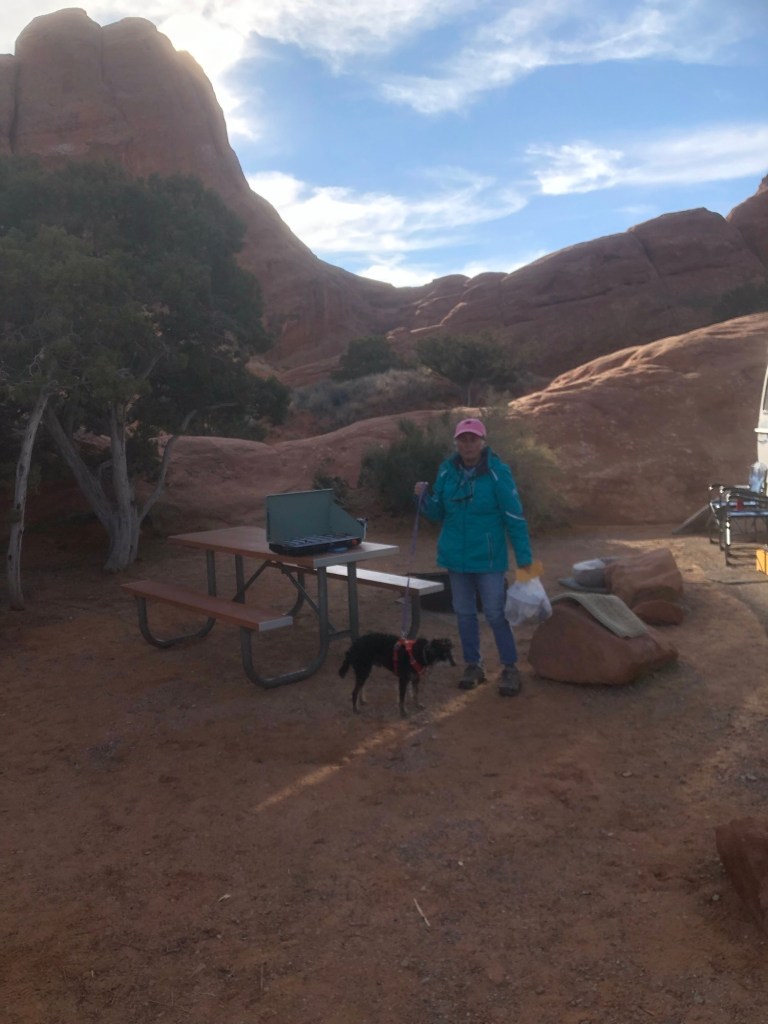
    Breakfast

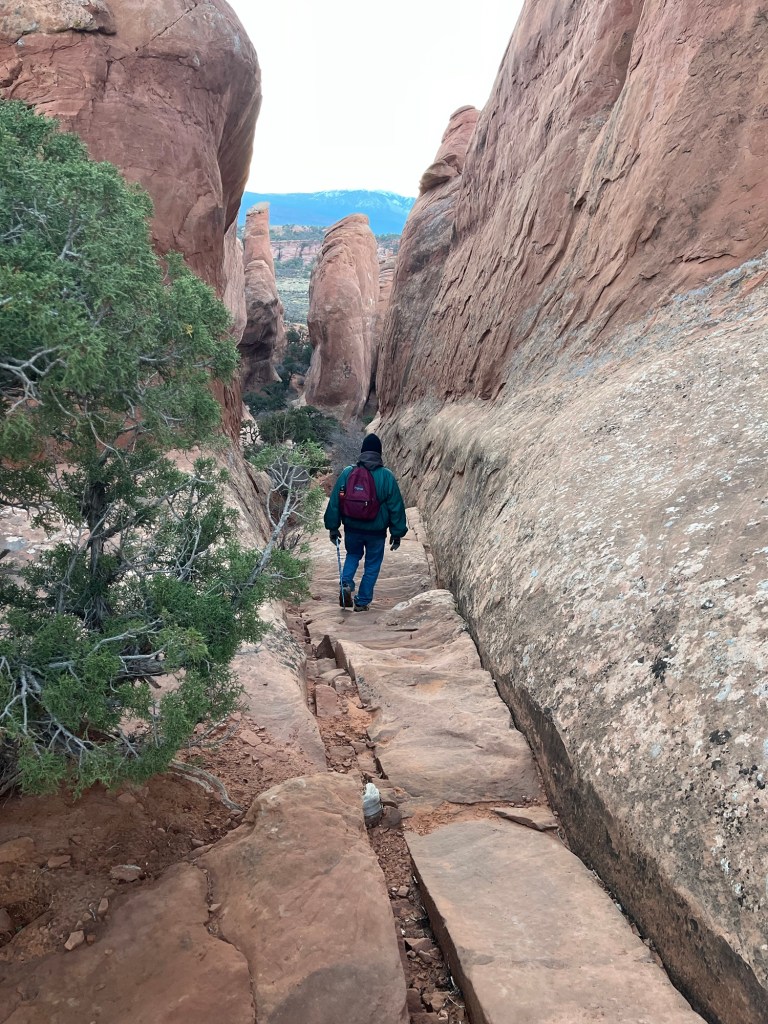
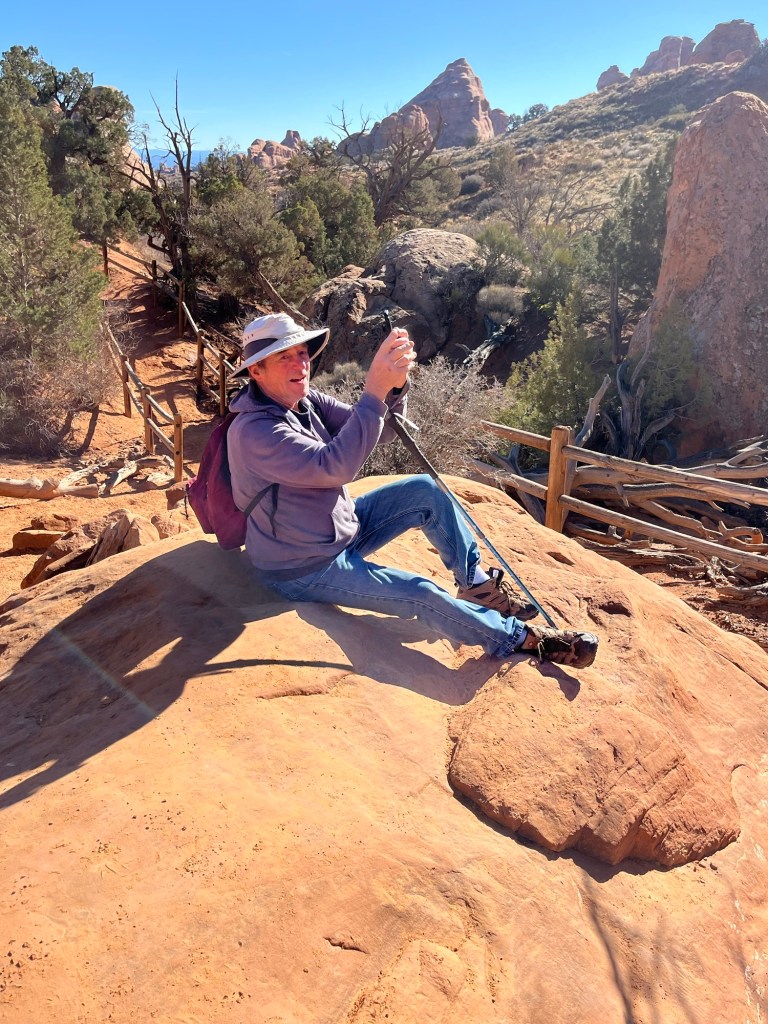
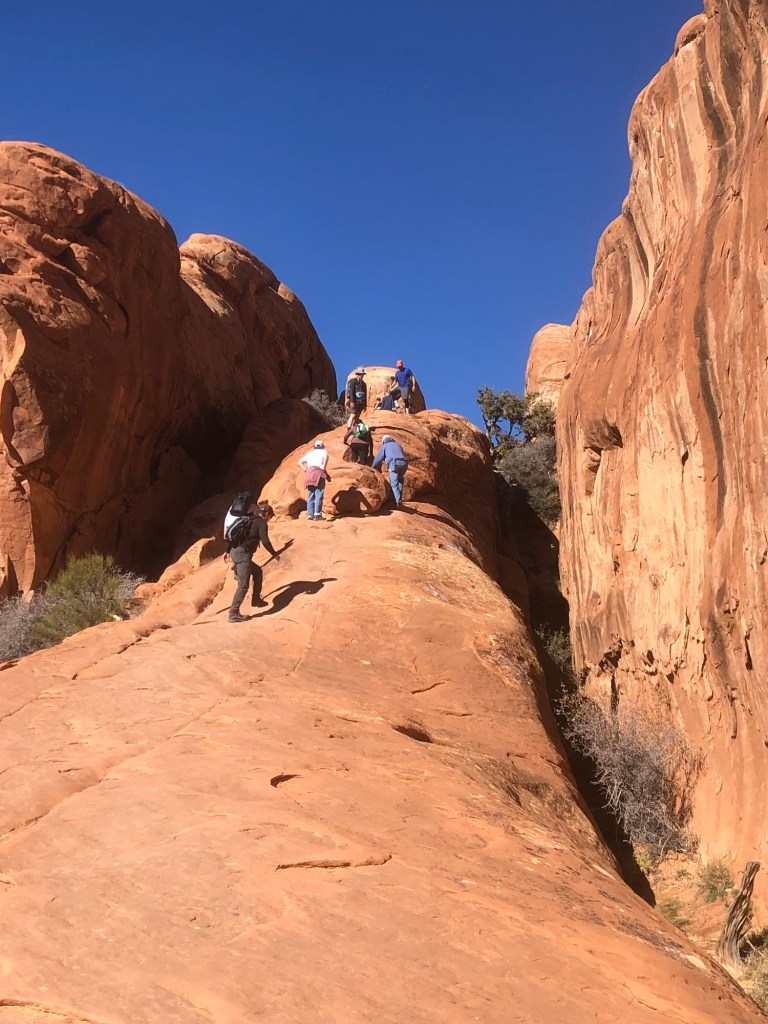
    After breakfast, we hiked up to several arches. There were lots of people on the trail; heard languages from all over the world.

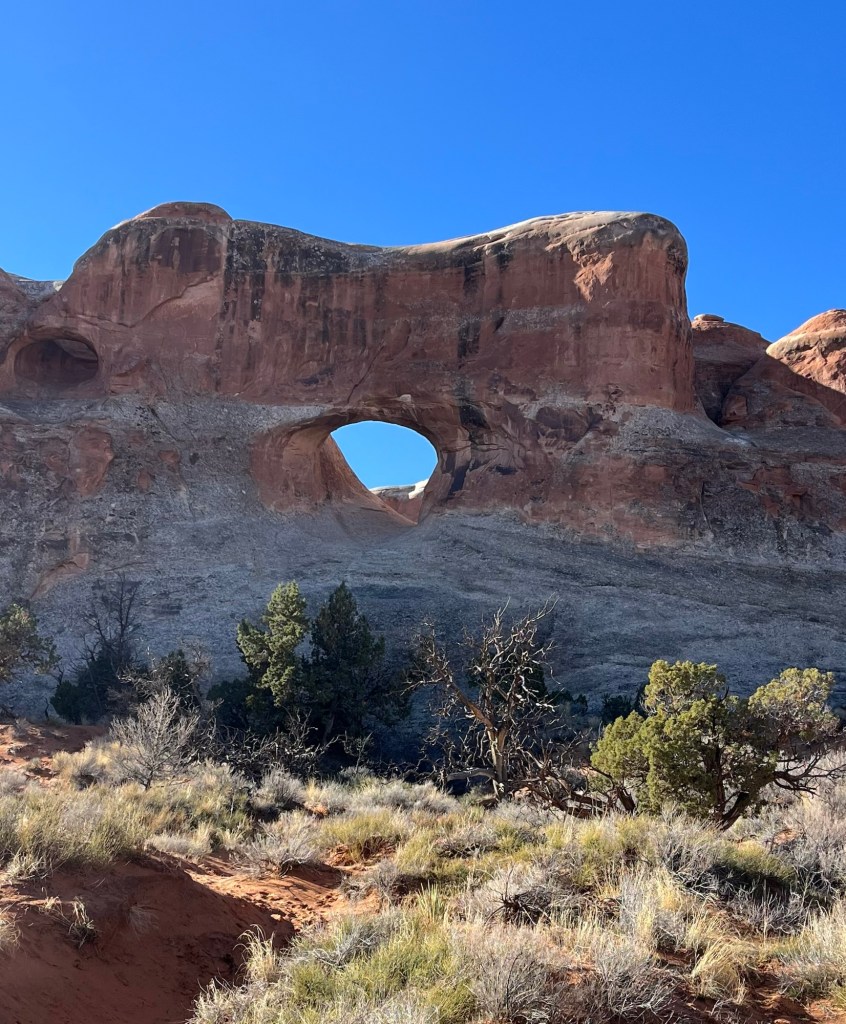
    Tunnel Arch
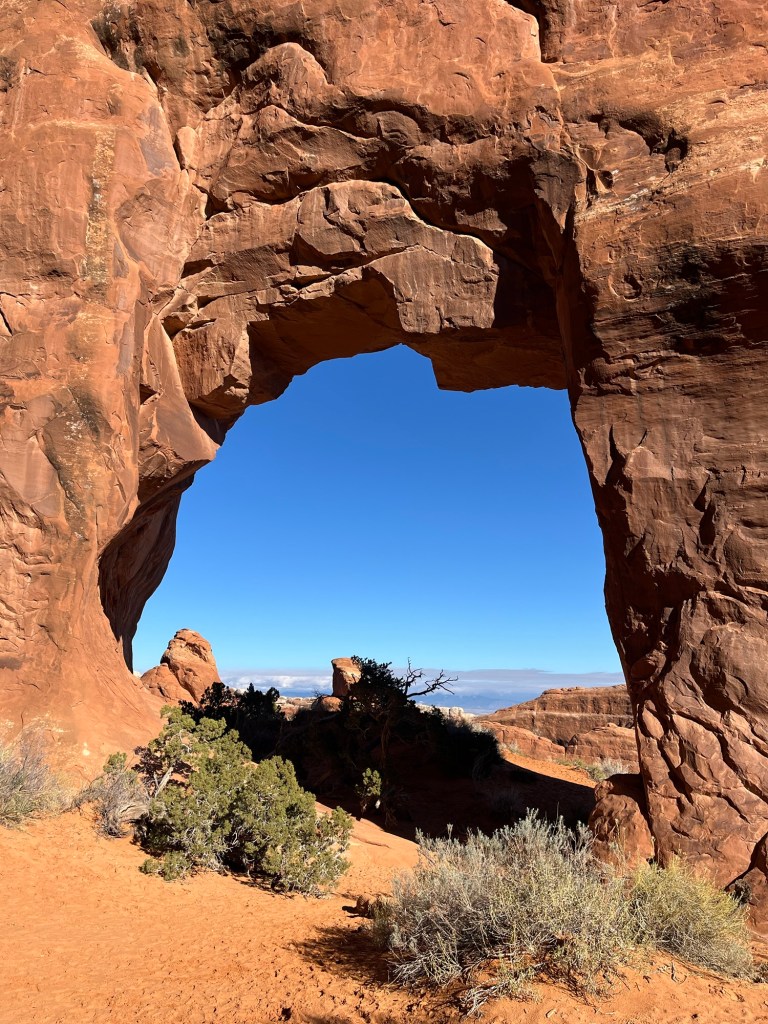
    Pine Tree Arch
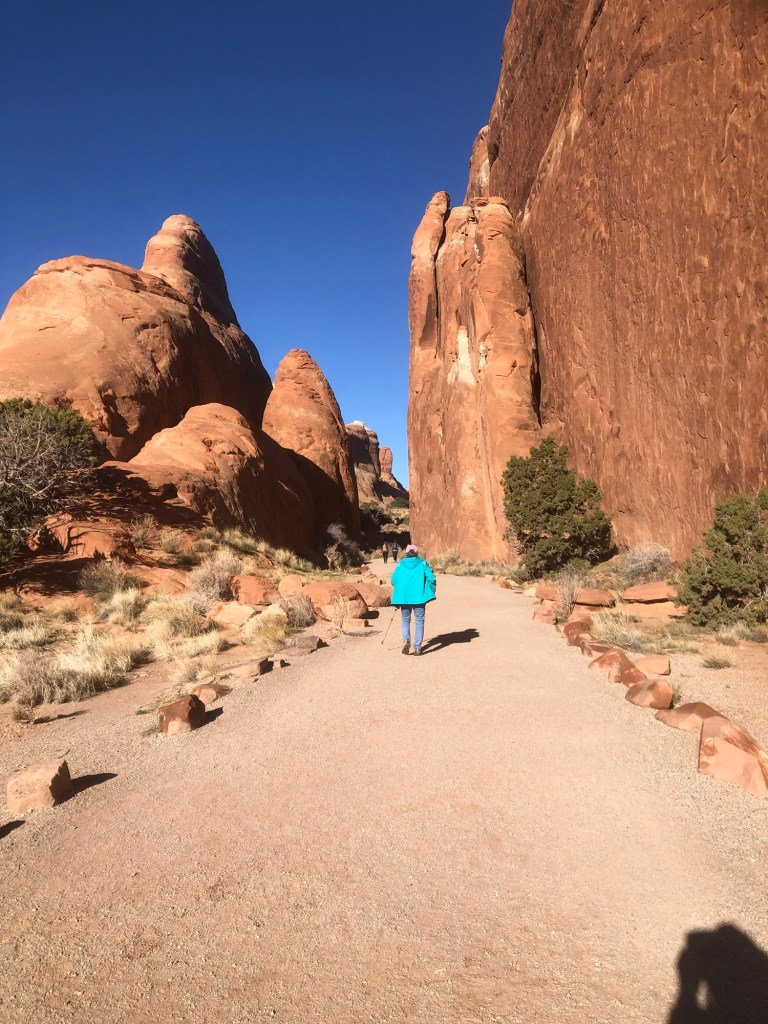
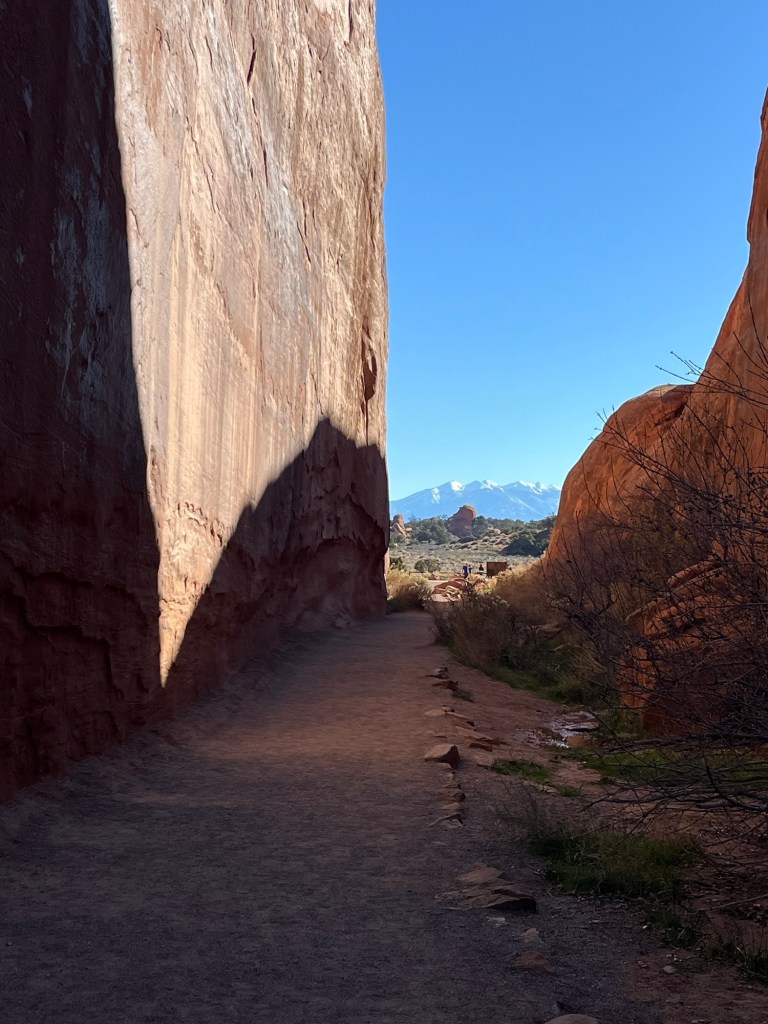
    The hiking trail
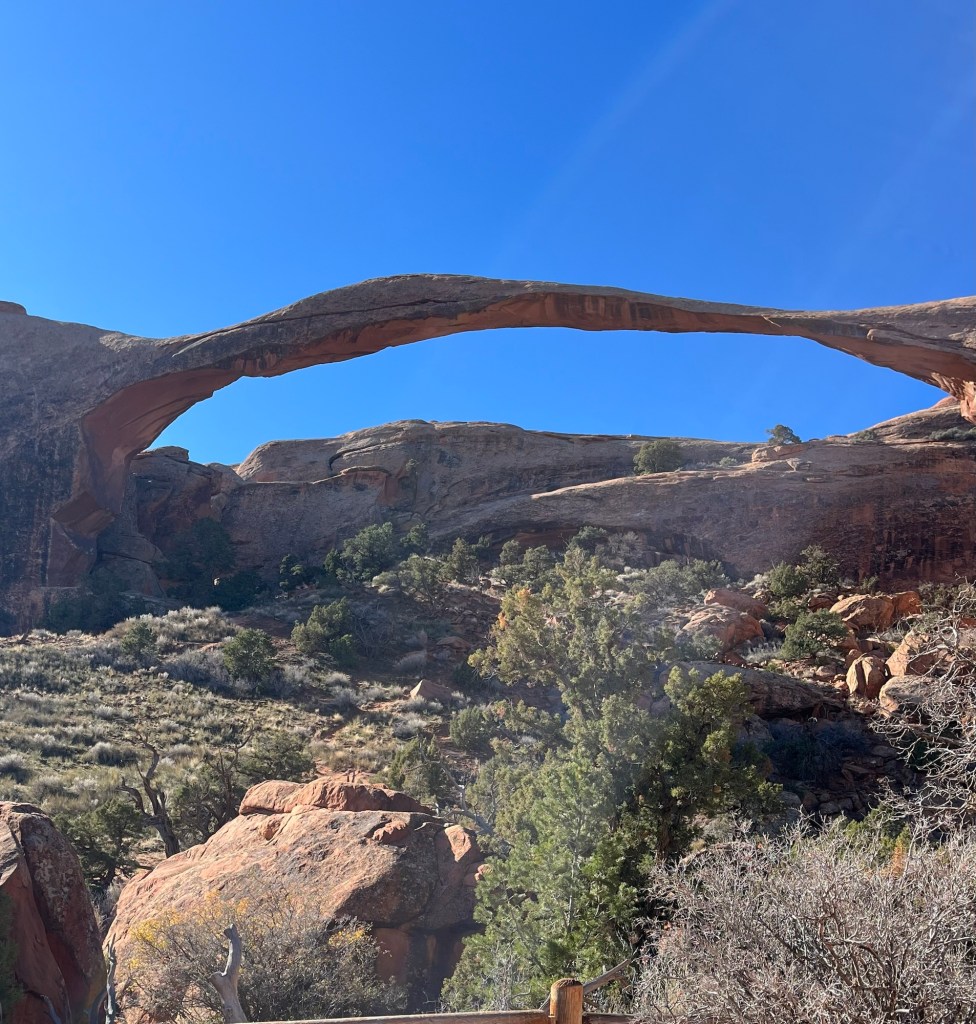
    Landscape Arch
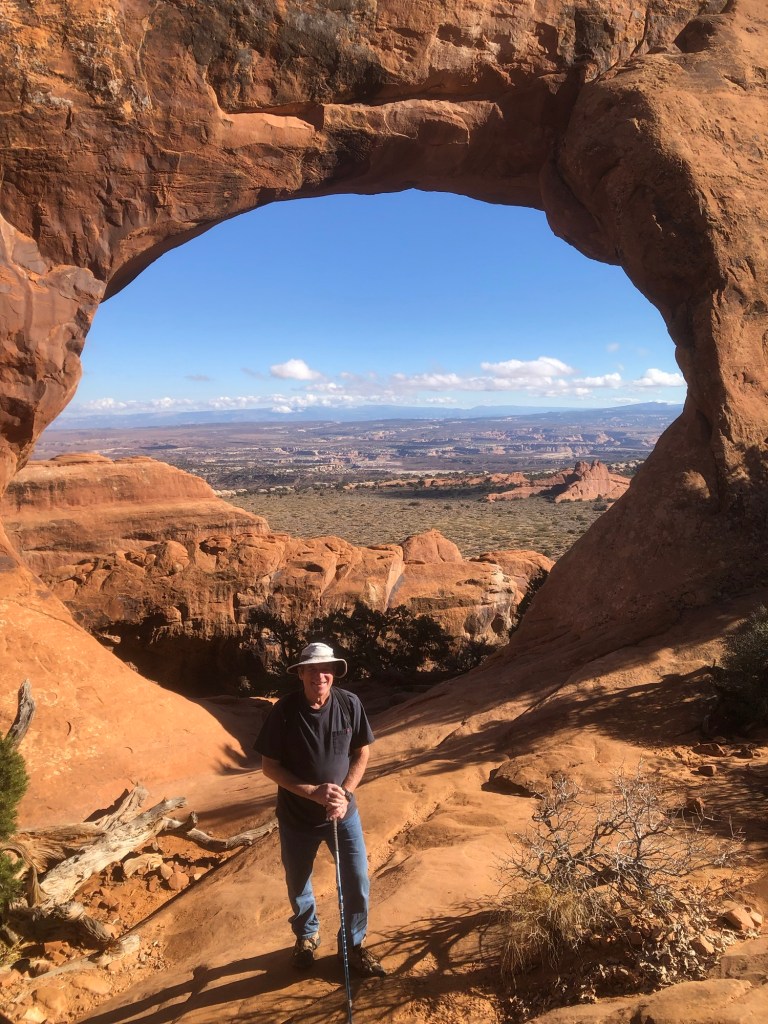
    Steve hiked on to Partition Arch; my knees were not up to it.
    Partition Arch
    Navajo Arch
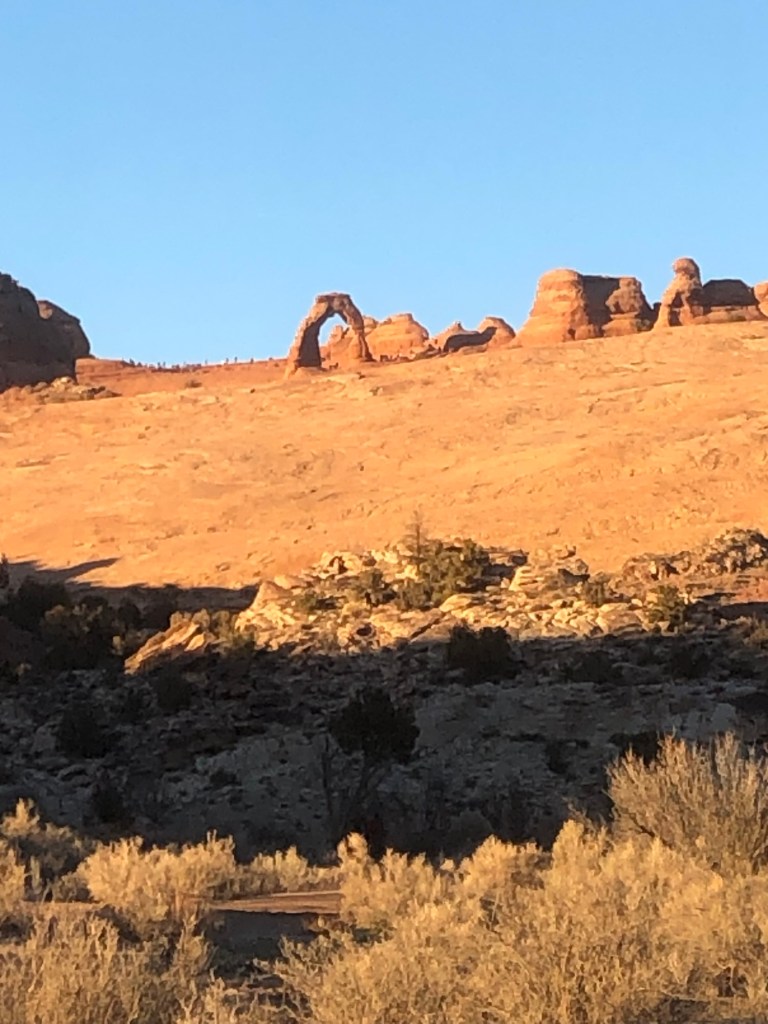
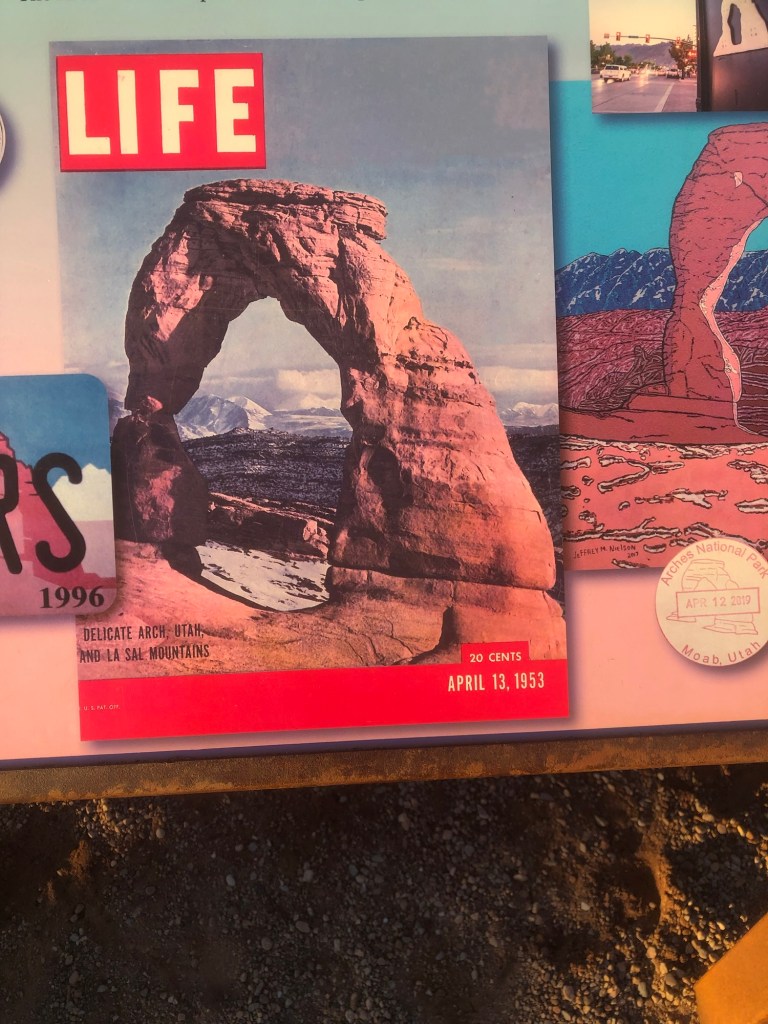
    Delicate Arch
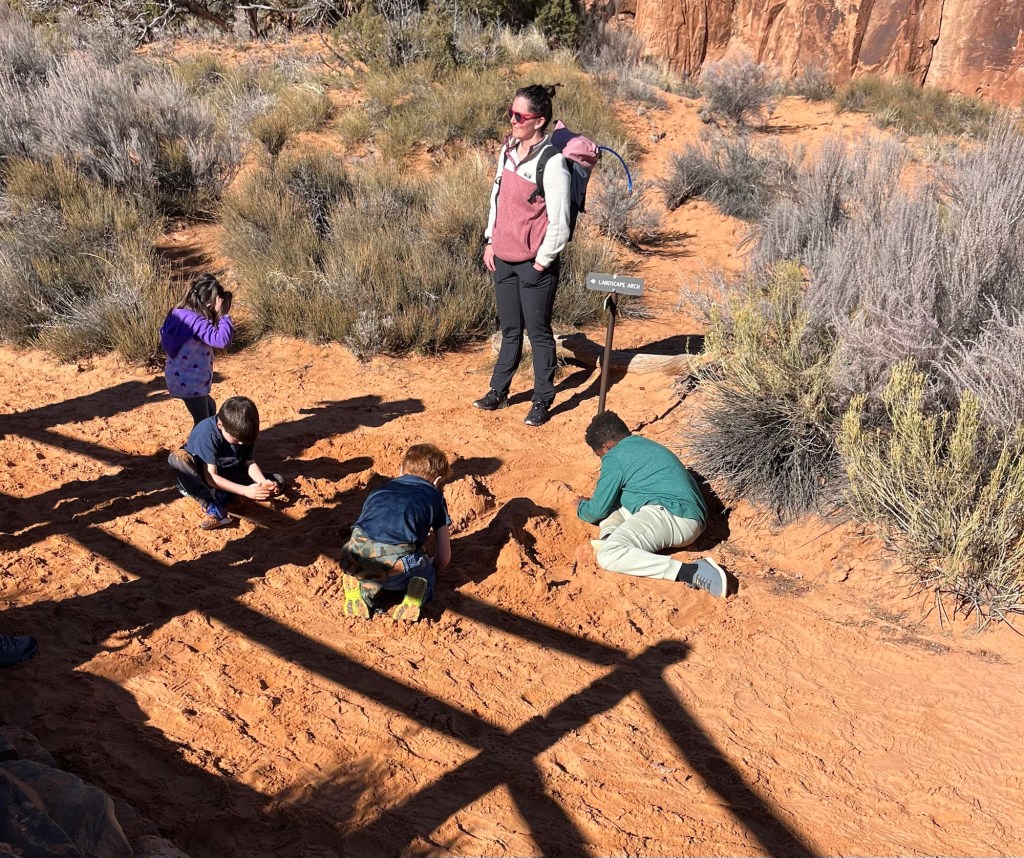
    Lots of kids in the park since most schools are closed. These four decided to create the scenery in sand.
    End of the hike

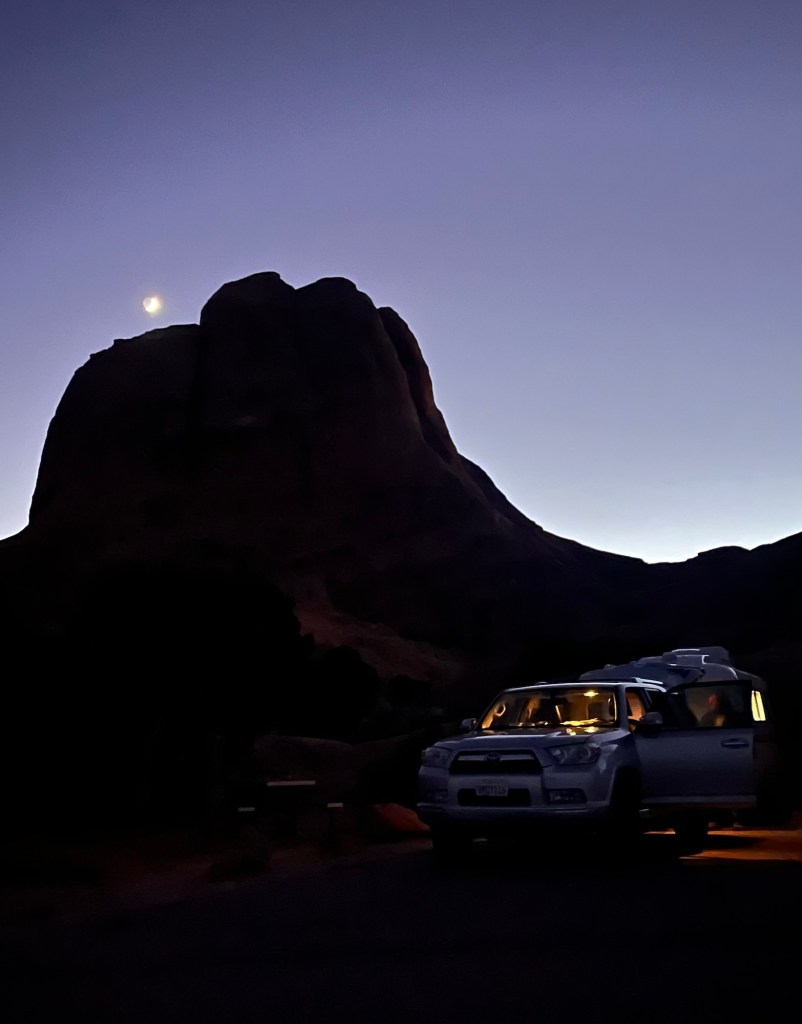
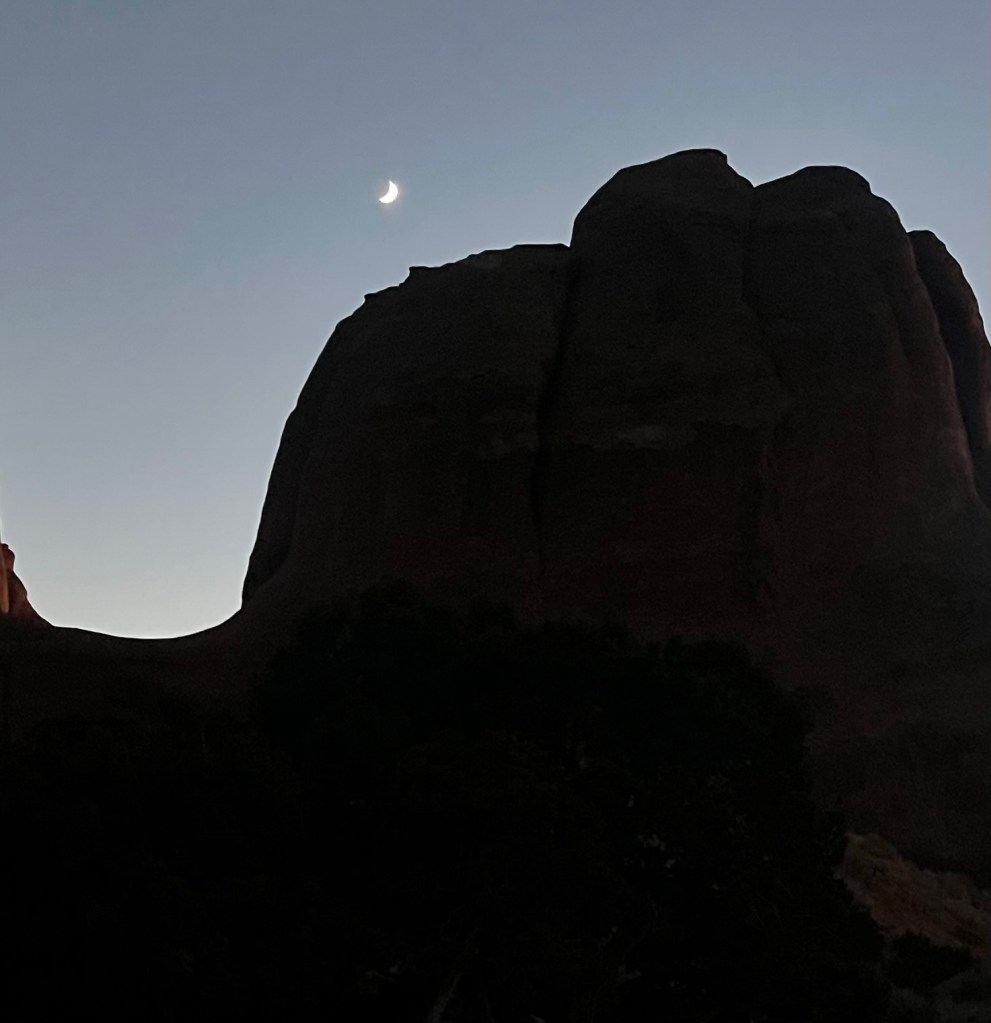
    The campground is a black sky location which means artificial light is at a minimum and the sky is a dazzling array of stars.

    We definitely want to come back here again.

    Campsite at night with moon rising

  • November 23

    We left the Mesa Verde area and headed out to Arches National Park in Utah. We drove through rain and snow and lite traffic. The rain got some of the road grime off the car and Casita.

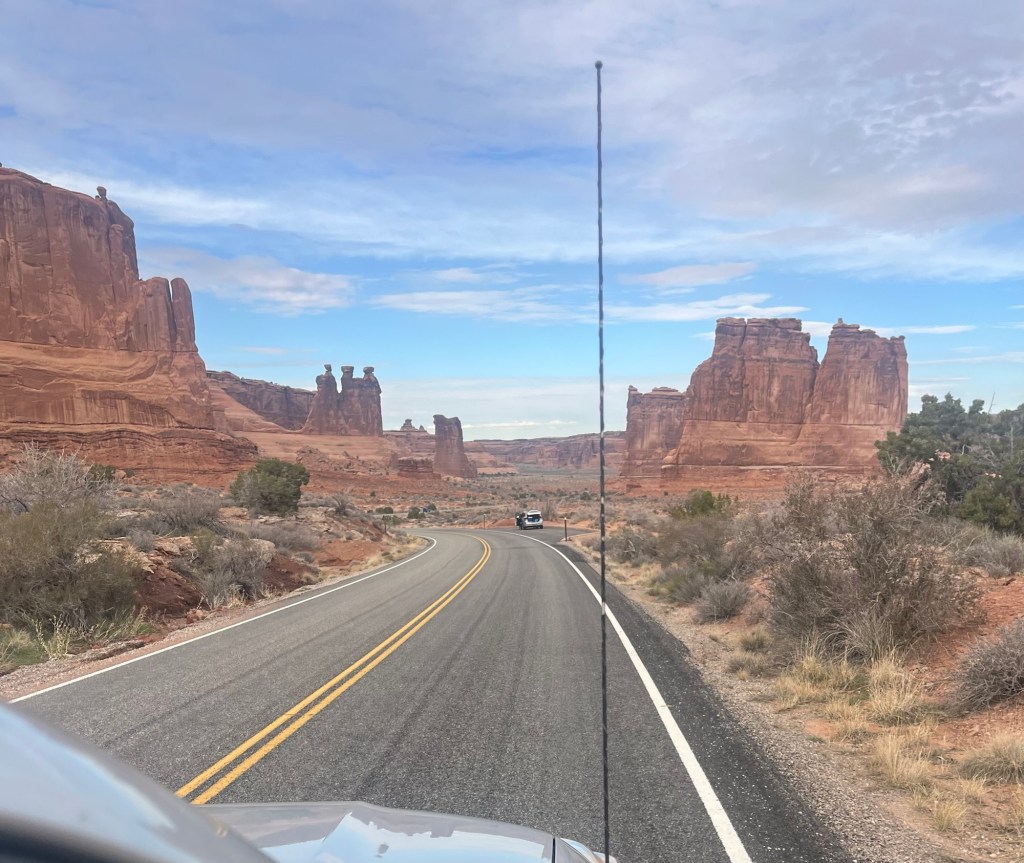
    Entering Arches NP

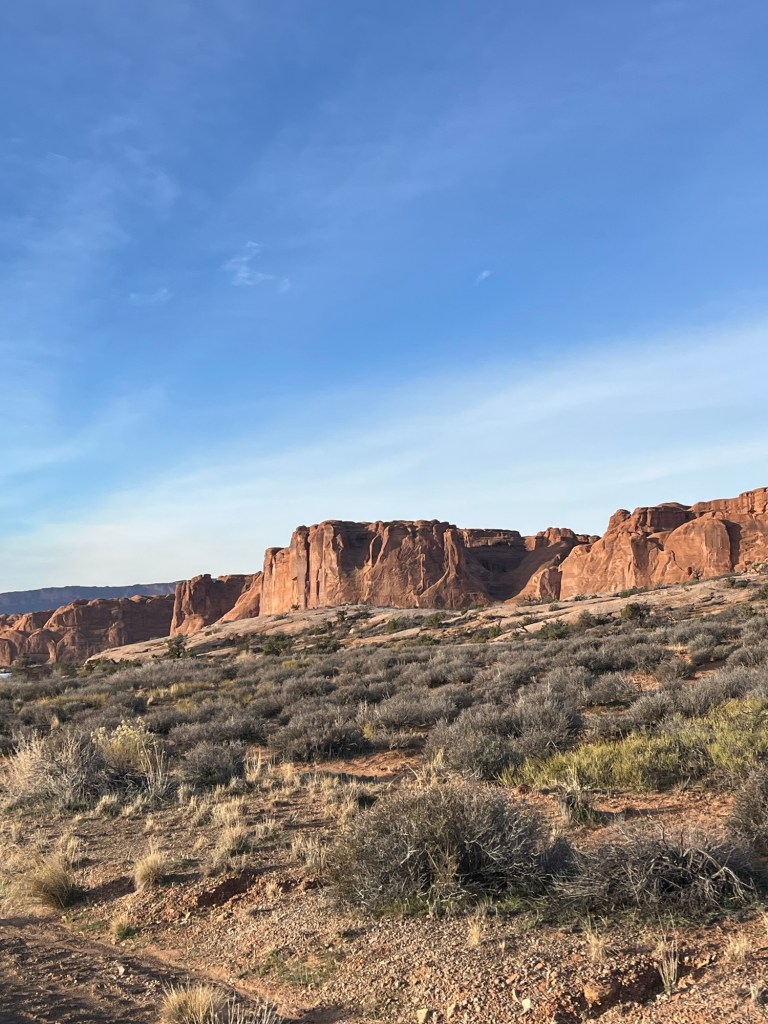
    Arches National Park is usually almost impossible to get into. During peak season you have to have a specific time reservation to enter and tour the park. We have picked a good time of the year for our travels as we have been able to get campsites and park entrances without any problems. Same thing here at arches. It is cold (mid 30s to mid 50s) but spectacularly beautiful here.

    Balancing rock in Arches NP
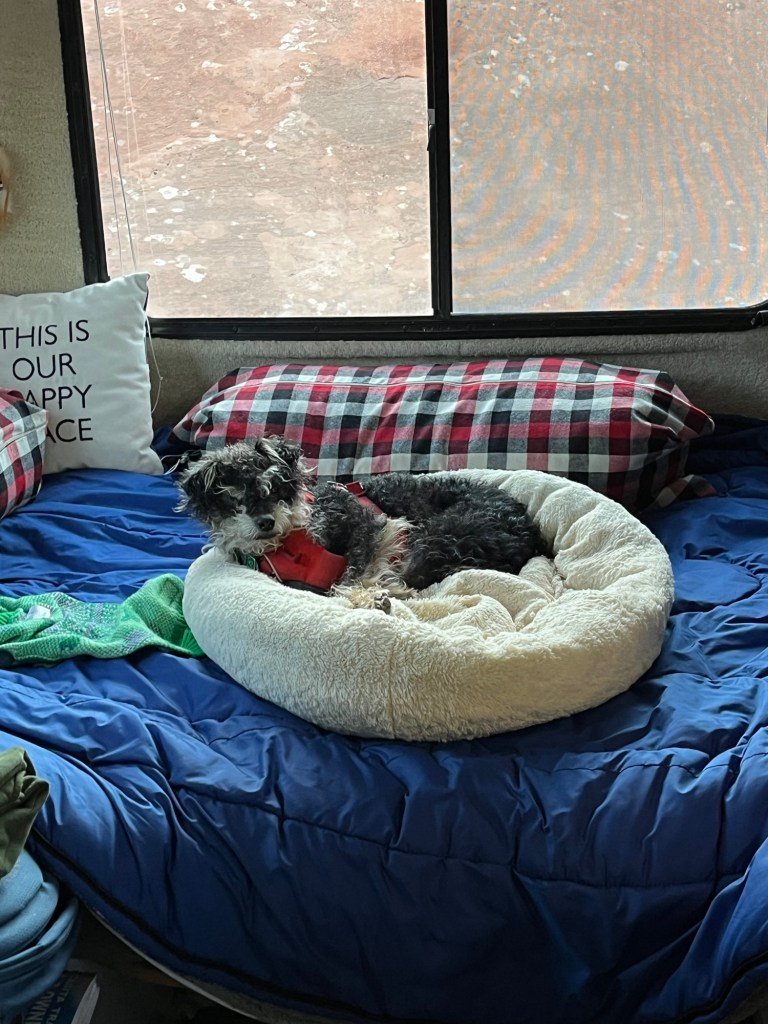
    Jasper chilling in the Casita.

    Tomorrow we will tour more of the park and do some hikes.

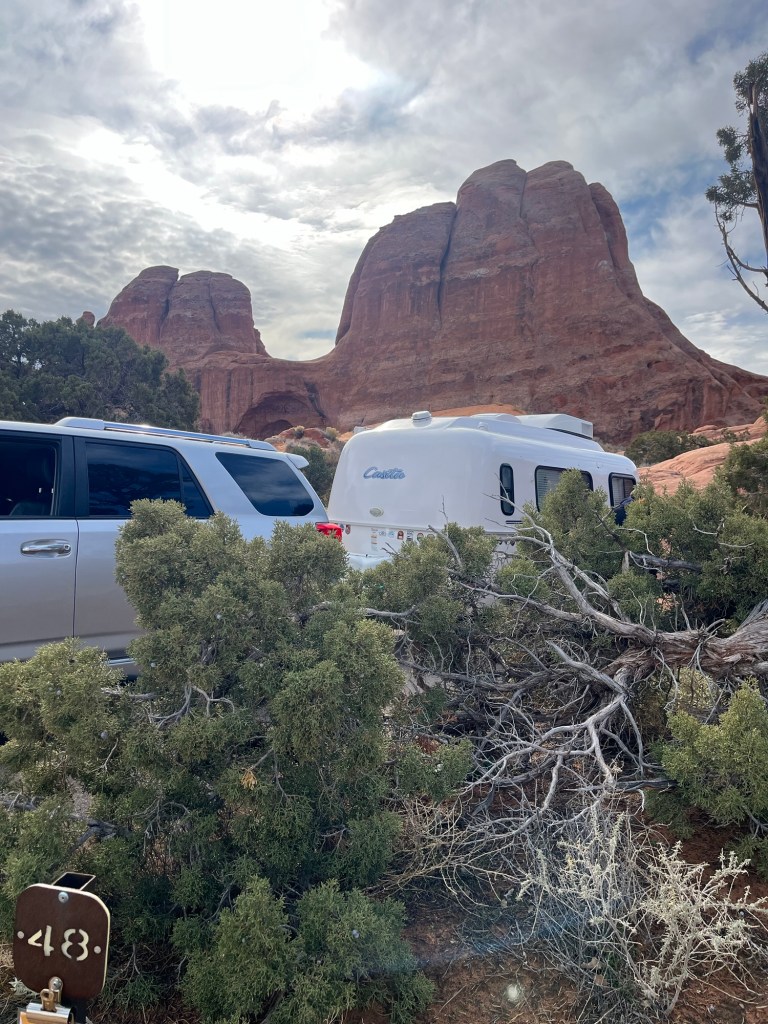
    Our campsite

  • November 22

    We woke to 30° weather—brrr.

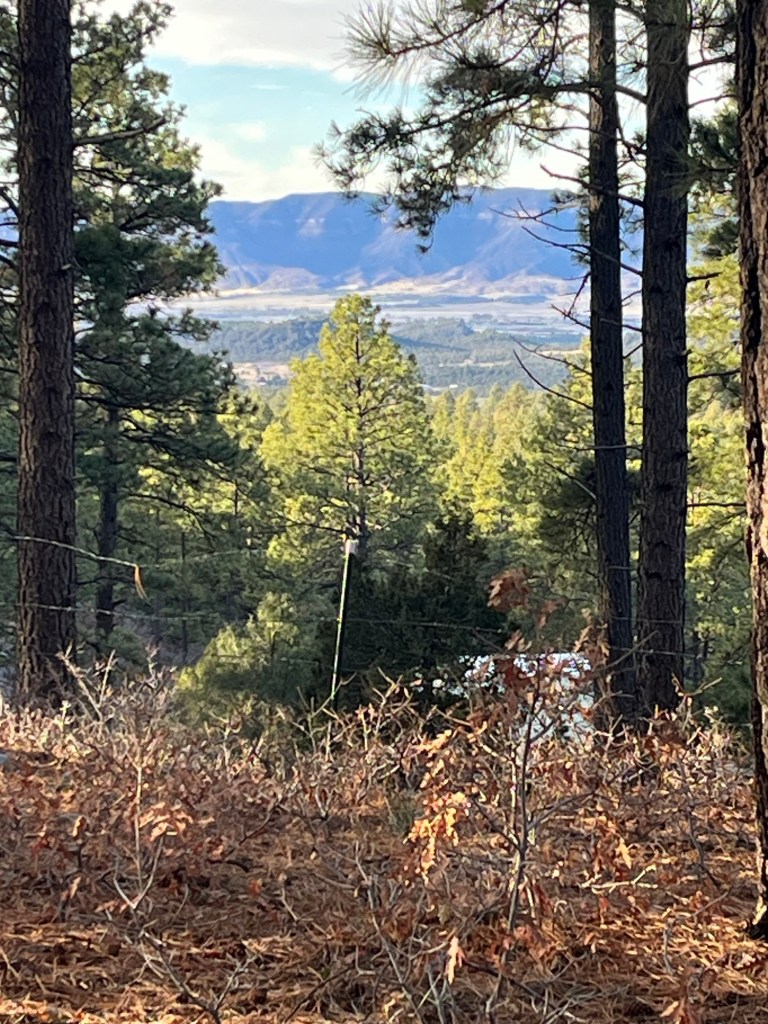
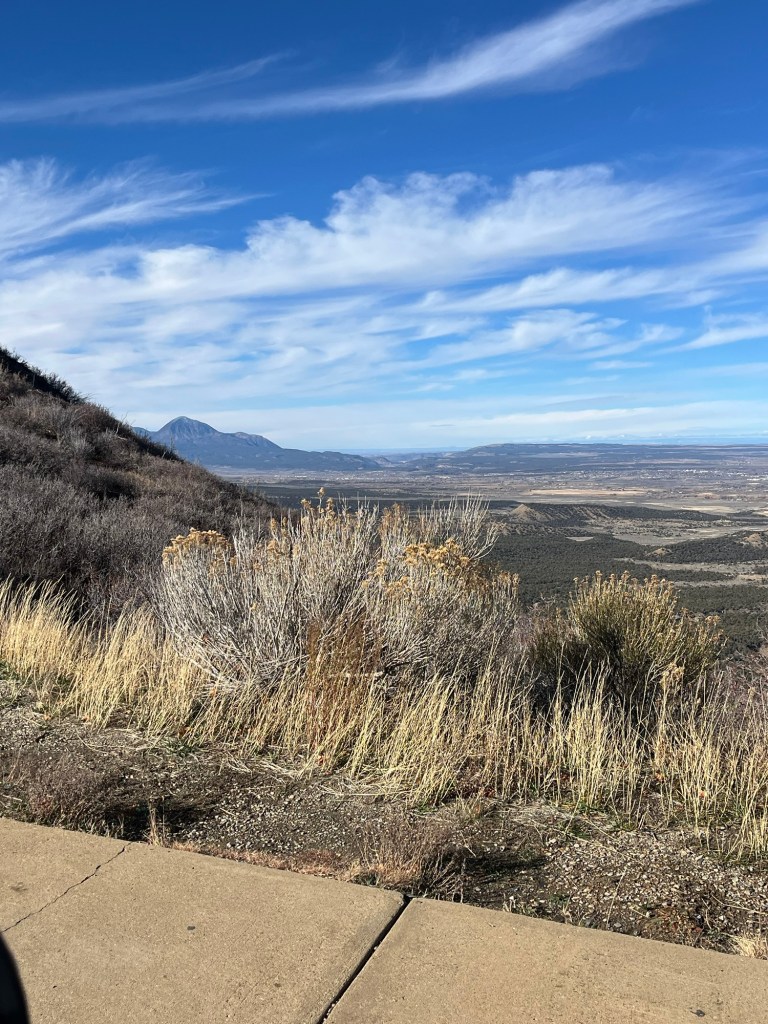
    The view from our campsite at 7800 feet elevation to the Valley below.

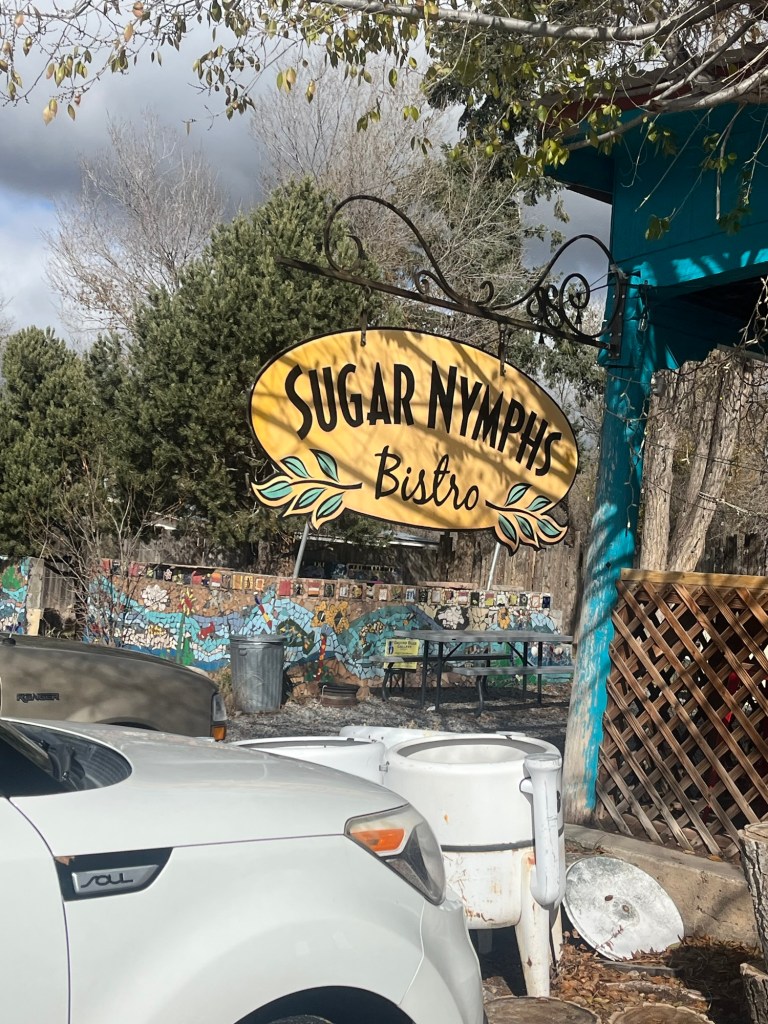
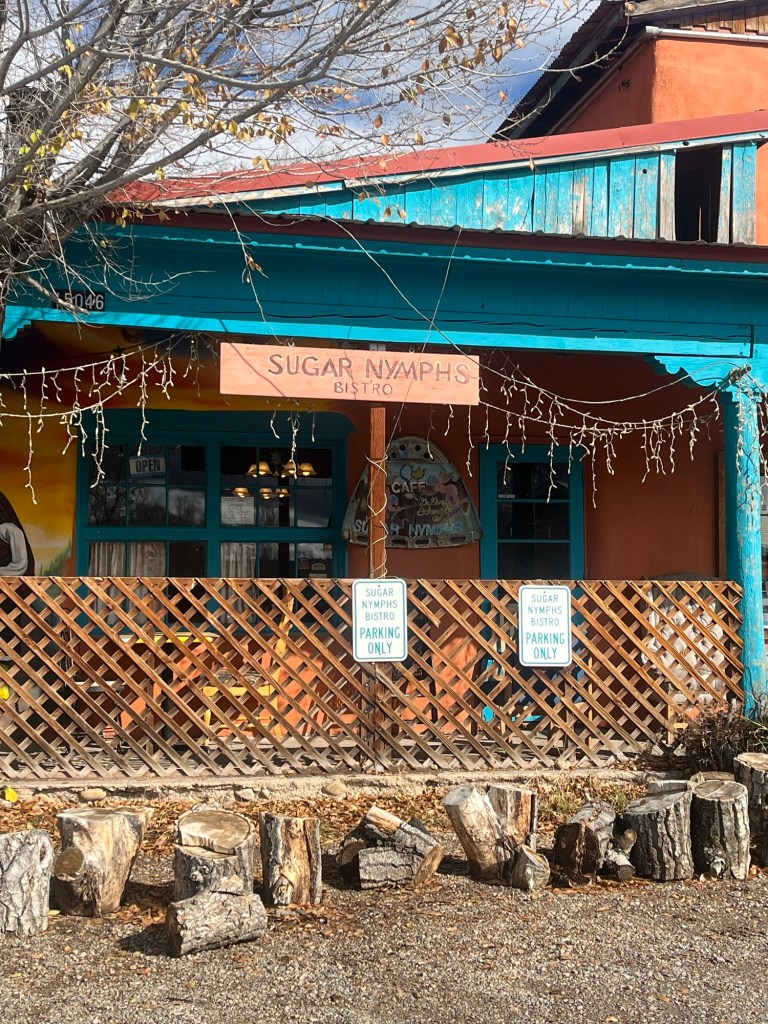
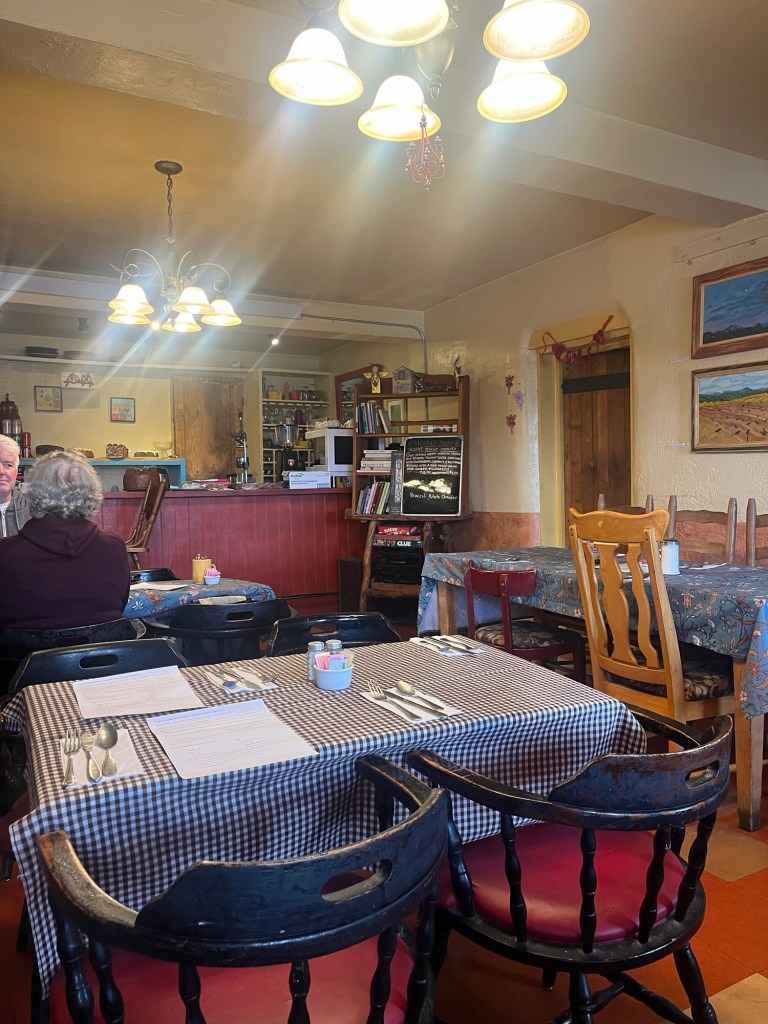
    Forgot to mention that yesterday our server at Sugar Nymph Bistro in the middle of nowhere New Mexico grew up on Lucas Drive in Lafayette. Small world.

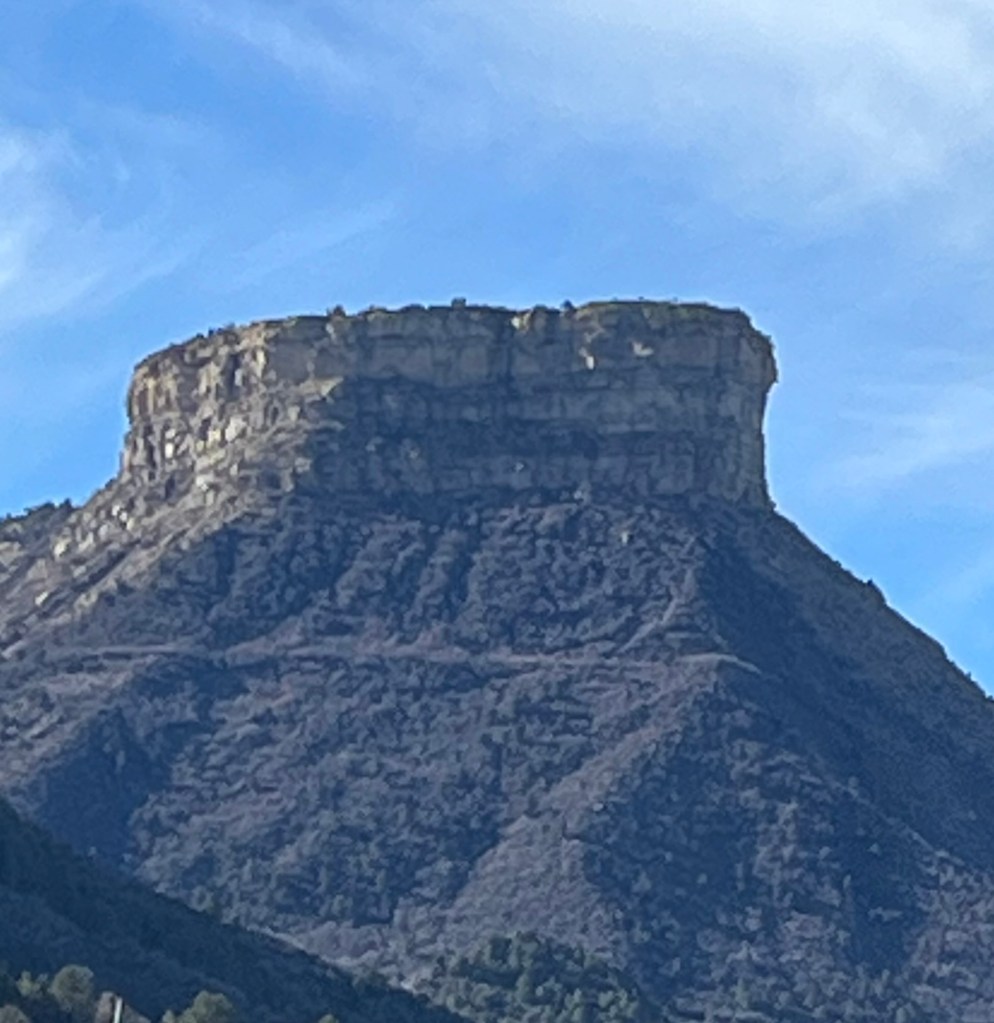
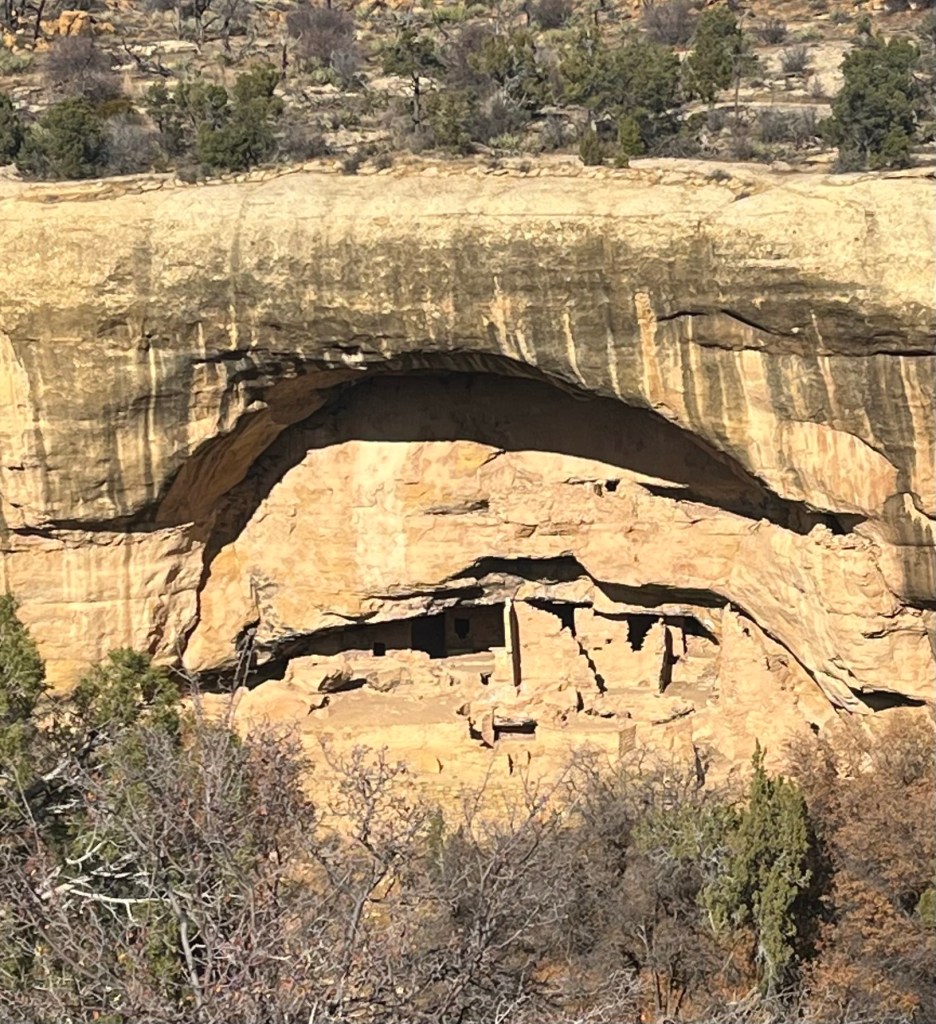
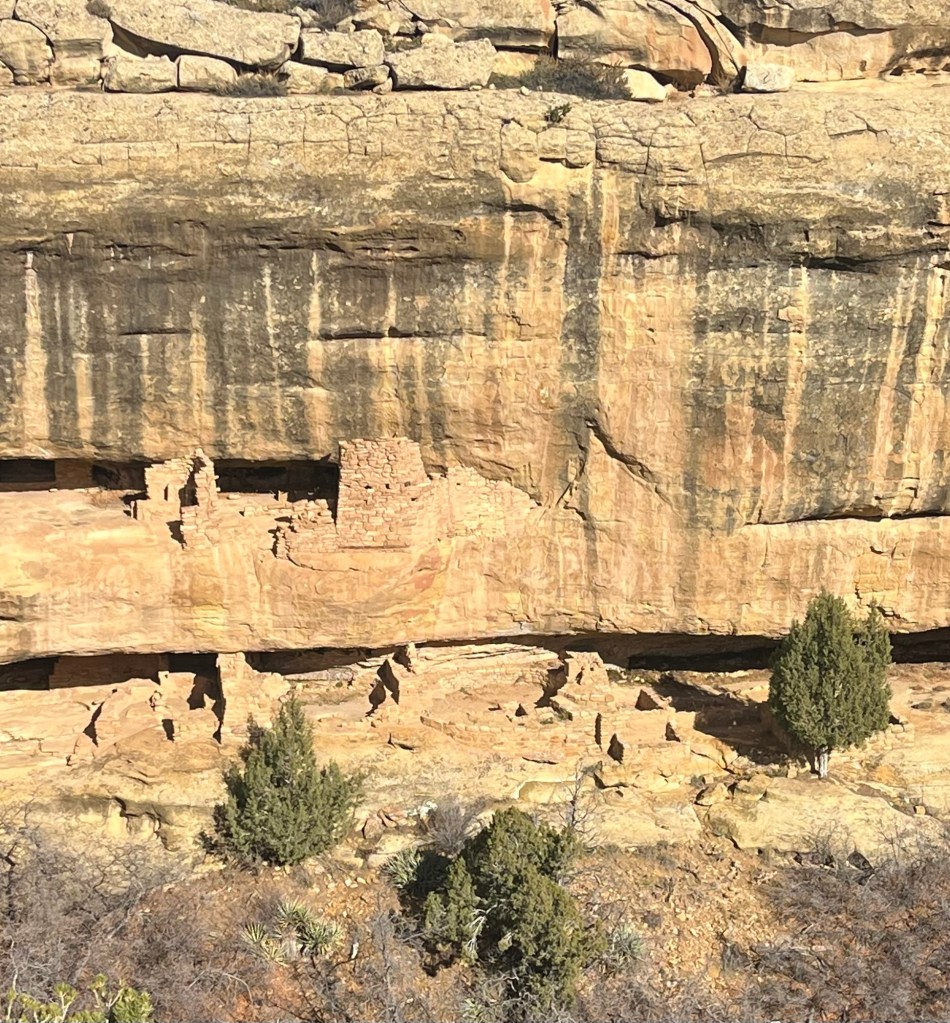
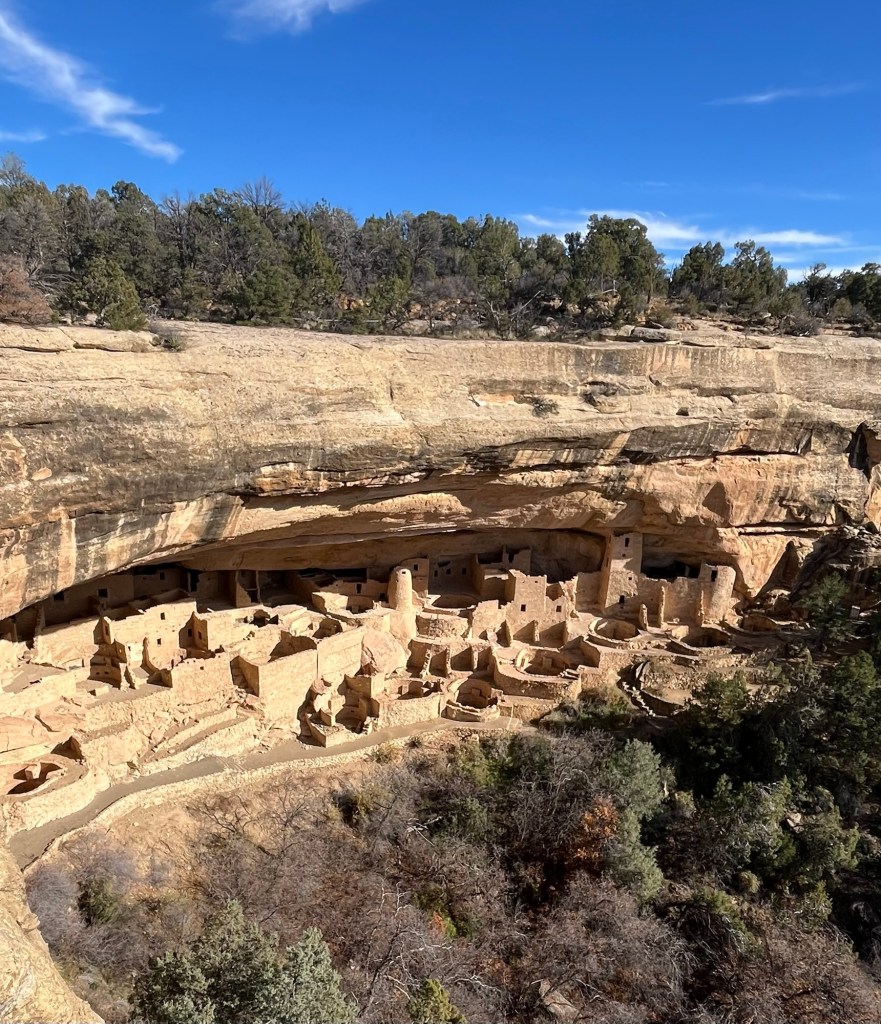
    We spent the day at Mesa Verde National Park. This park has been on my bucket list for years. We had cold, clear weather and very little traffic in the park.

    MVNP contains nearly 5000 known archaeological sites representing distinct periods between AD550 and AD 1300. MVNP was established by President Theodore Roosevelt in 1906. It is the only national park in the United States created to preserve ancestral Pueblo culture and prehistoric architecture.

    The move by the ancestral inhabitants to cliff dwellings began around AD 1200 and by mid-century there were more than 30 cliff dwellings. We learned that the cliff dwellers did not disappear but were part of a migration south to New Mexico and Arizona where they established the pueblos—Acoma, Hopi, Jemez, Laguna, Nambe, Navajo, Ute, Taos, Zuni— to mention a few.

    Southwest Native Americans are known for their gorgeous pottery. We learned today that pottery began in Mexico and through trade and travel became part of the Native American culture in Arizona and New Mexico.

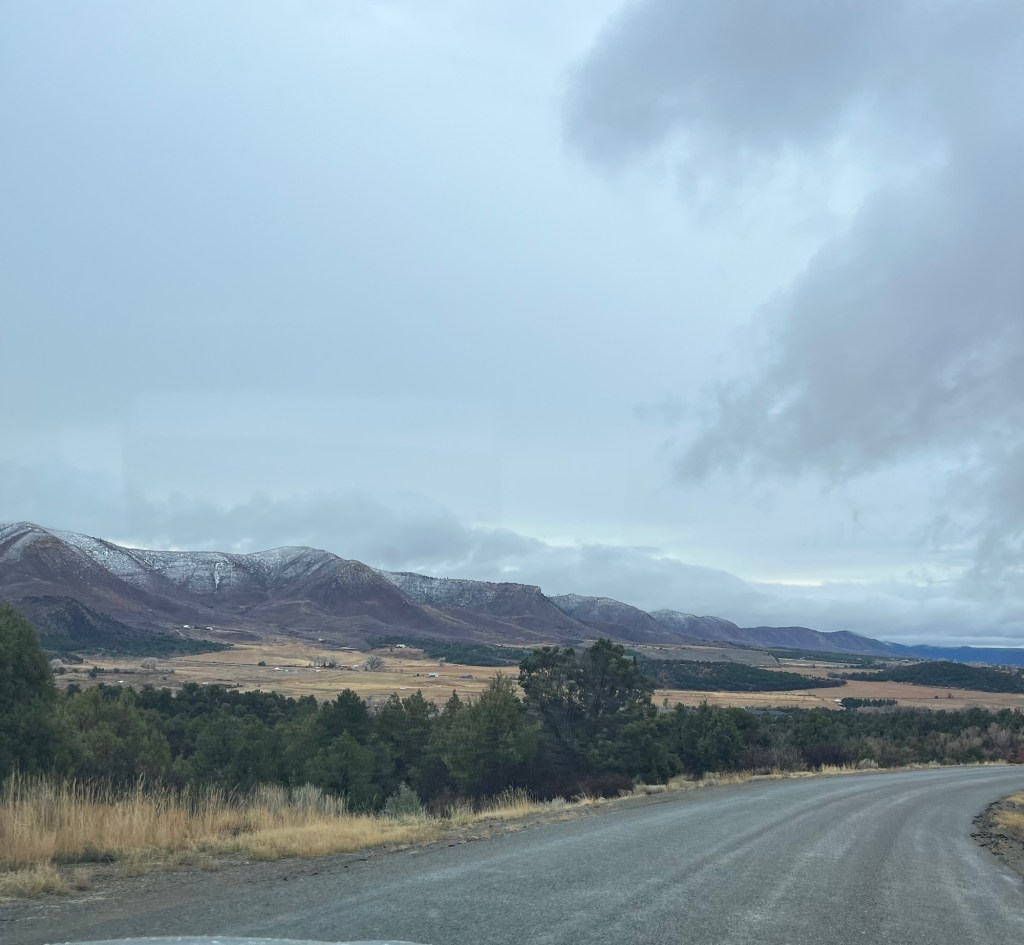
    The drive towards Mesa Verde
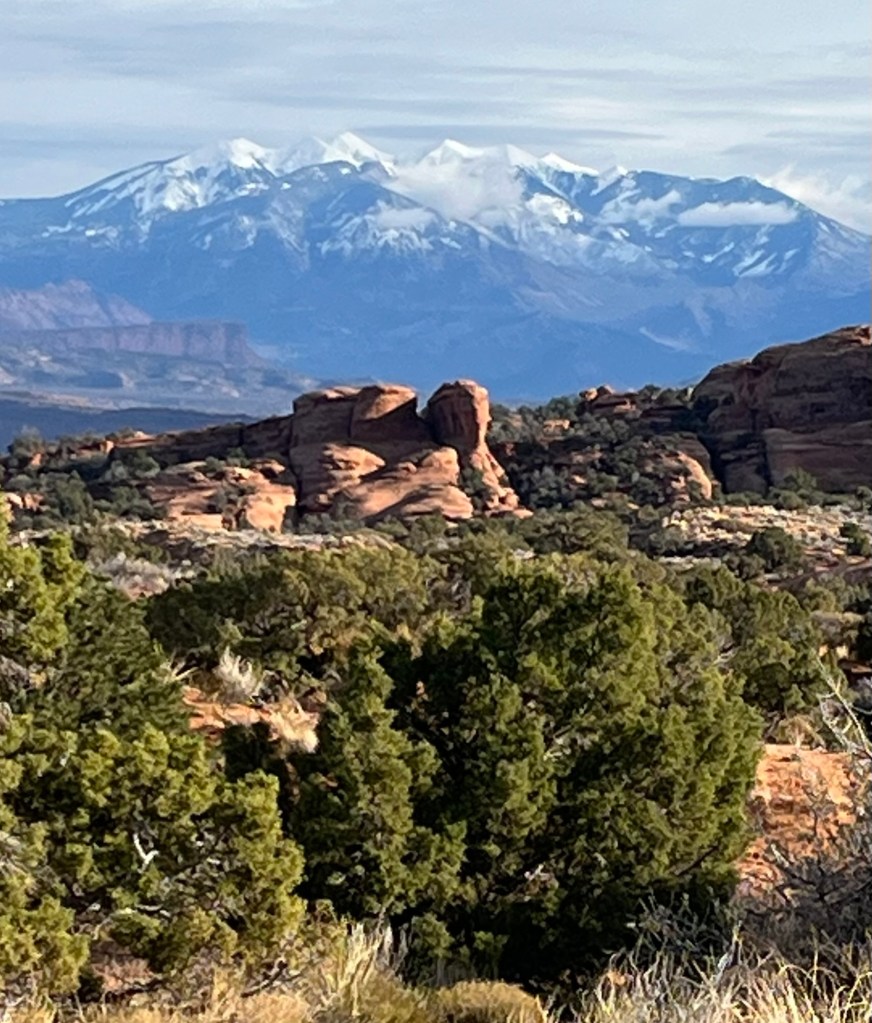
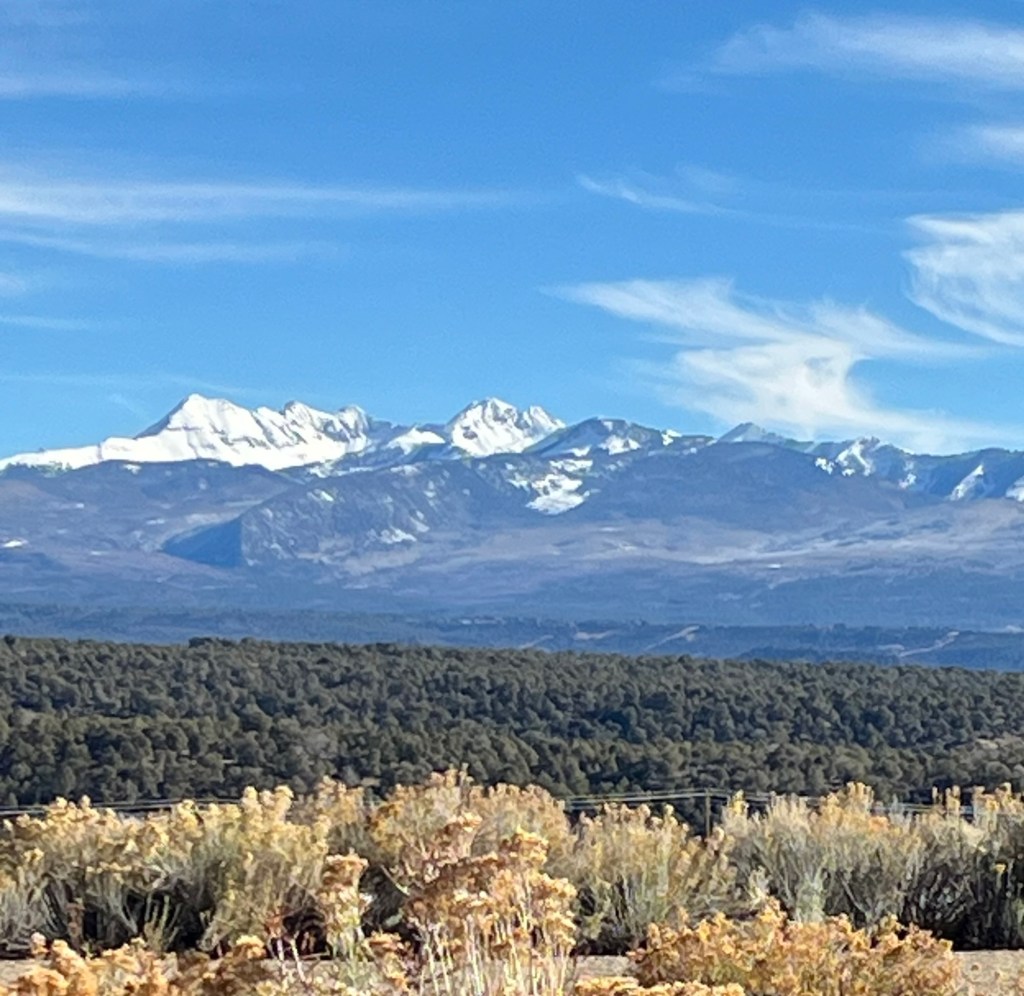
    Snow on the mountain peaks
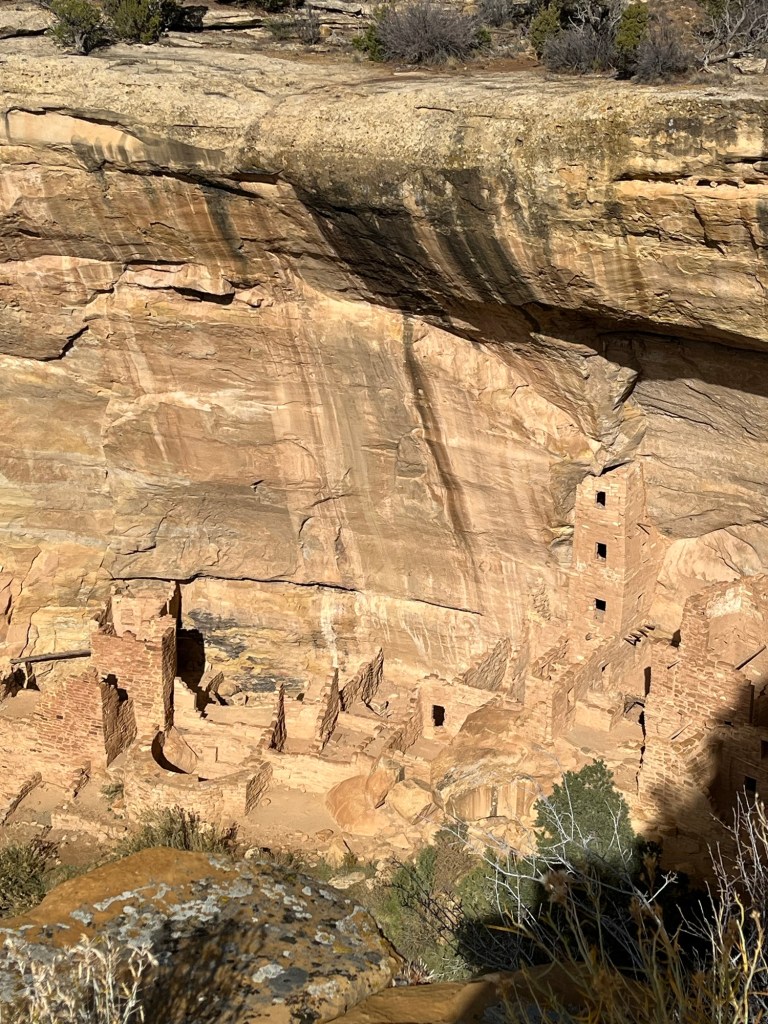
    Square Tower House  which is 27 feet high and is the tallest dwelling in Mesa Verde. The tower is what remains of a stair stepped multistory complex built between 1244 and 1249.
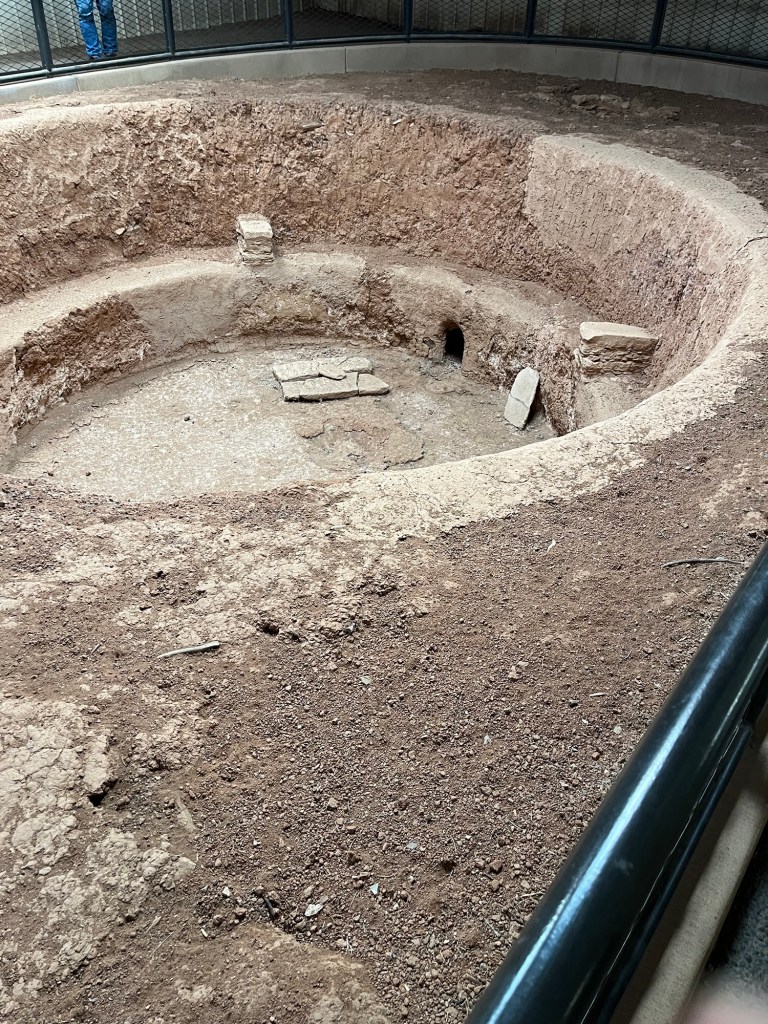
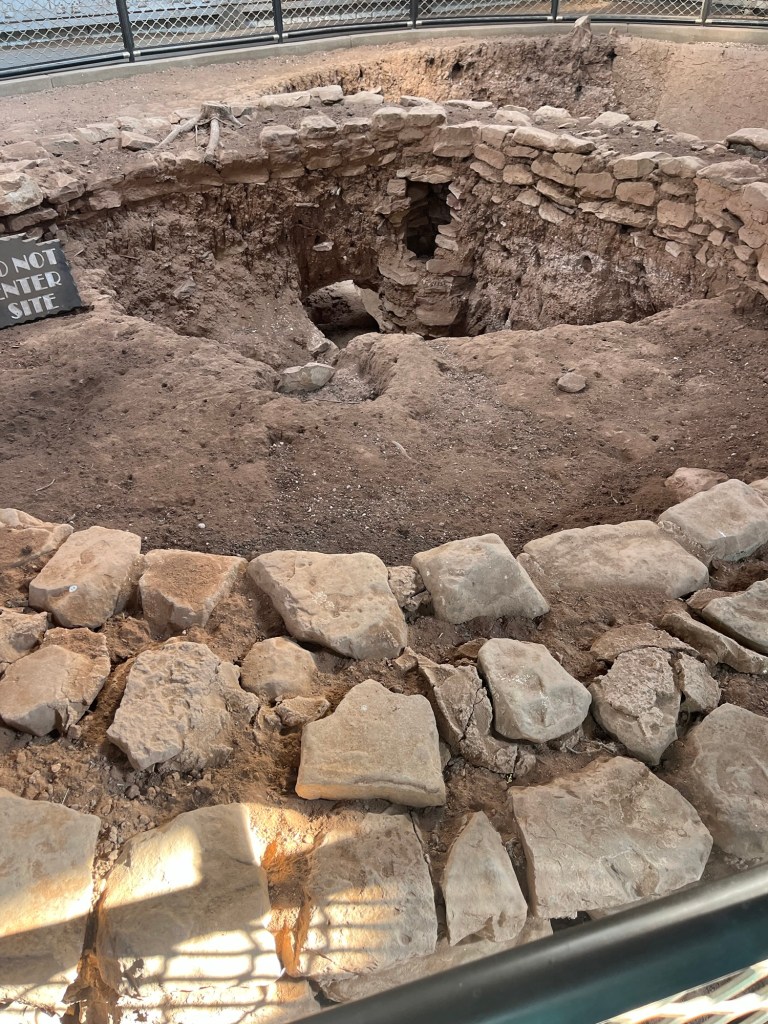
    What remains of Pithouse architecture. There was usually a roof over it and was cool in the summer and warm in the winter.
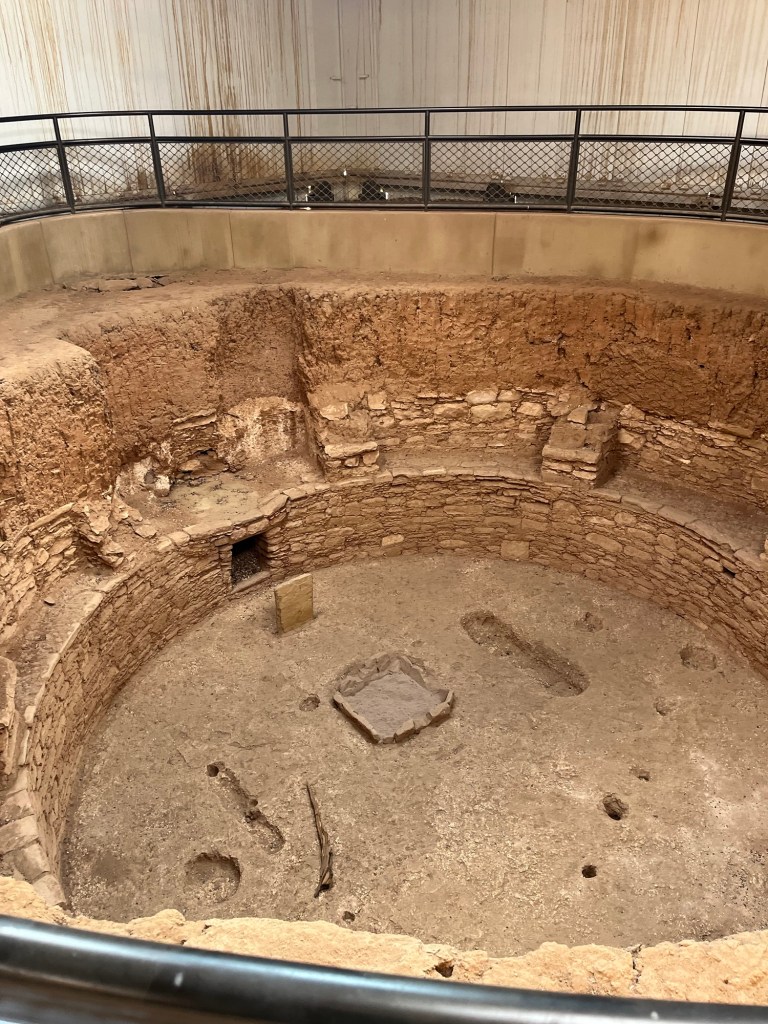
    Pithouse architecture is the basis for kivas. Kivas were used predominately by males for religious ceremonies.
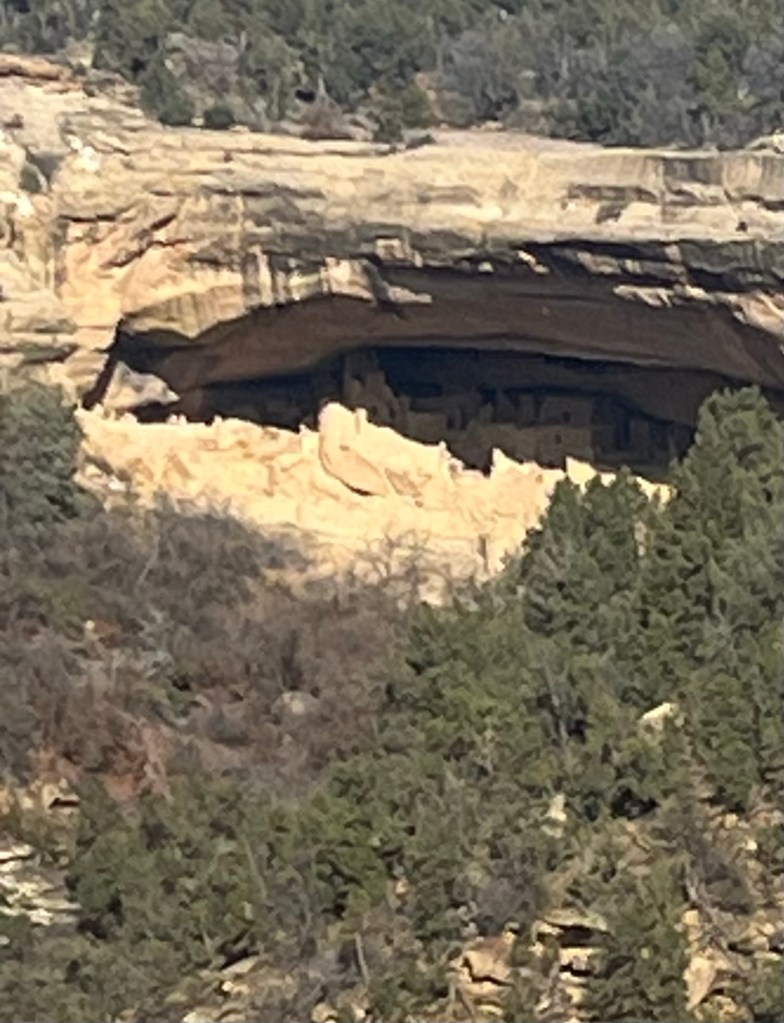
    Cliff Palace had at least 150 rooms and 21 kivas. Scholars believe it was an important place for many ancestral Pueblo villages
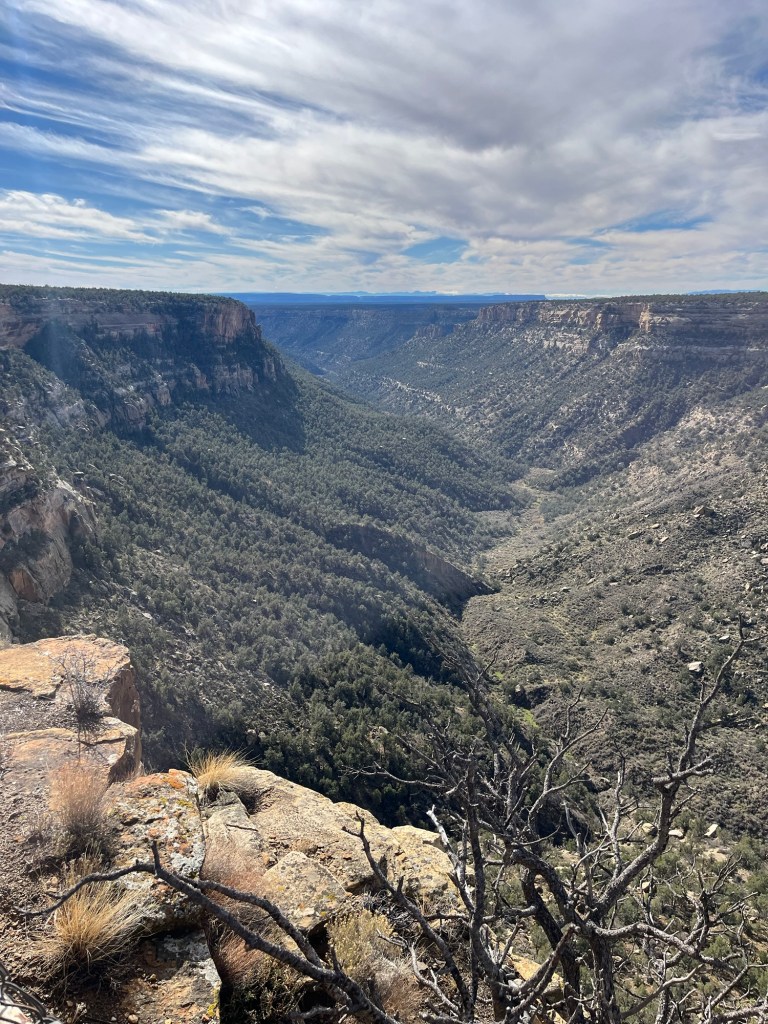
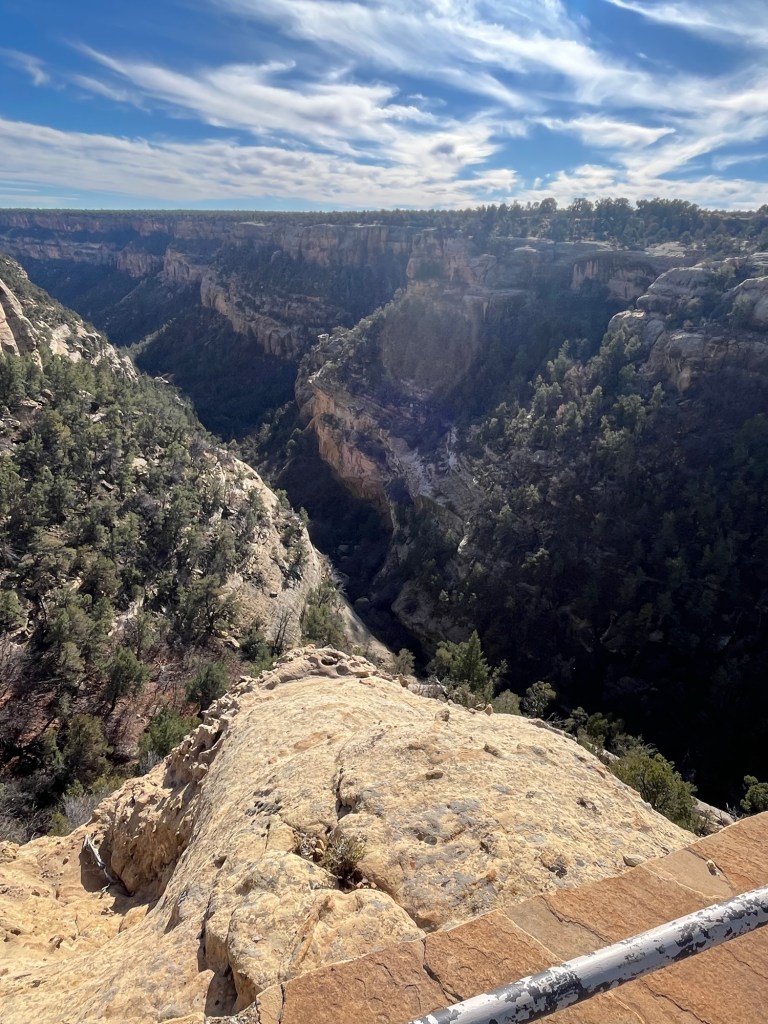
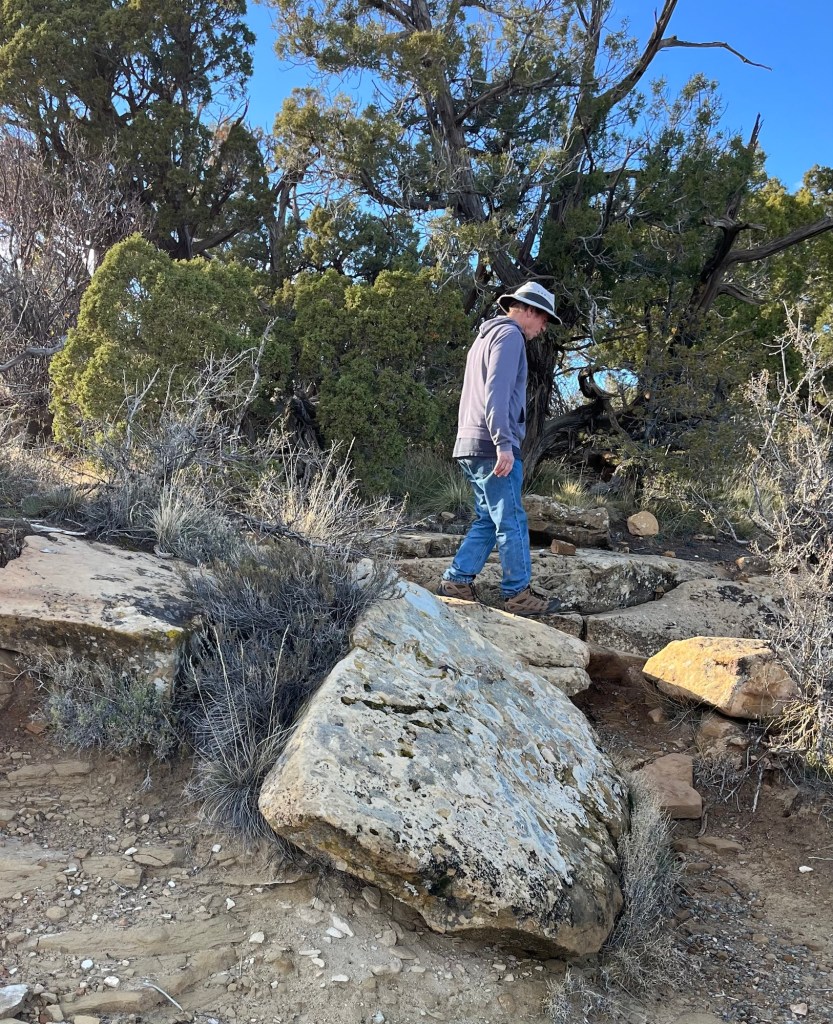
    We took a hike on the Mesa to the edge of the cliffs.
    On the drive out of Mesa Verde.

    Steve visited MVNP about 60+ years ago and had been traumatized by a mummy, “Esther”, in the museum. He asked about Esther today and found out that she has been properly buried along with Steve traumatic episode.

    Tomorrow we are heading to Arches National Park as we work our way towards Reno to celebrate Thanksgiving with Jackson and Megan.

  • November 20 and 21

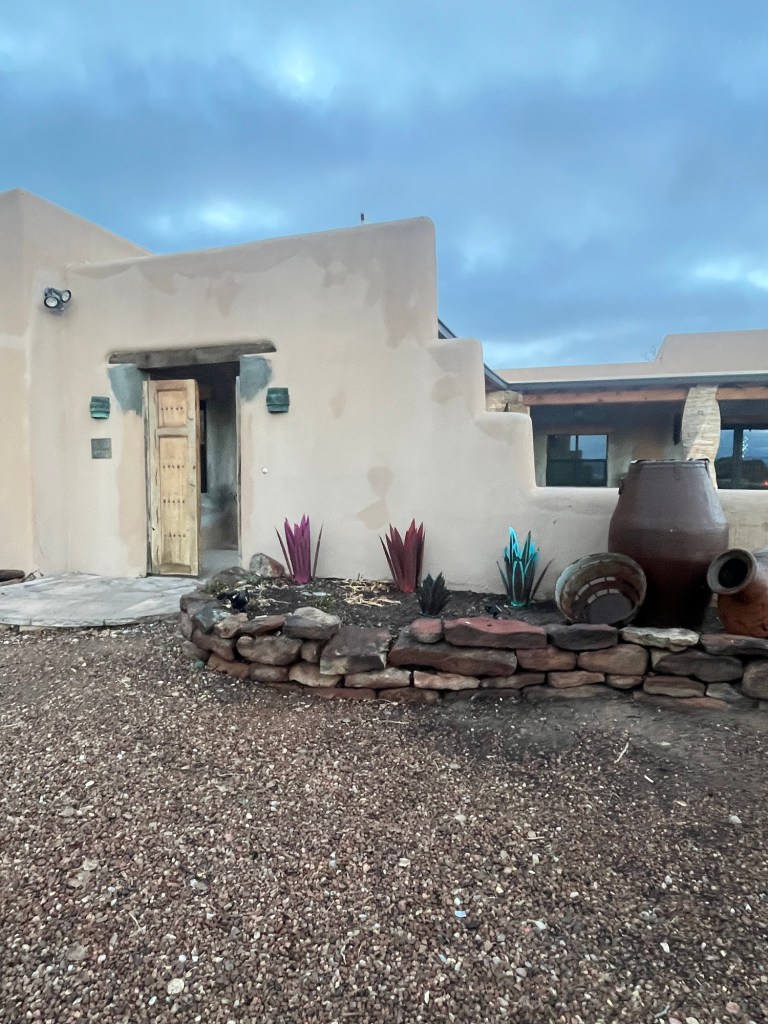
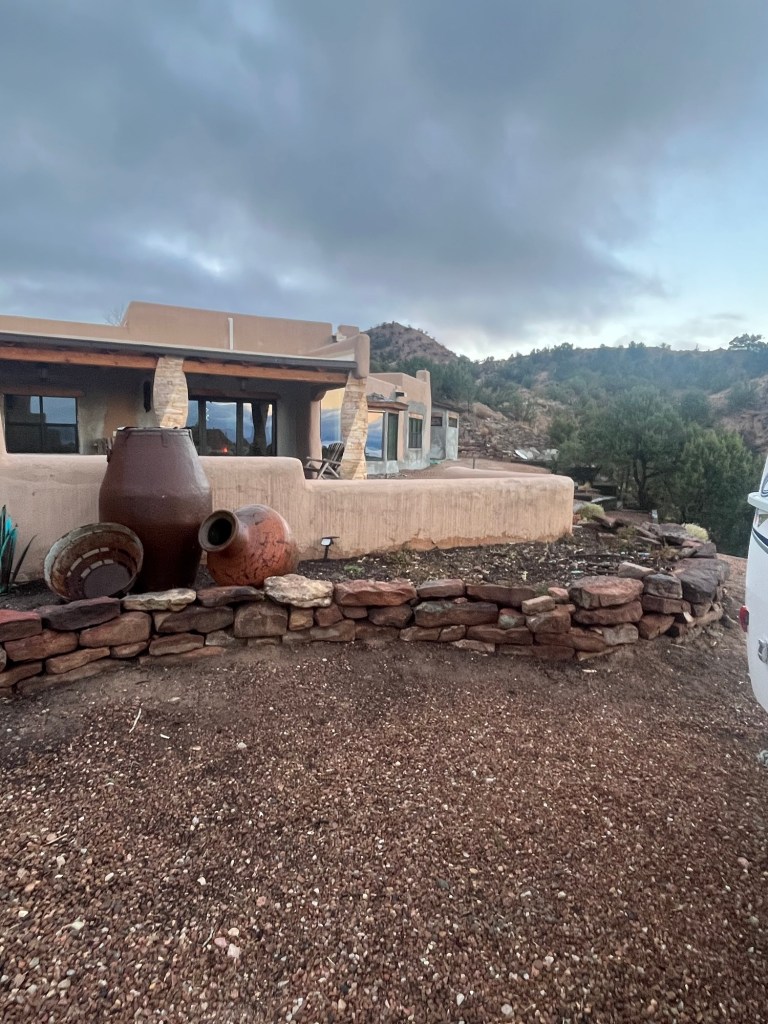
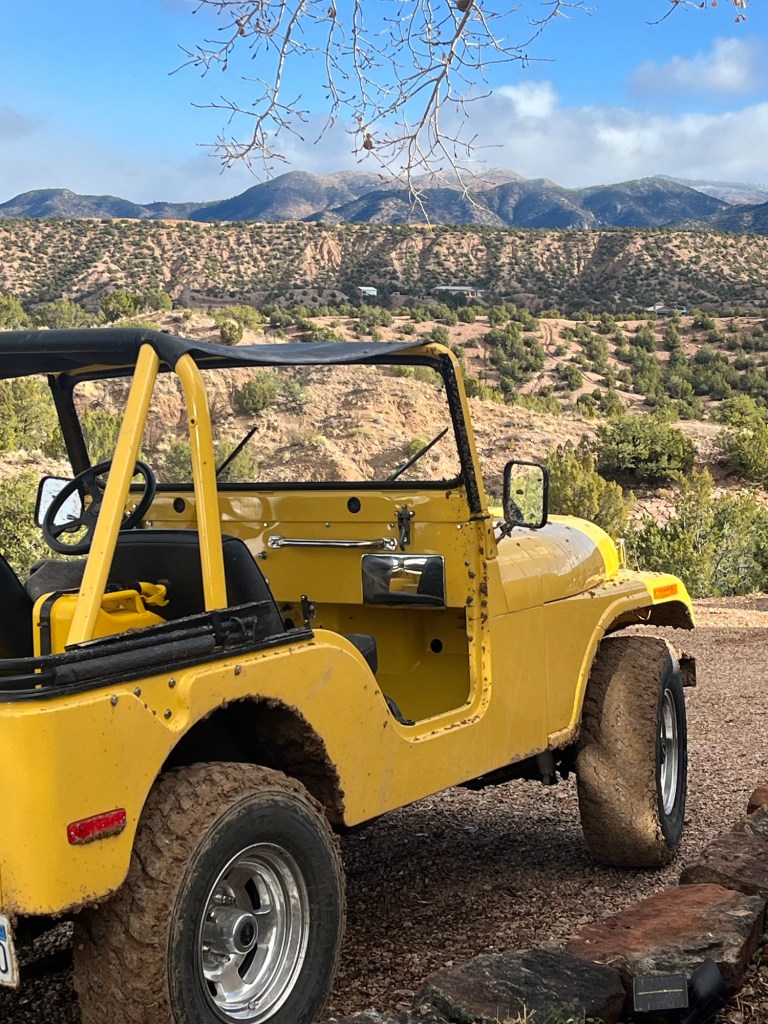
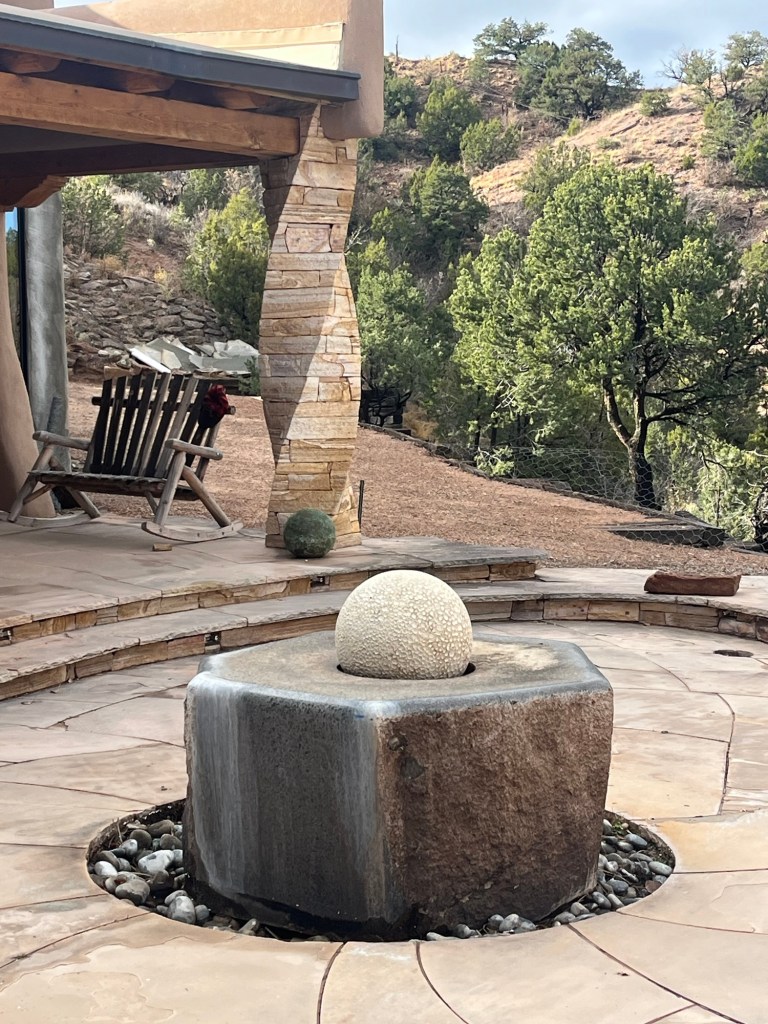
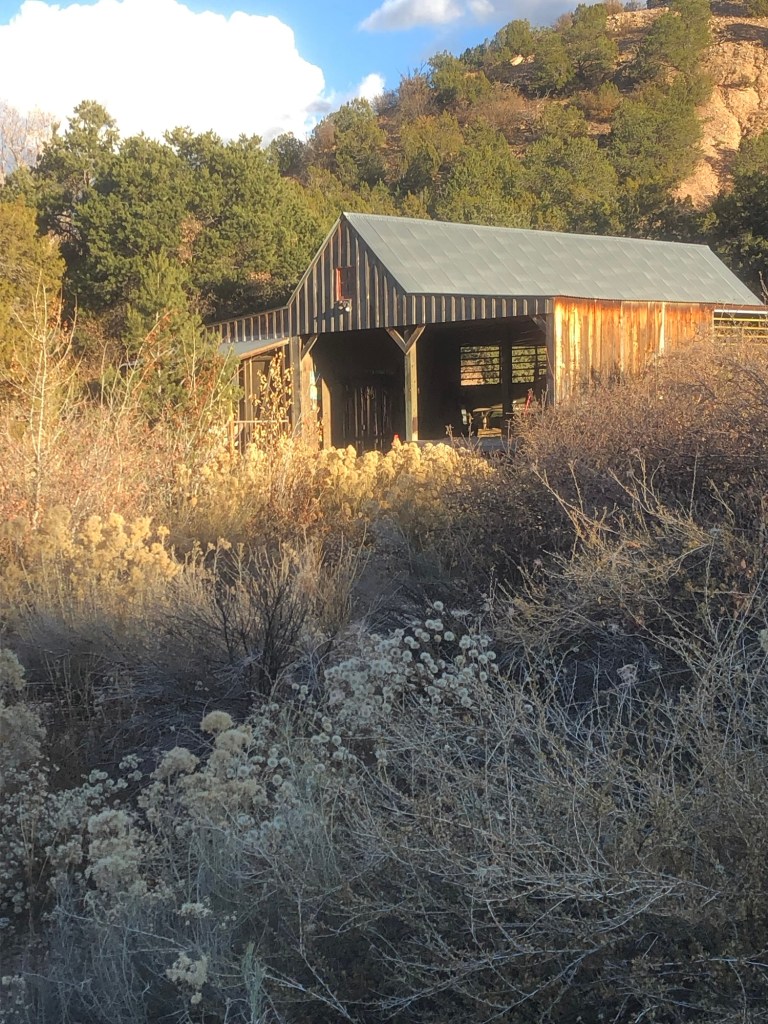
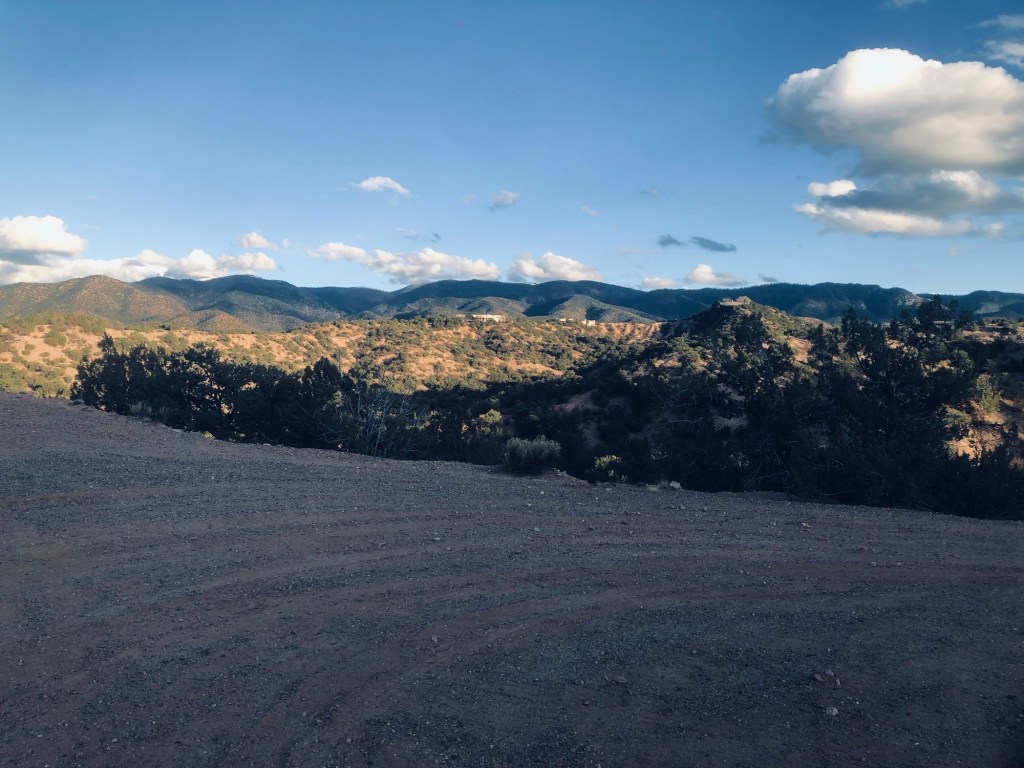
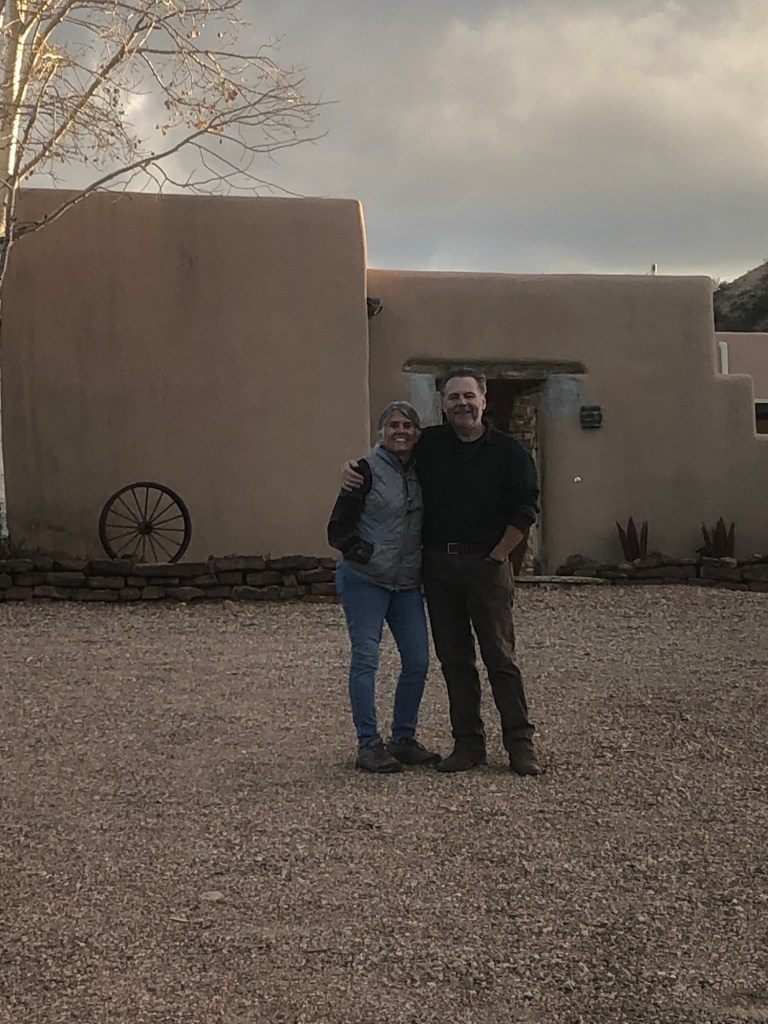
    Sunrise from David and Palma’s home plus some photos of their house from the outside.

    We reluctantly left Santa Fe after a great visit with David and Palma, touring around the beautiful city, and great meals at both at their house and in Santa Fe.

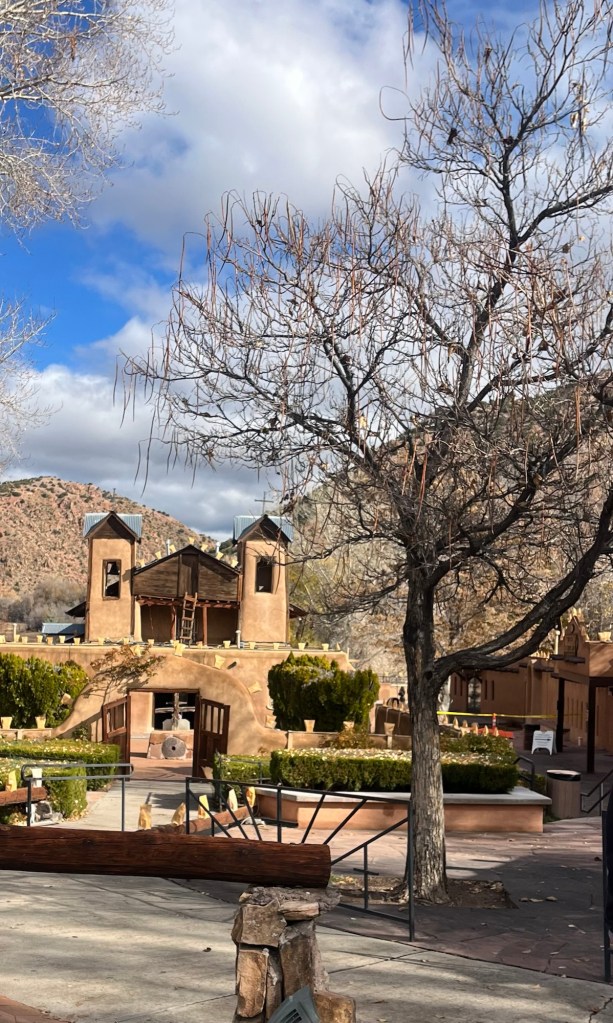
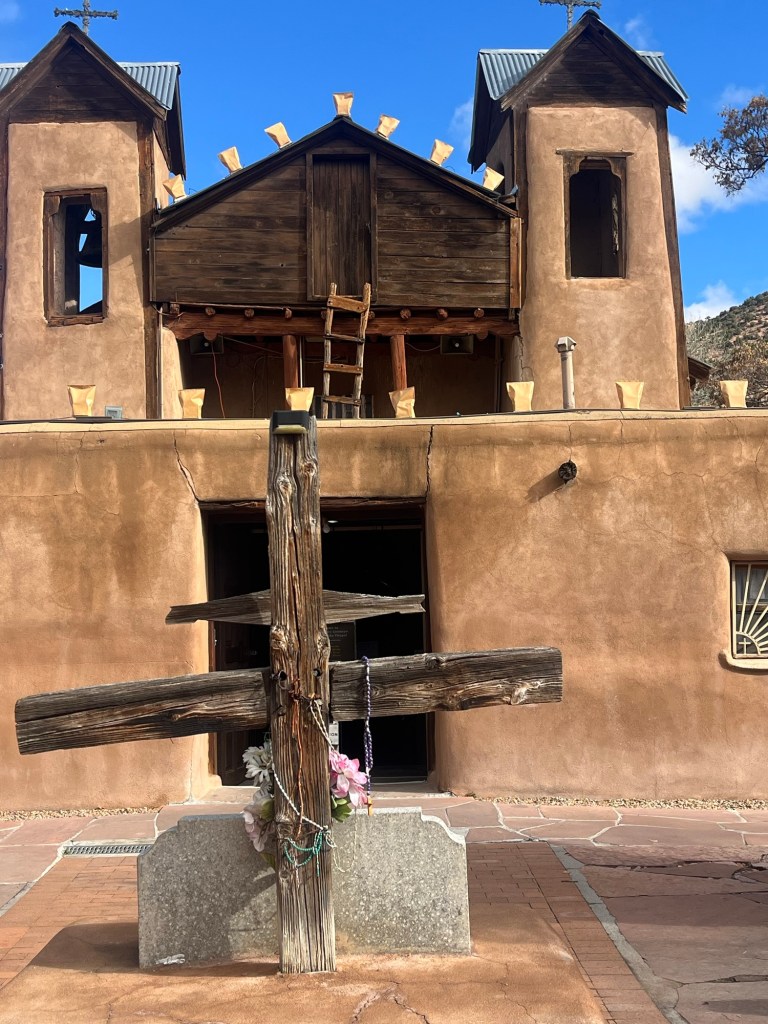
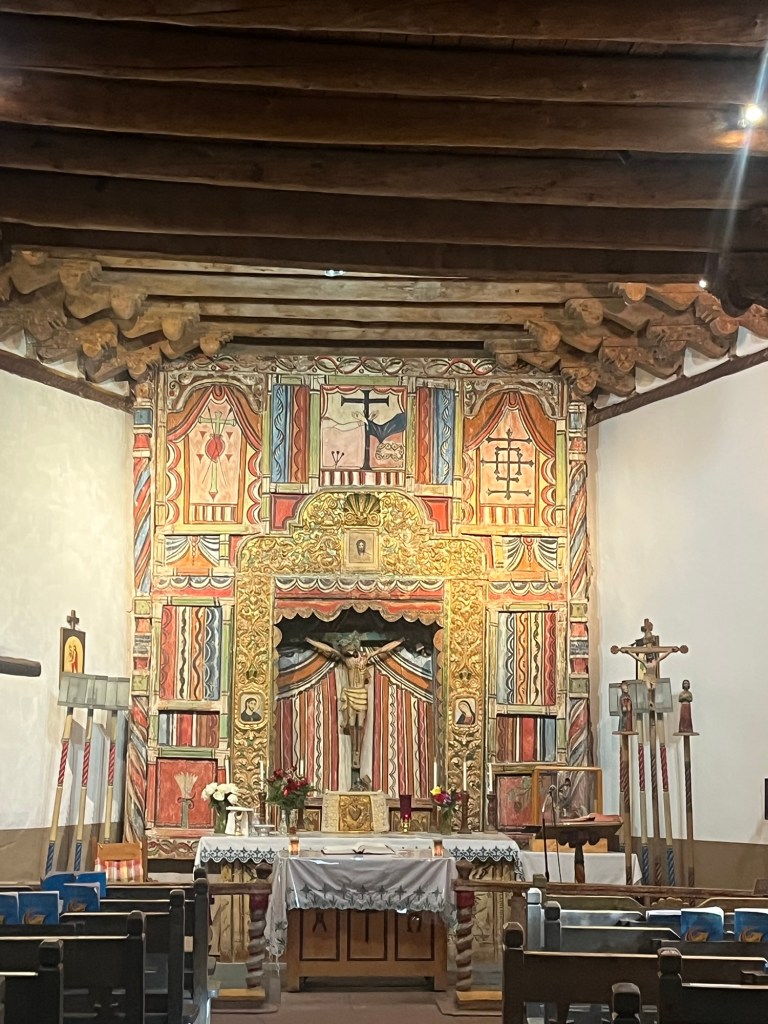
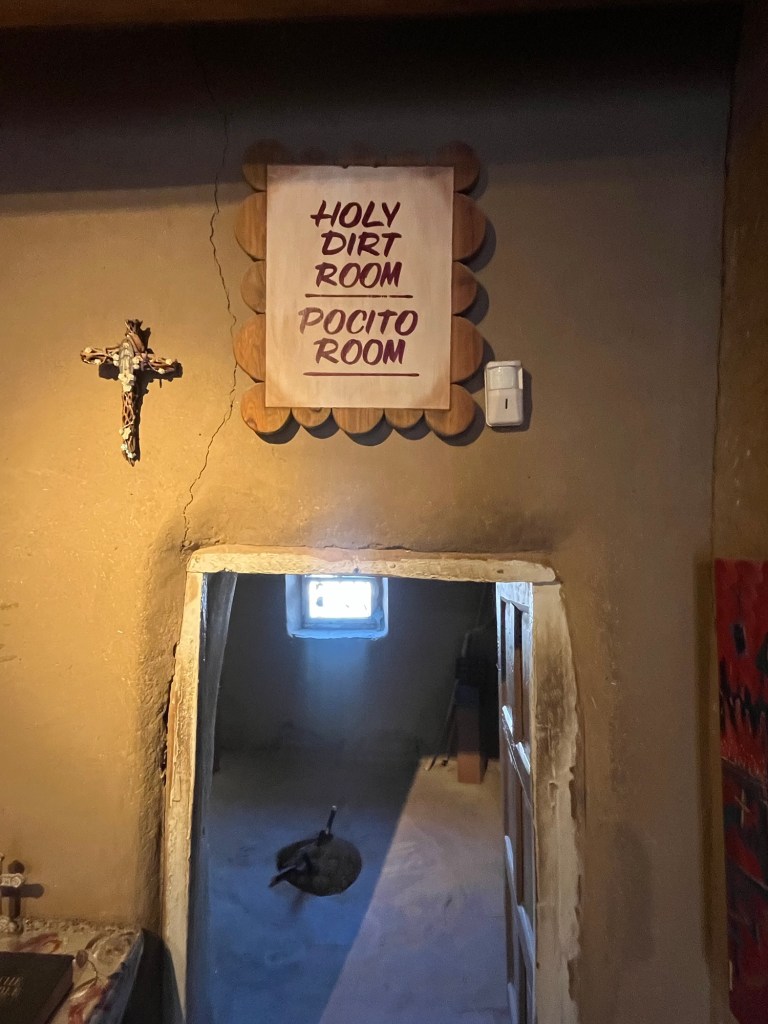
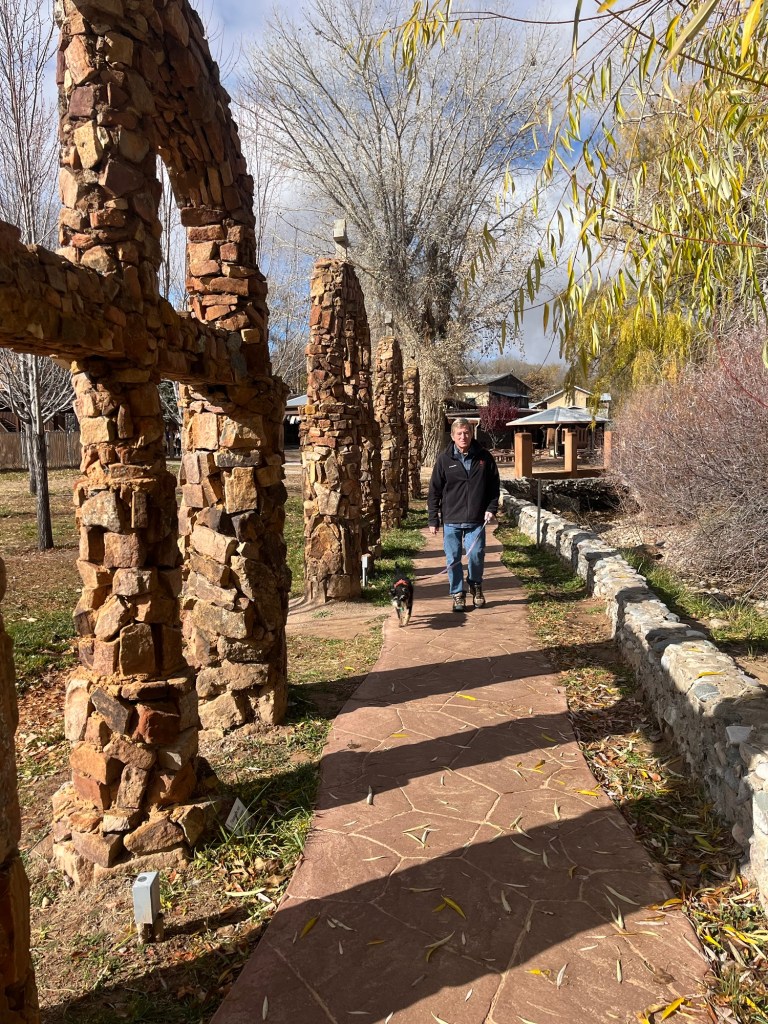
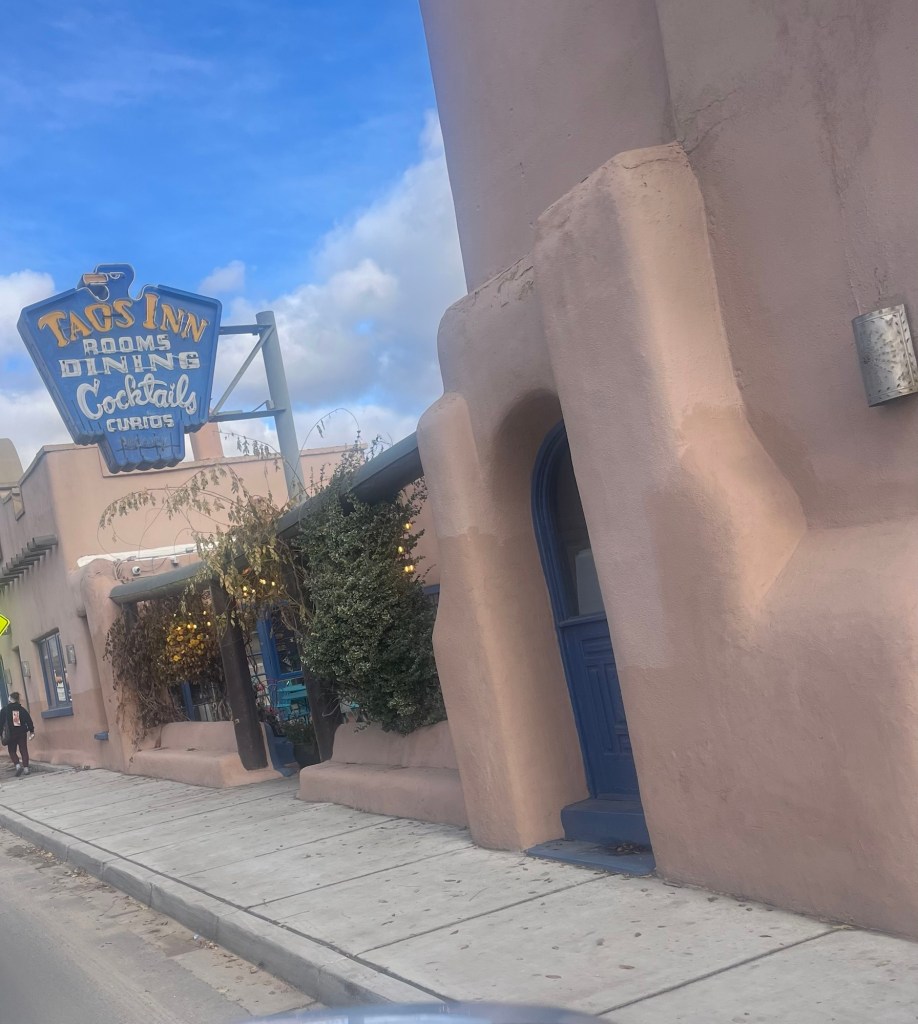
    We drove the High Road to Taos with a stop at El Santuario De Chimayo, and a great lunch at Sugar Nymph Bistro in Penasco.

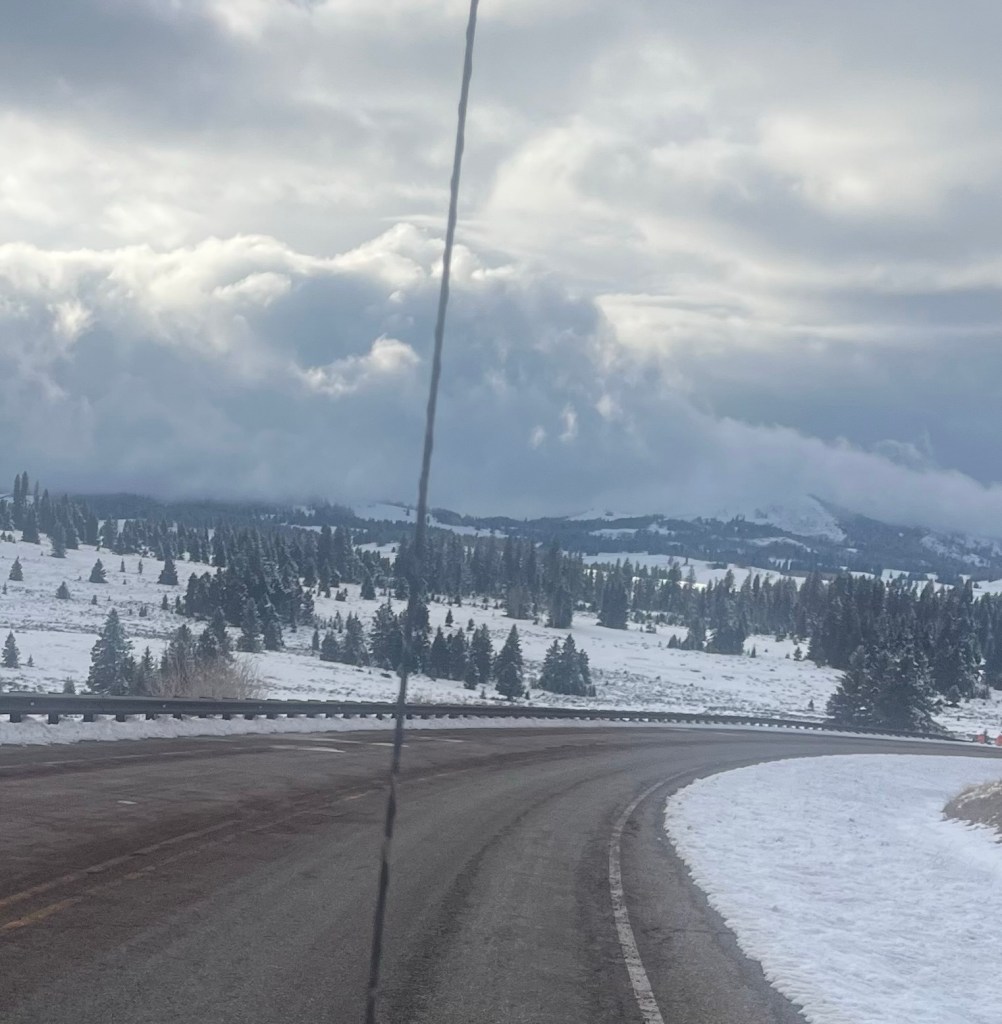
    After a brief drive around Taos, we headed to Mesa Verde through some stunning and solitary country and over a 10,000 foot high mountain range. About three weeks ago we were at 3 foot elevation in the Everglades. What a difference.

    Driving into Taos
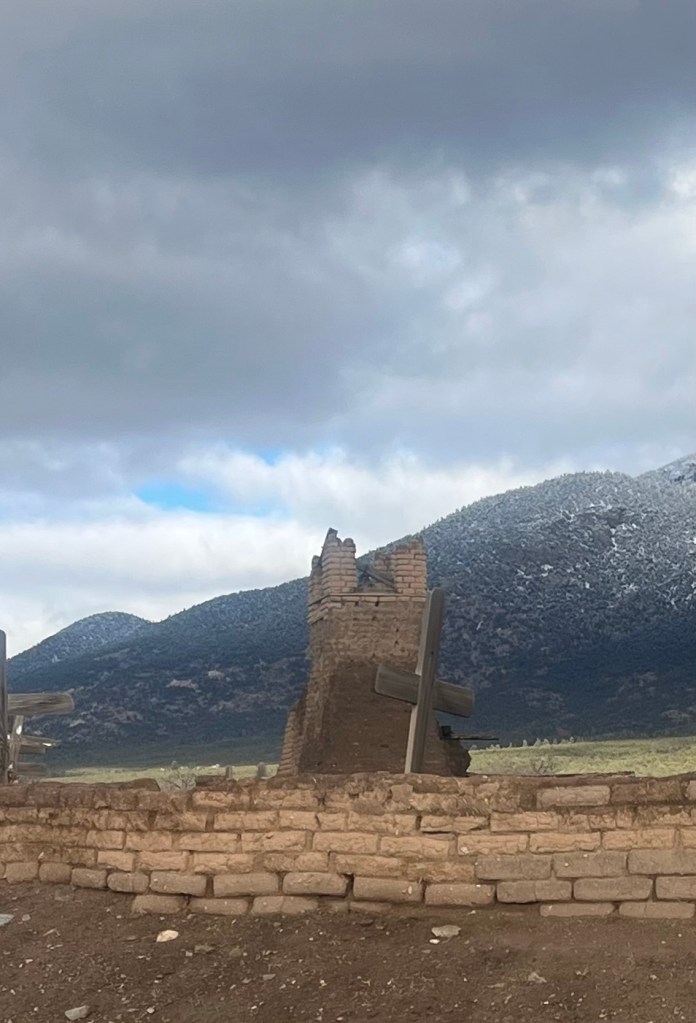
    Remnants of a building at Taos Pueblo
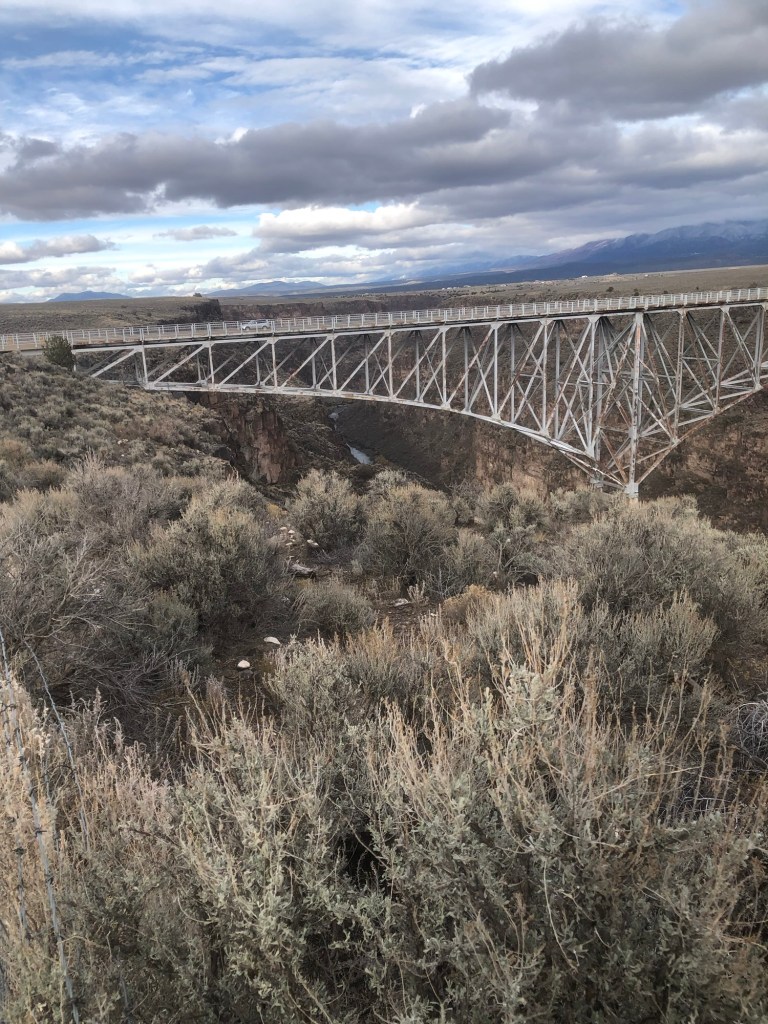
    Bridge over the Rio Grande River
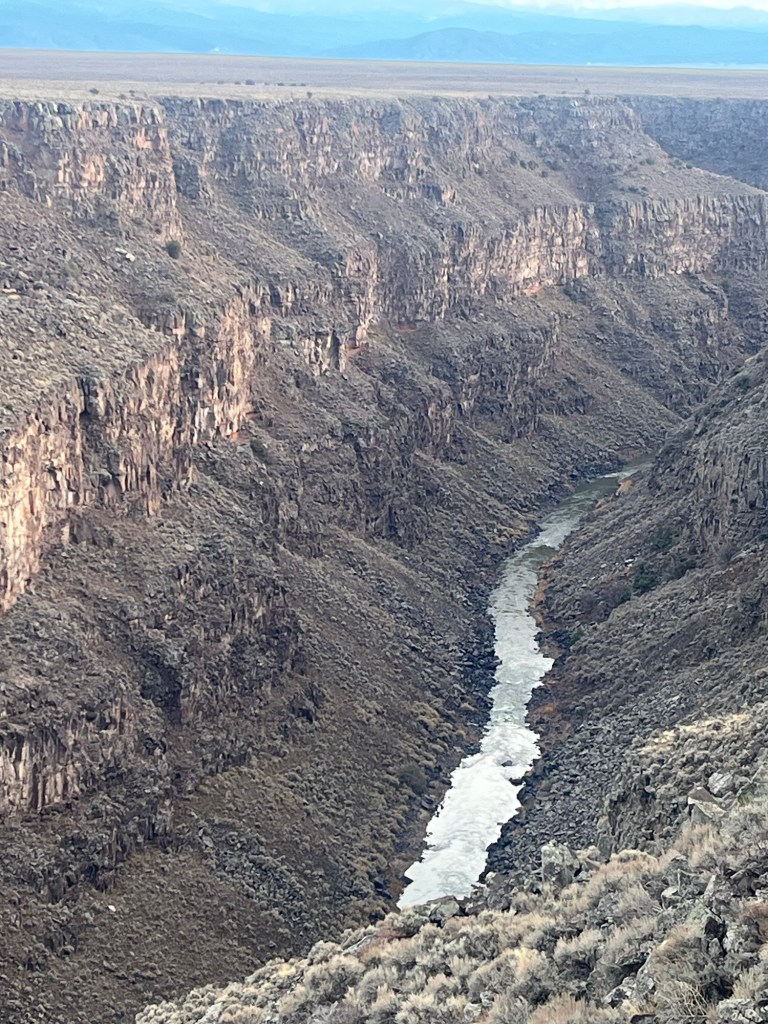
    The Rio Grande River
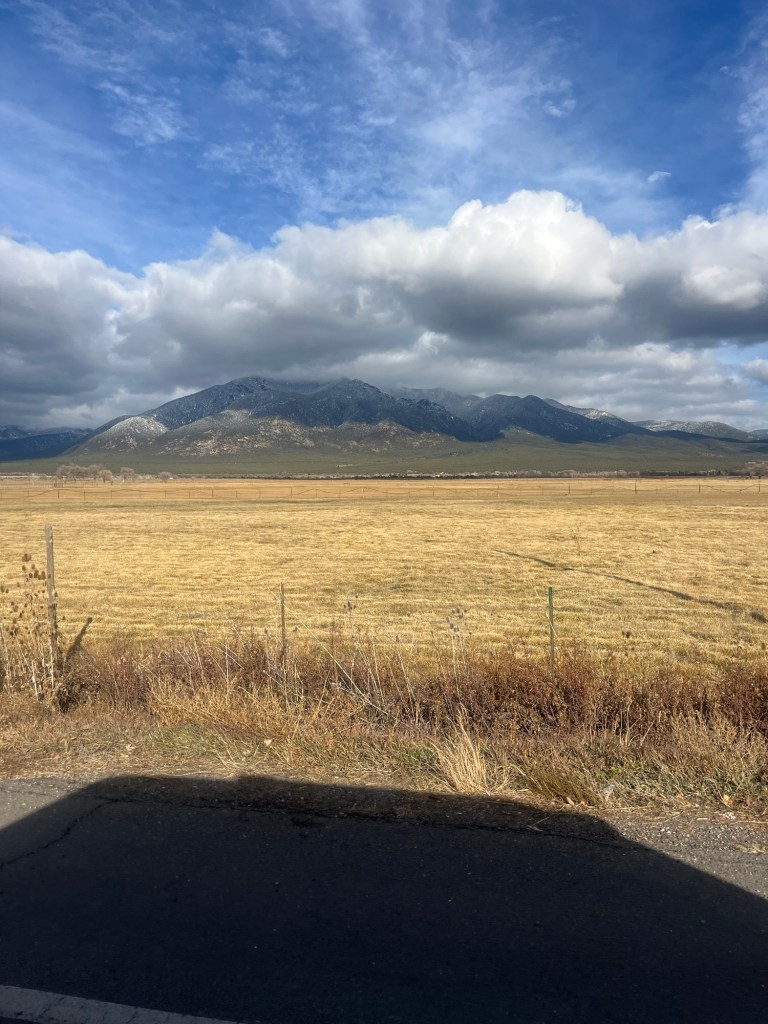
    Heading towards the mountains
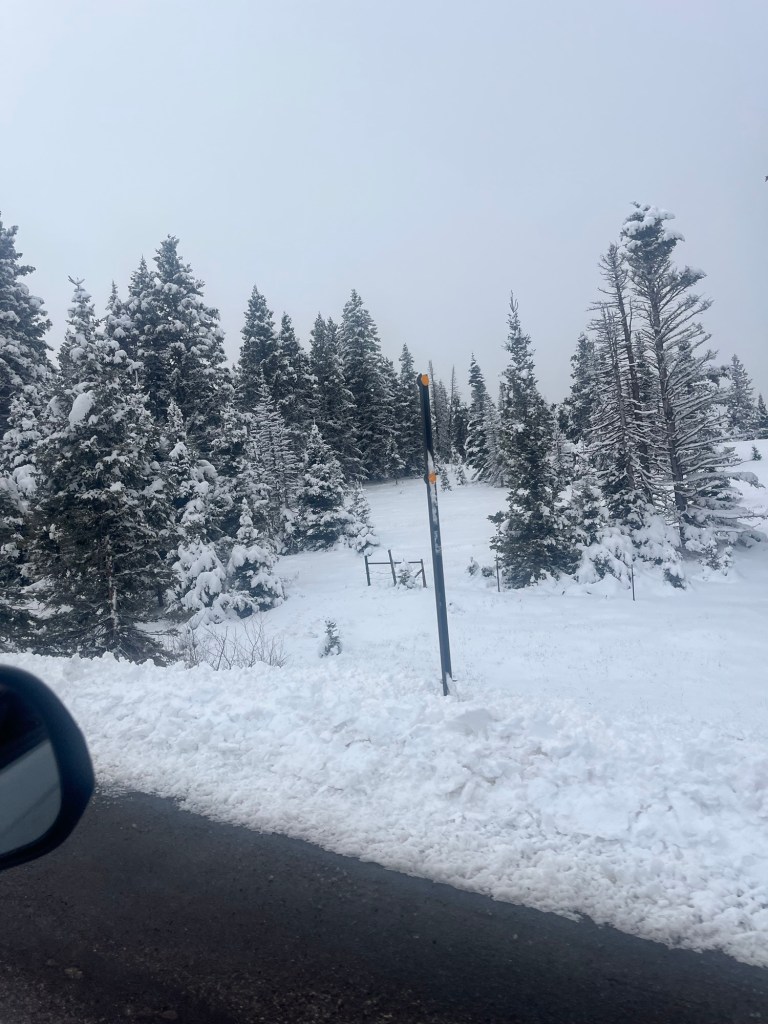
    10,000 feet elevation and snow

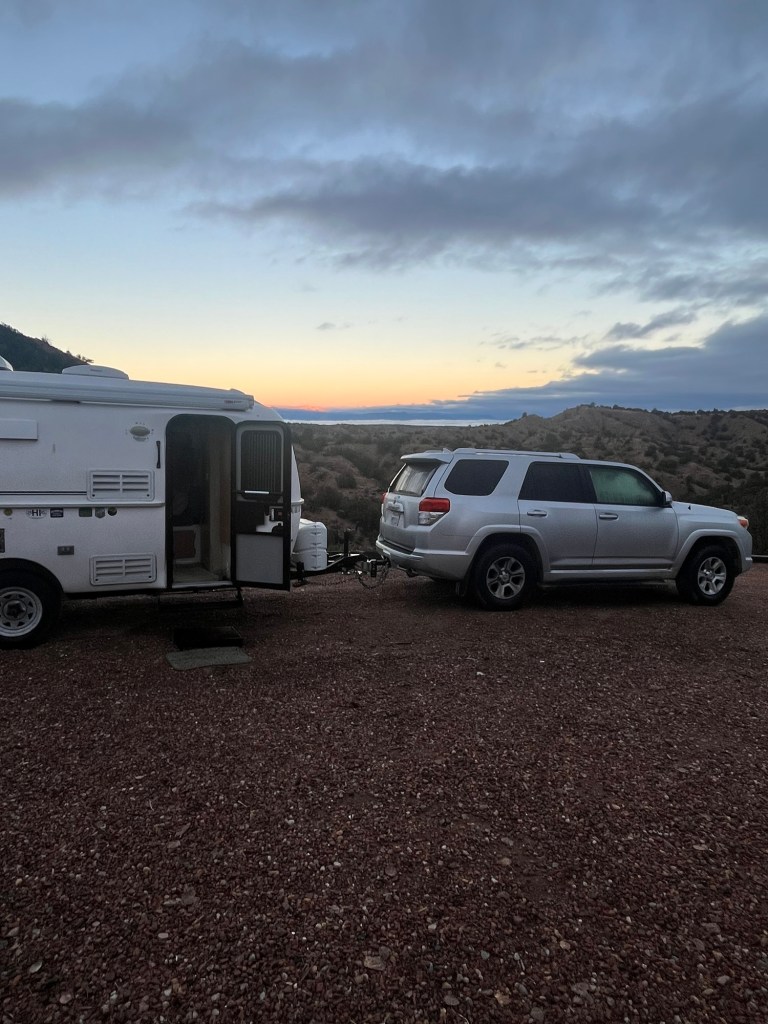
    We are camping at 7800 feet altitude near Mesa Verde national park which we will explore tomorrow.

  • November 19

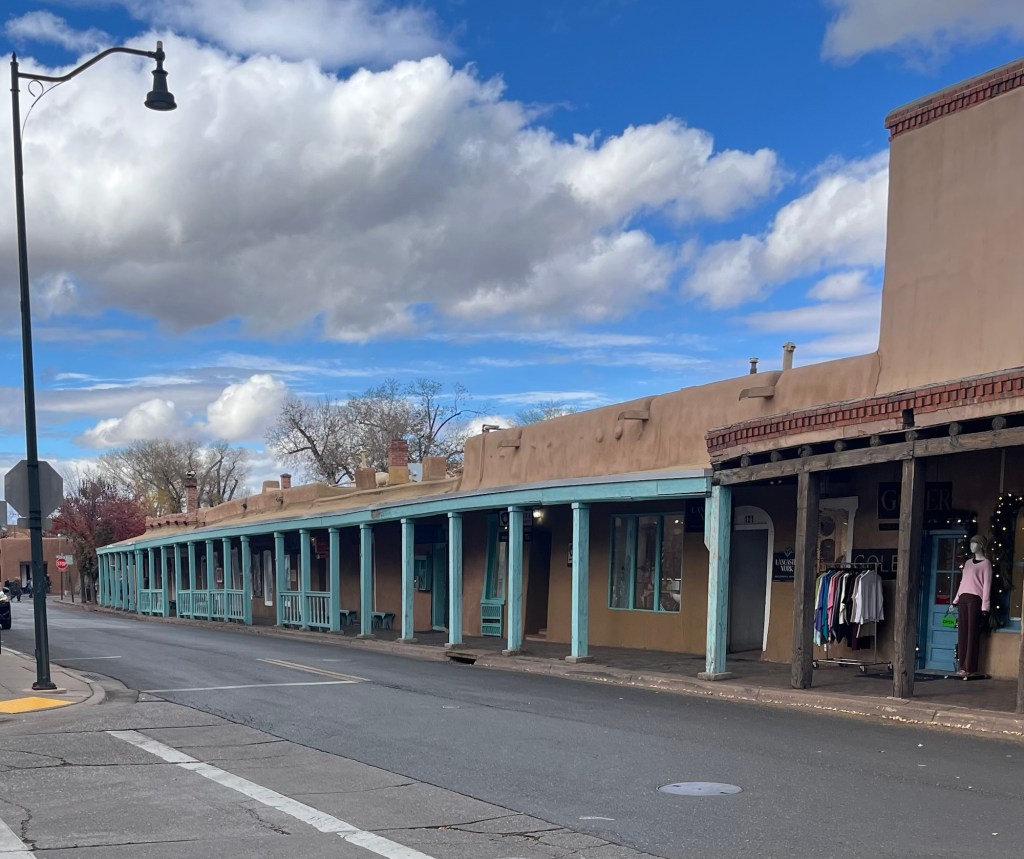
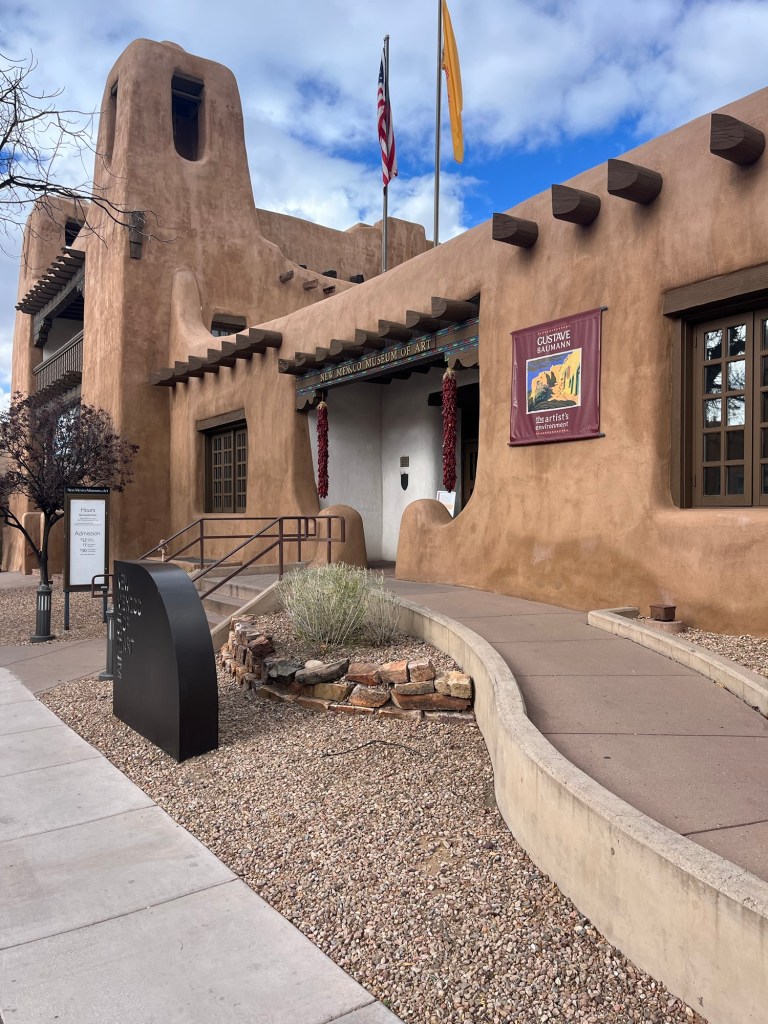
    We drove into Santa Fe this morning from the campground outside of the city where we had stayed last night. Santa Fe is one of my favorite places for the style, the ambience, and weather. I have not been to Santa Fe for almost 30 years and I was anxious to see it again and show it to Steve

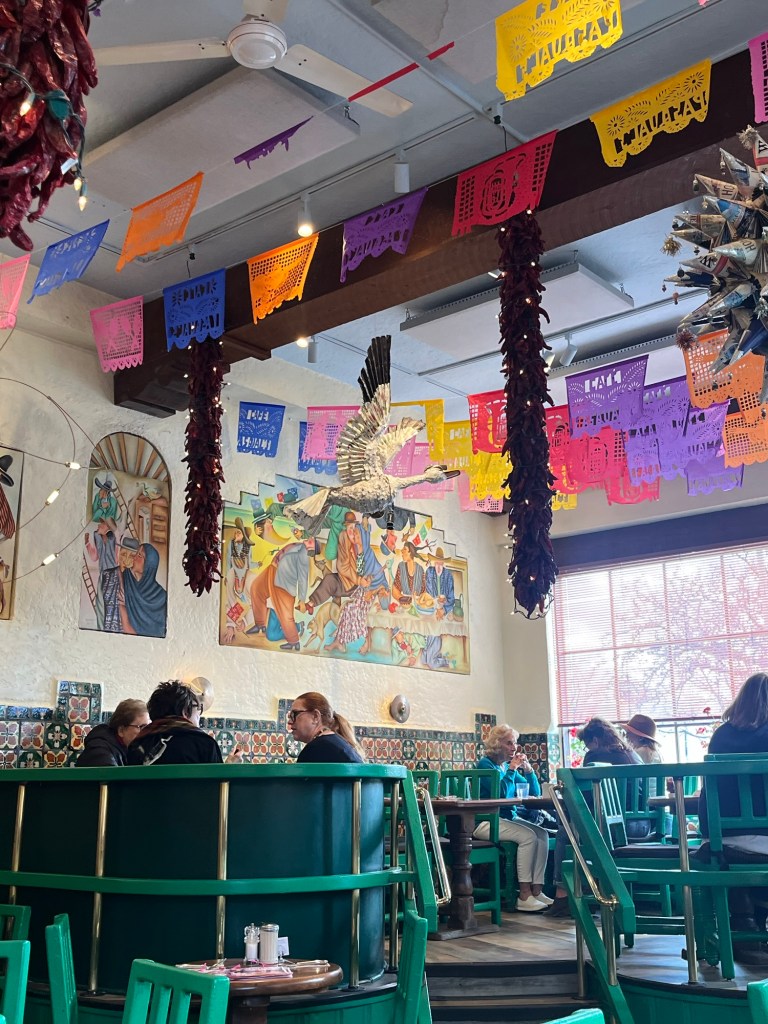
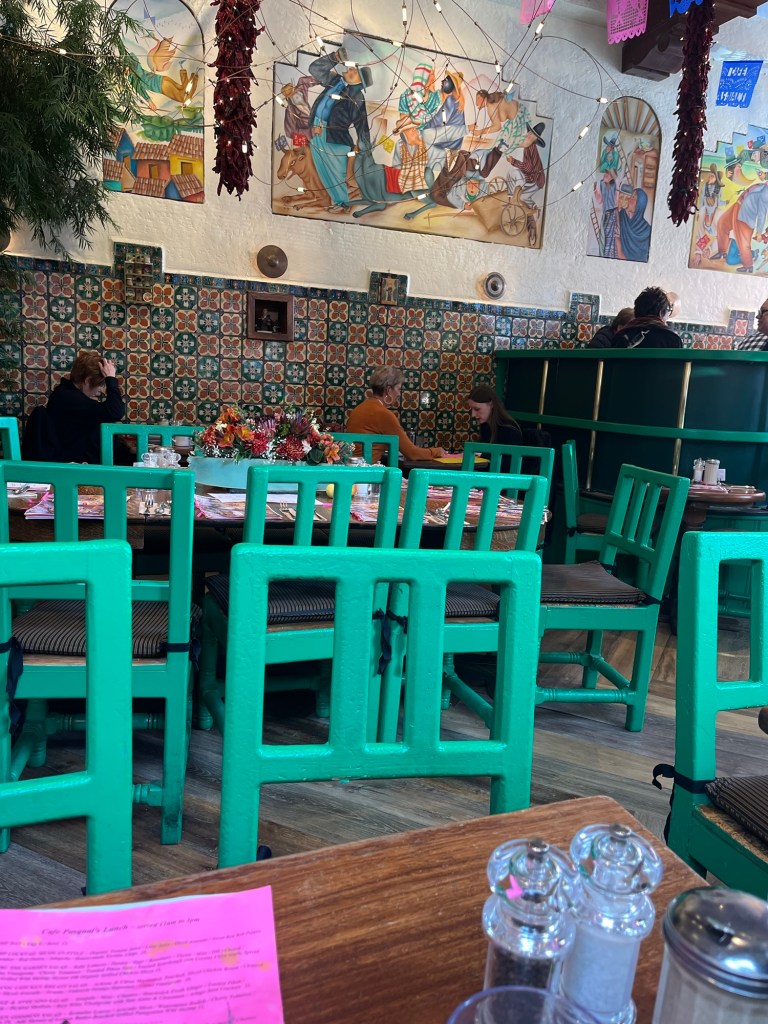
    We walked around the historic plaza, peeking into galleries and having lunch at Café Pasquale. I ate at the café previously, and it was still as charming and delicious as I remembered.

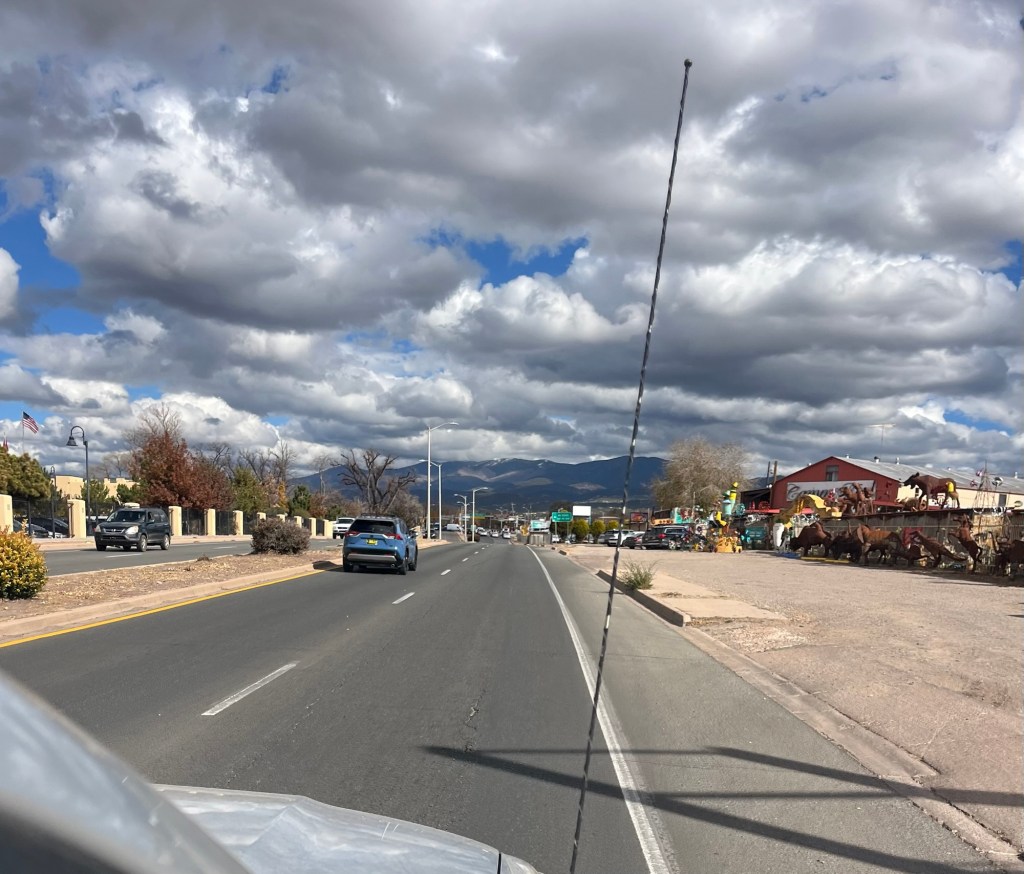
    Look at the clouds as we drive into Santa Fe
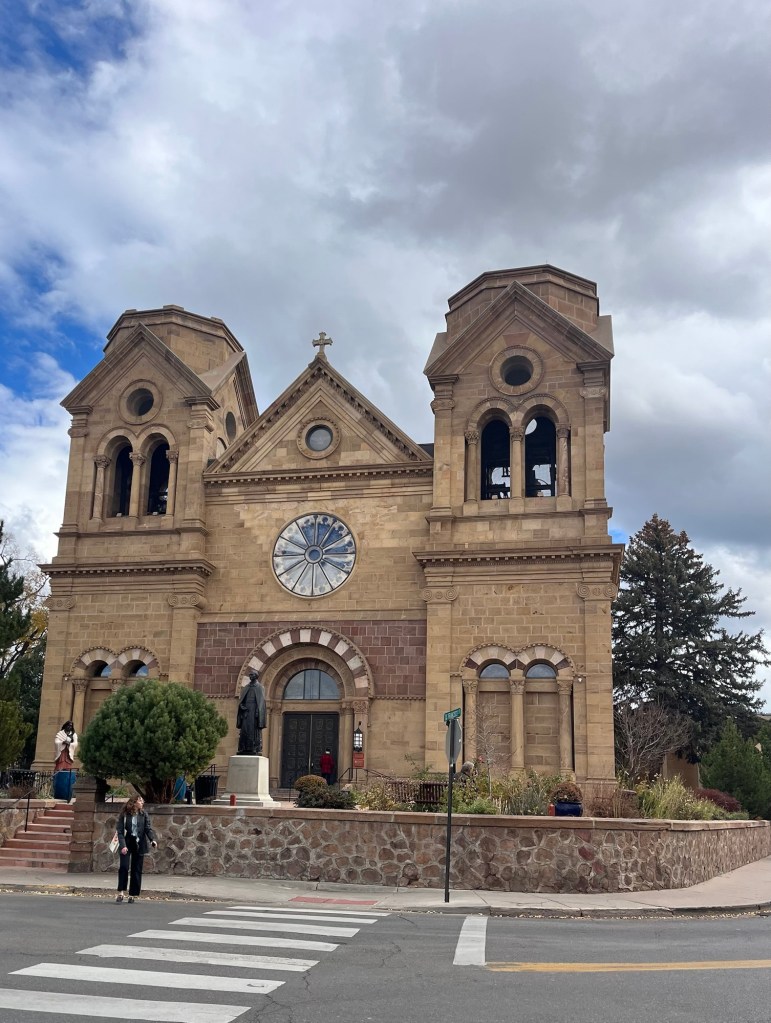
    Cathedral Basilica of St. Francis of Assisi
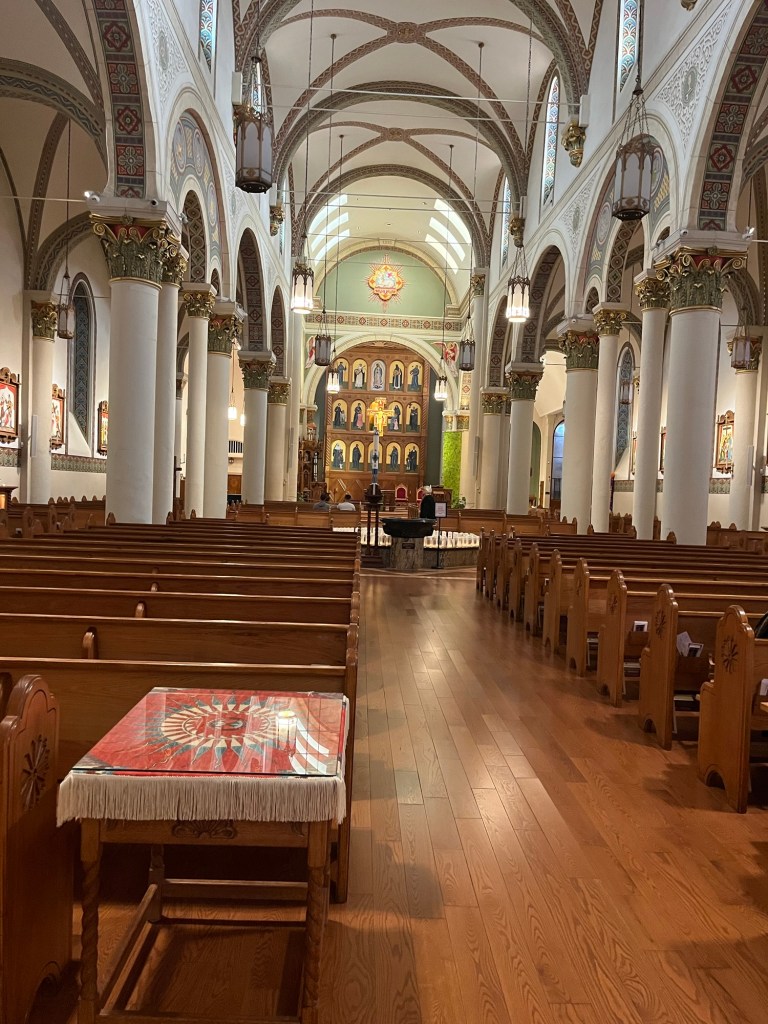
    Inside the cathedral
    Cafe Pasquale
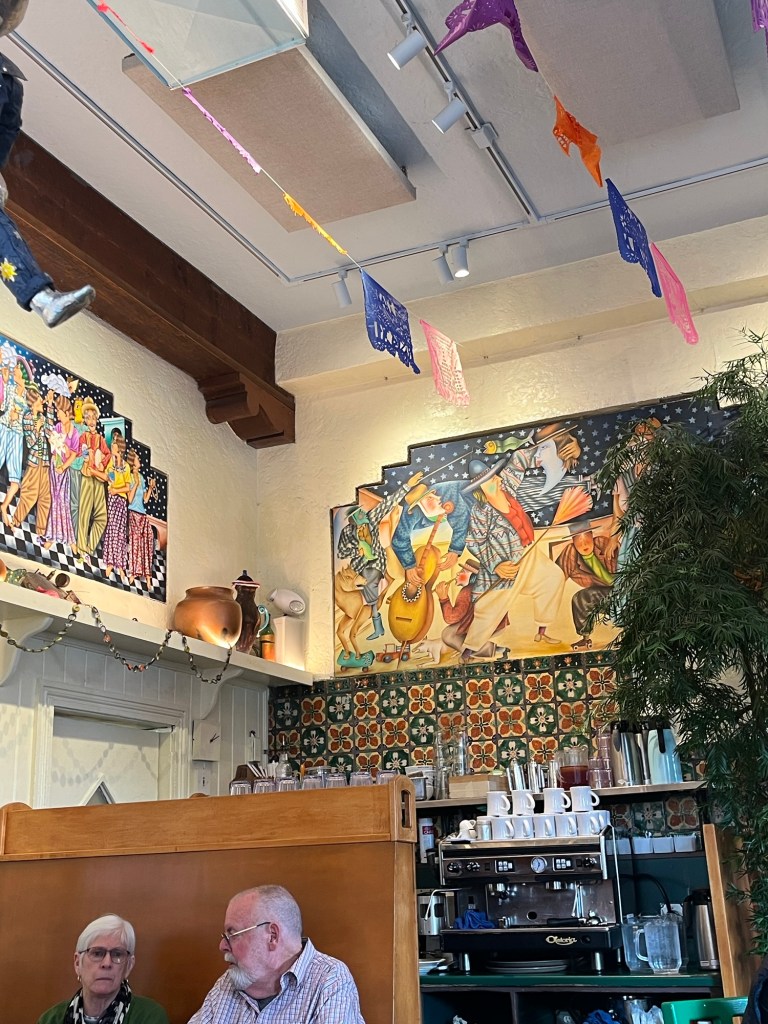
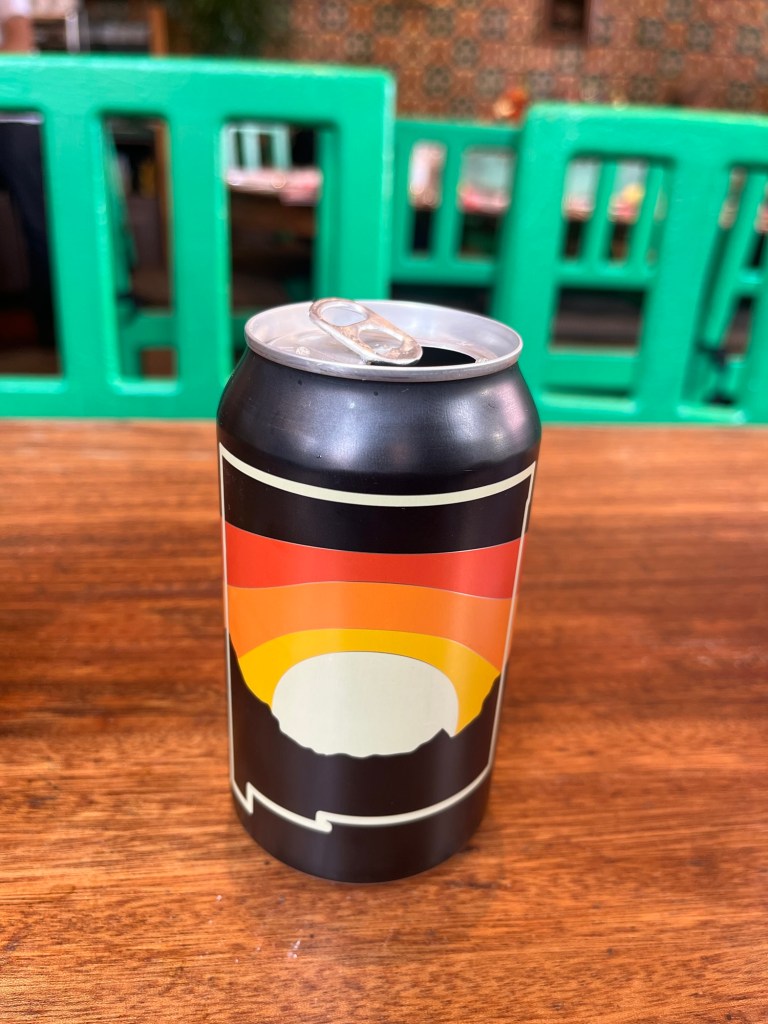
    Santa Fe Brewing Co
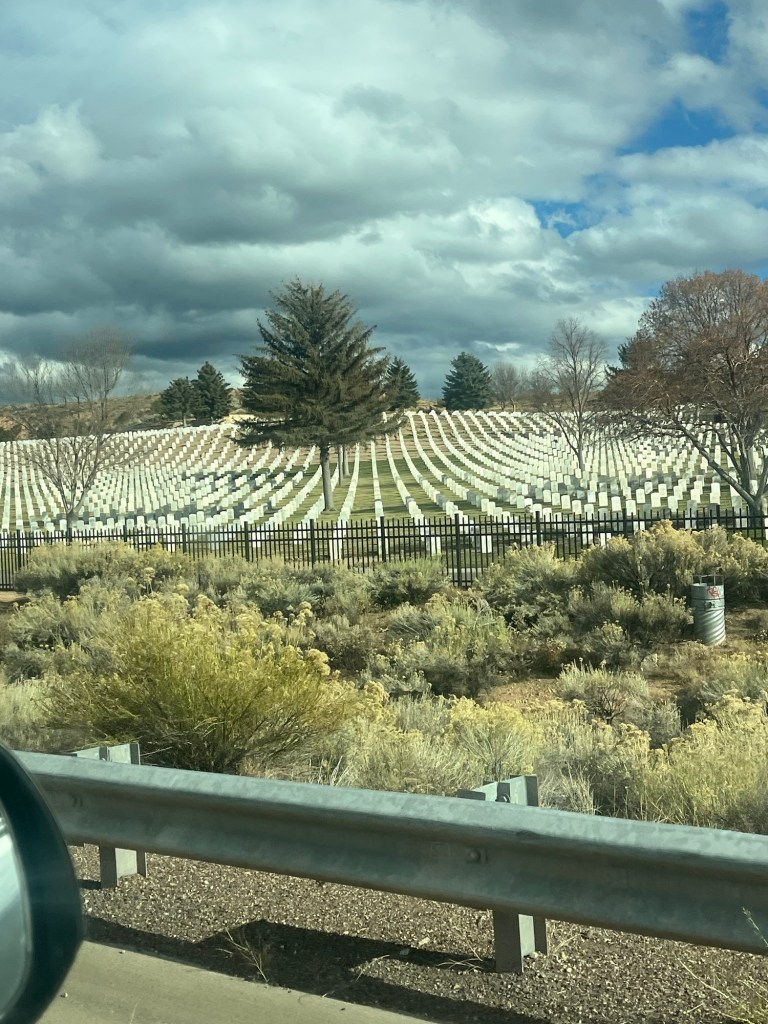
    The National Cemetery. it is acres and acres.

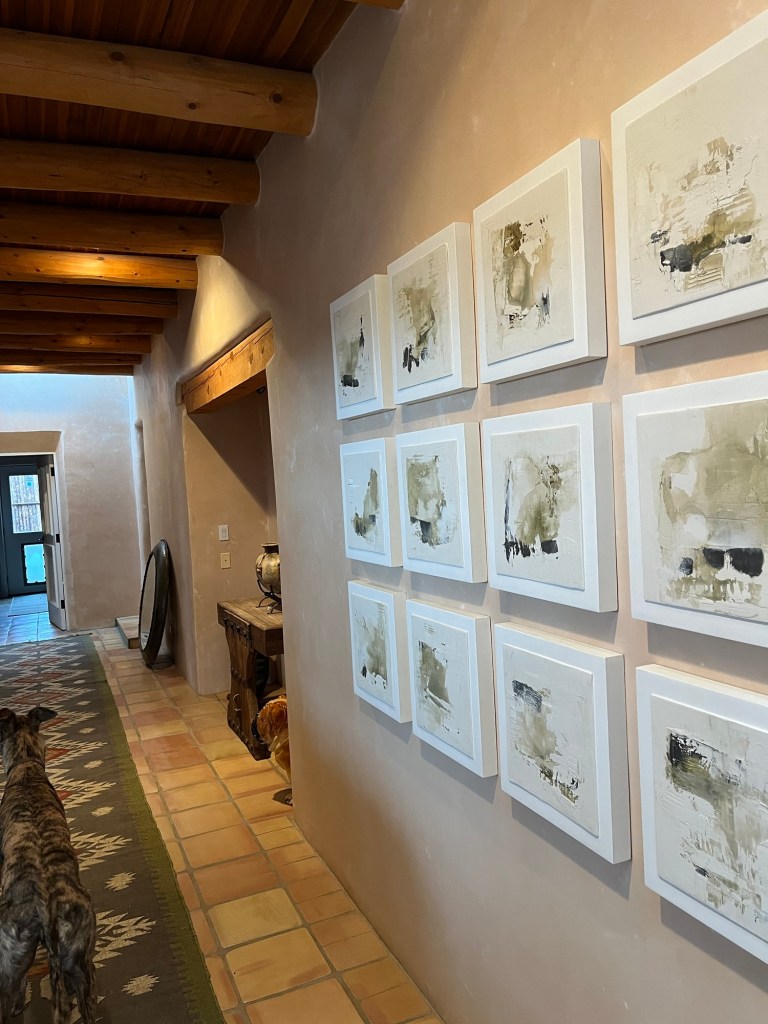
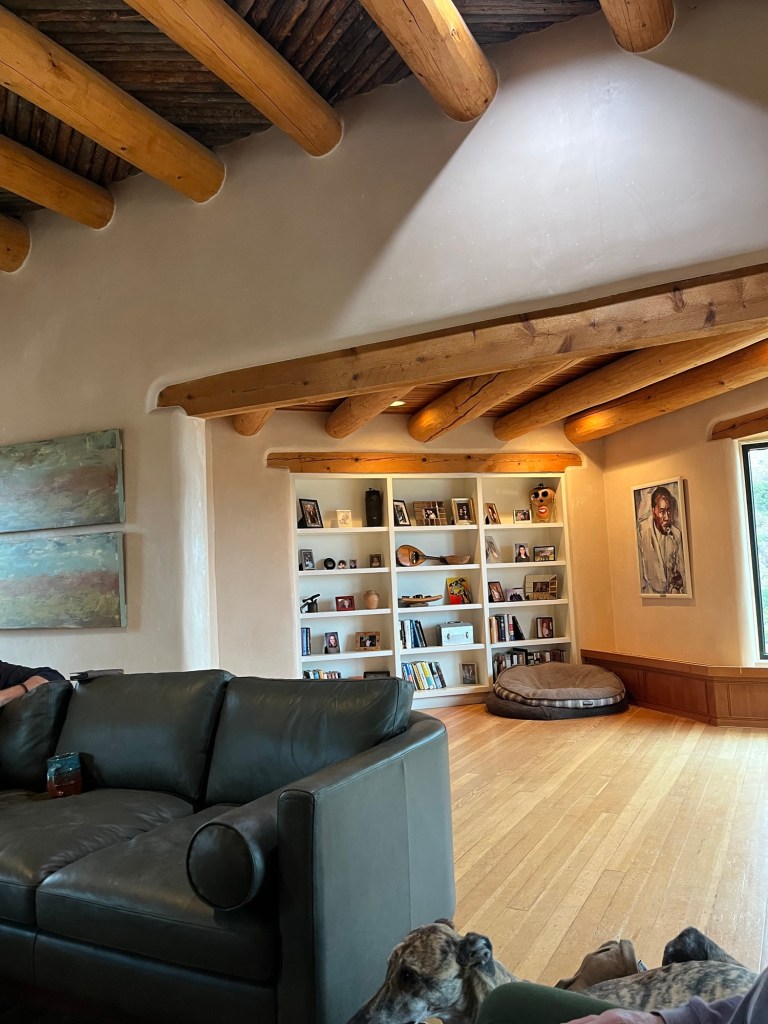
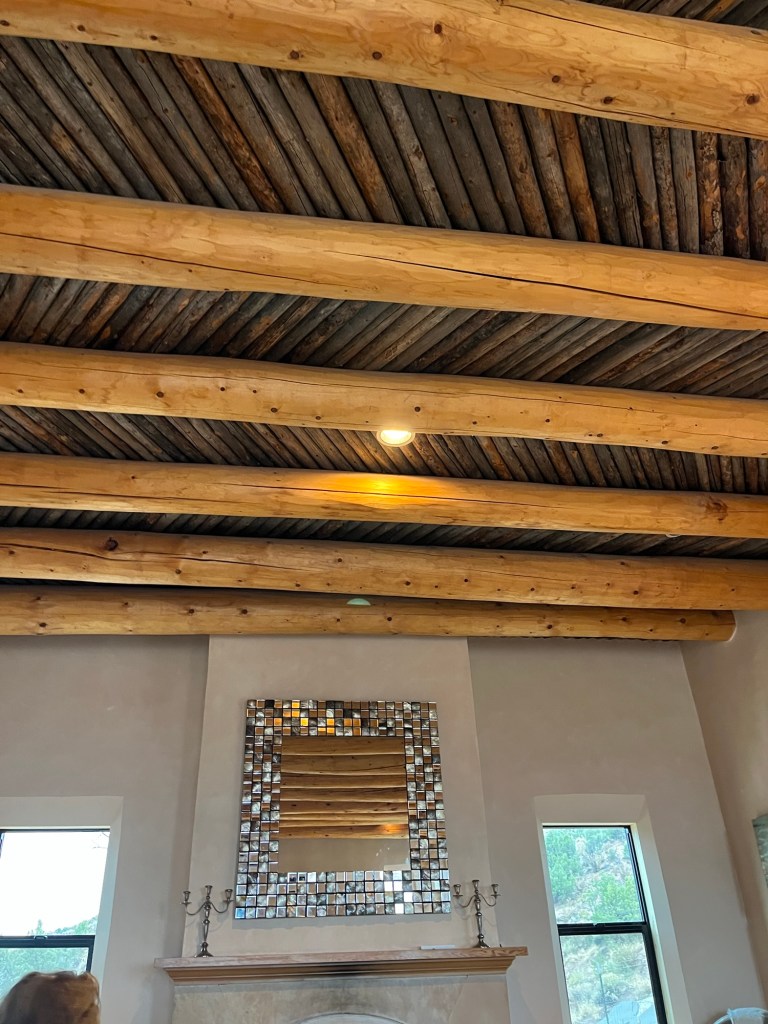
    Next, we drove to North Santa Fe to David and Palma‘s home on 10 acres in the rolling Hills and canyons. They recently relocated from Lafayette to Santa Fe and their house is beyond gorgeous and stunning. Of course, David and Palma‘s artistic and design style really make the place a showstopper. They also have this wonderful apartment suite for guests and we feel like we are at a five star resort.

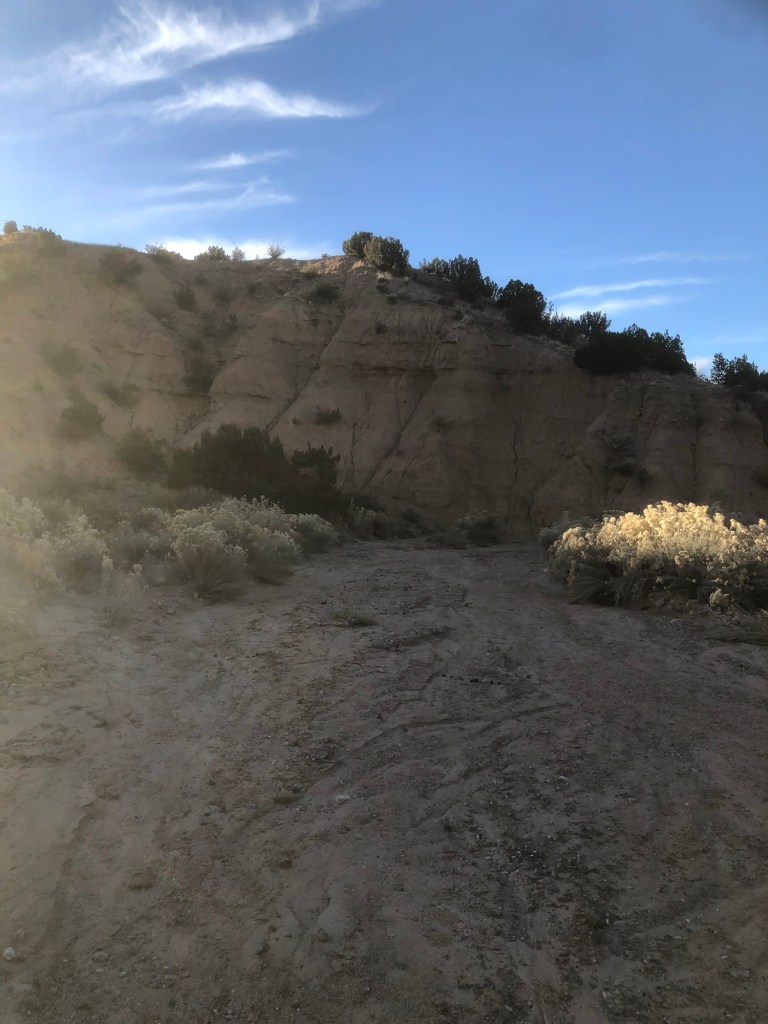
    We took a wonderful hike around their property before a fabulous dinner last night.

    David, Palma and Steph

  • November 18

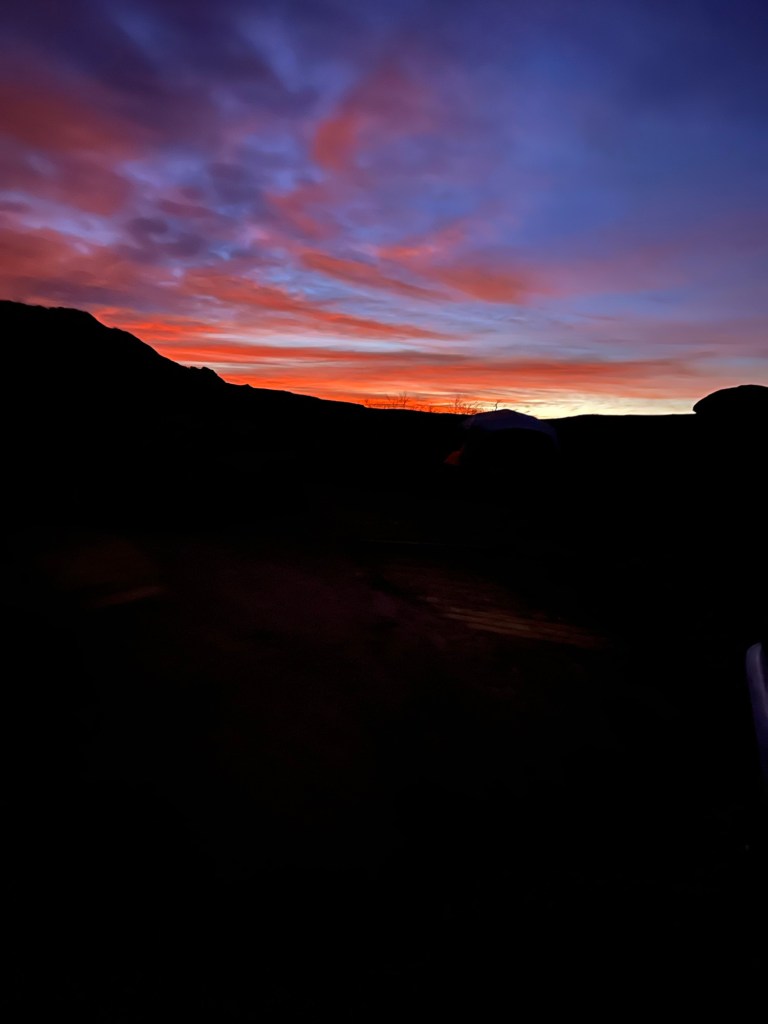
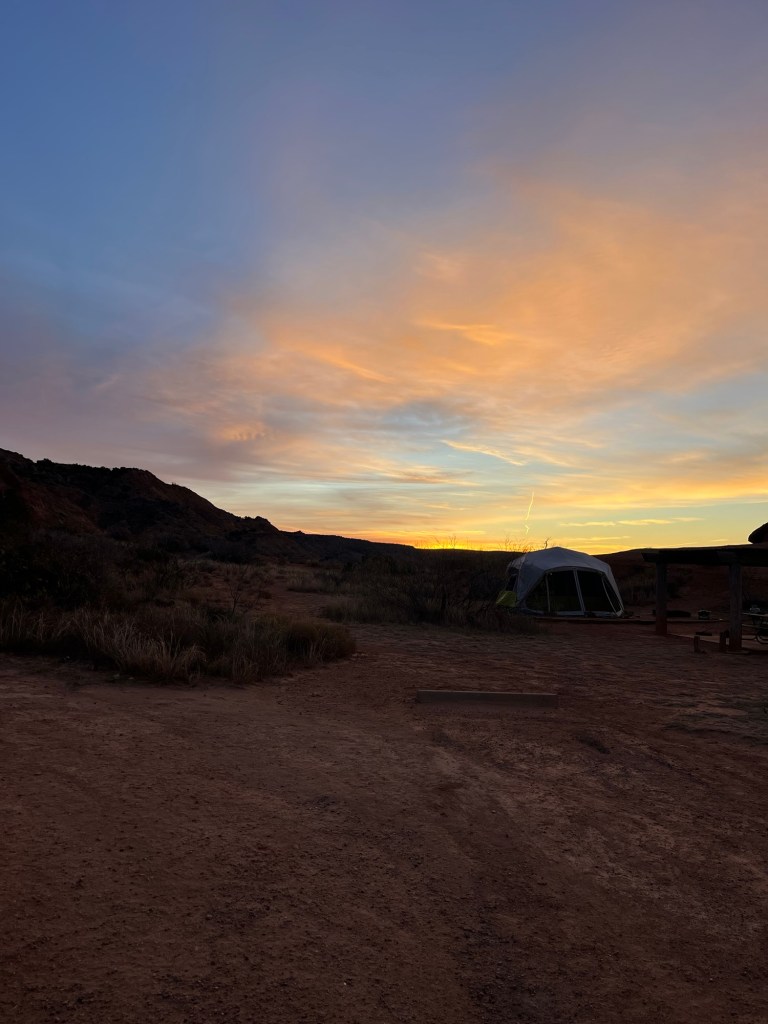
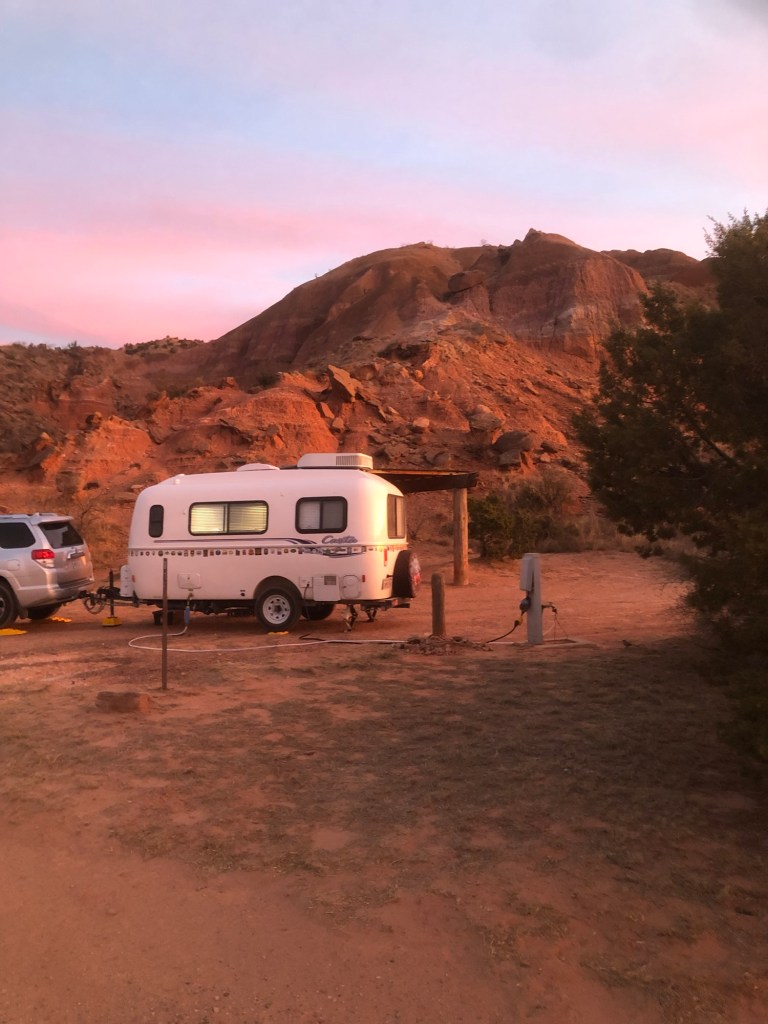
    We woke to sunrise, clean air and the stillness of a beautiful morning in Palo Duro Canyon. We did our usual morning walk amongst all the beautiful vistas of the canyon.

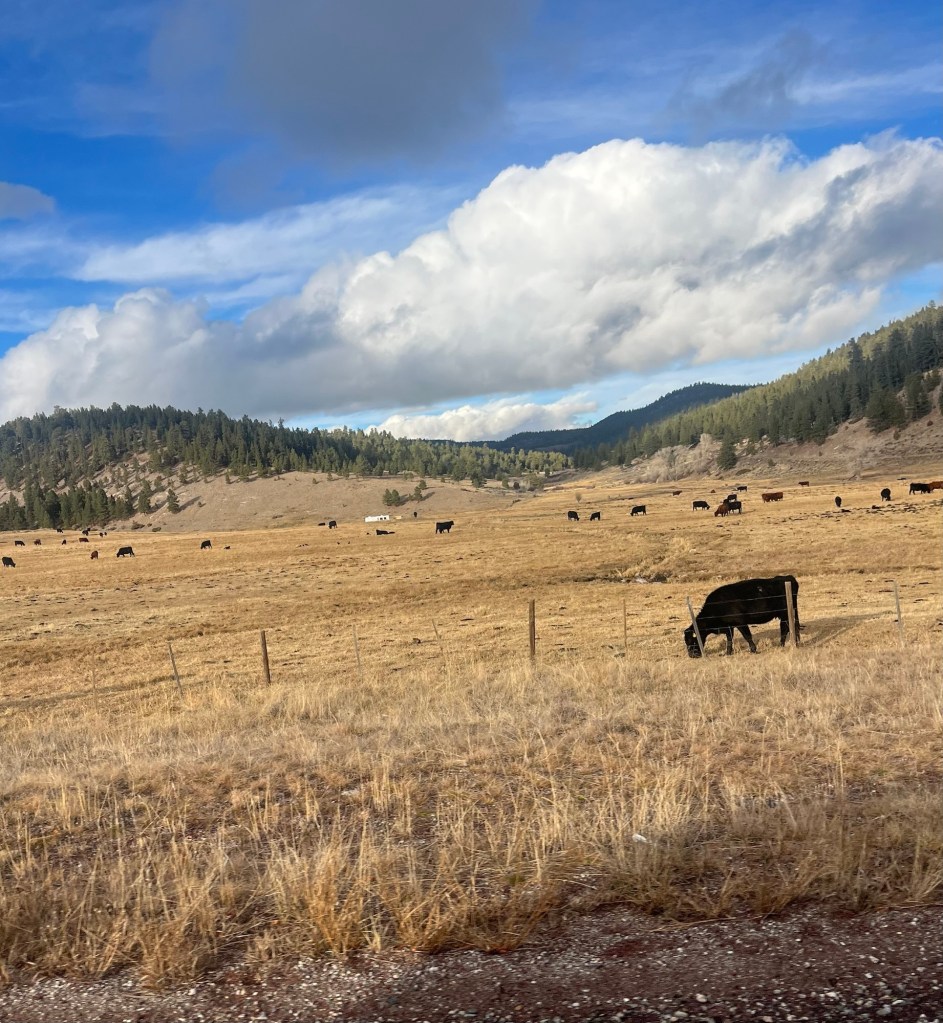
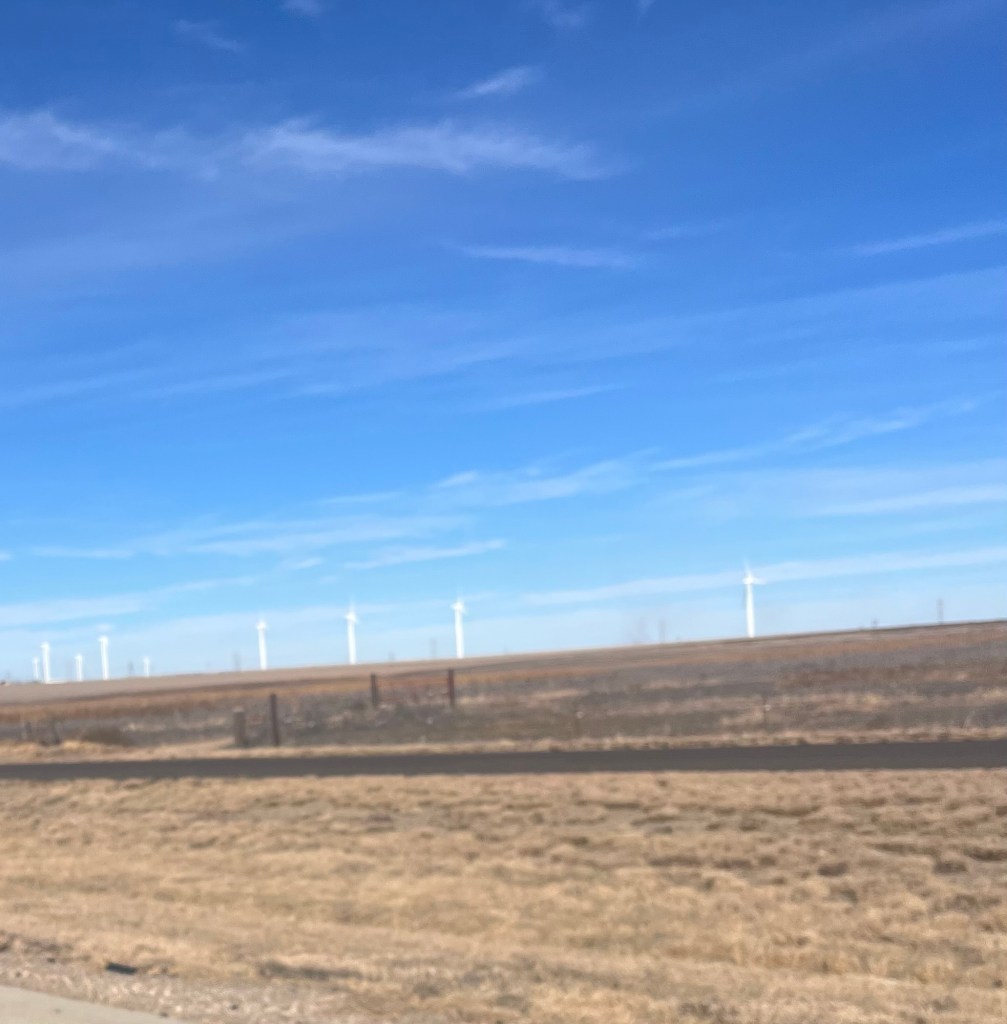
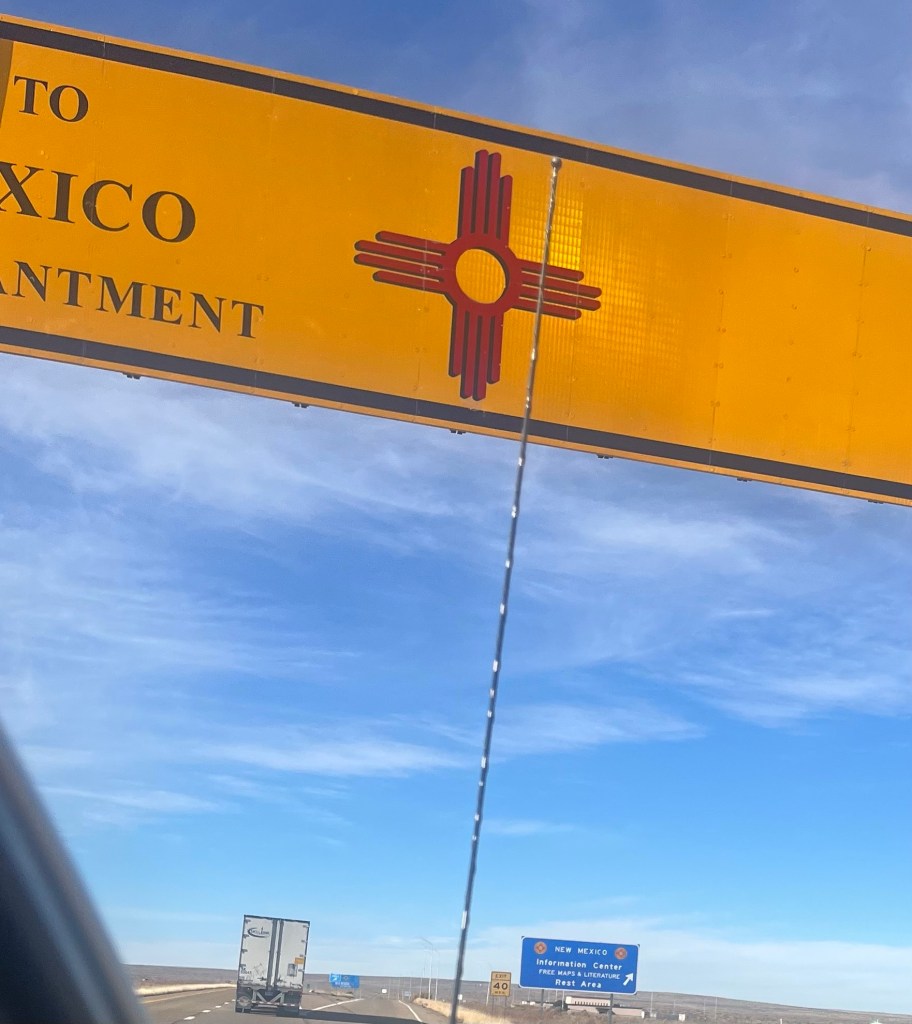
    Our day was spent driving across the Texas panhandle— nothing but flat land, cattle, and wind turbines. Once we crossed into New Mexico, the terrain improved as we climbed 7000 feet towards Santa Fe.

  • November 17

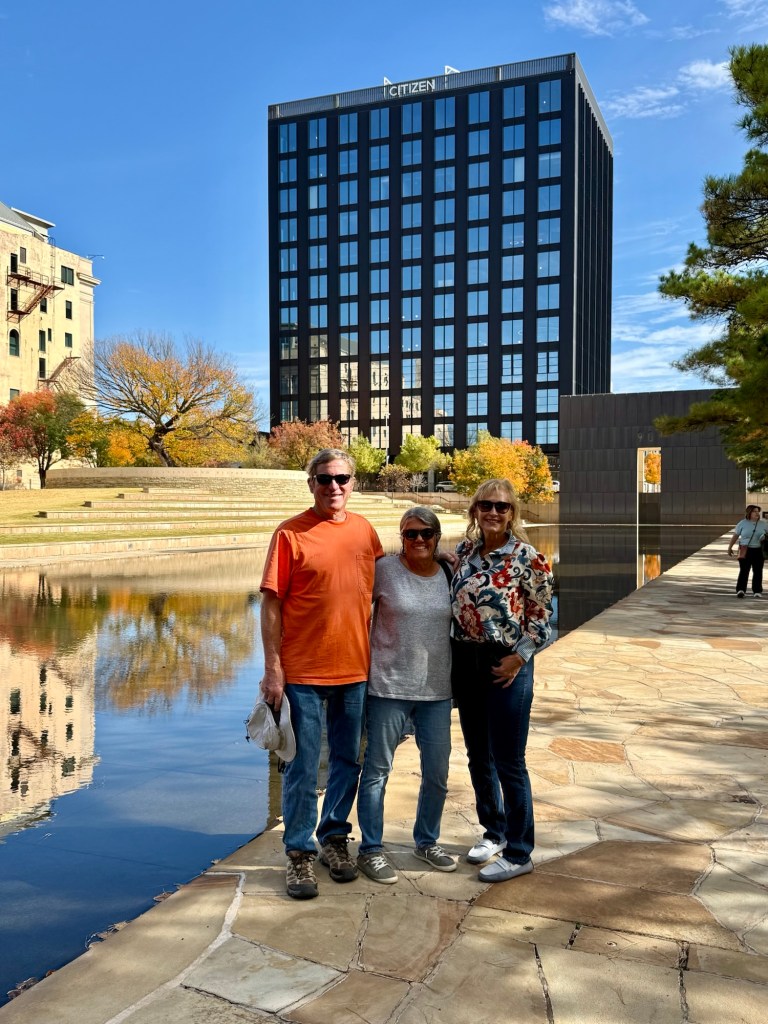
    Here are a few more pictures from our Oklahoma City weekend.

    We had a really fun dinner Sunday evening. Sonnya took us and her good friends, Cheryl and Frank, to their local Mexican restaurant. Sonnya and her kids go to this restaurant often so we were treated like VIPs— special sauce for our chips, large margaritas, sopapillas for dessert, and mango tequila shooters on the way out.

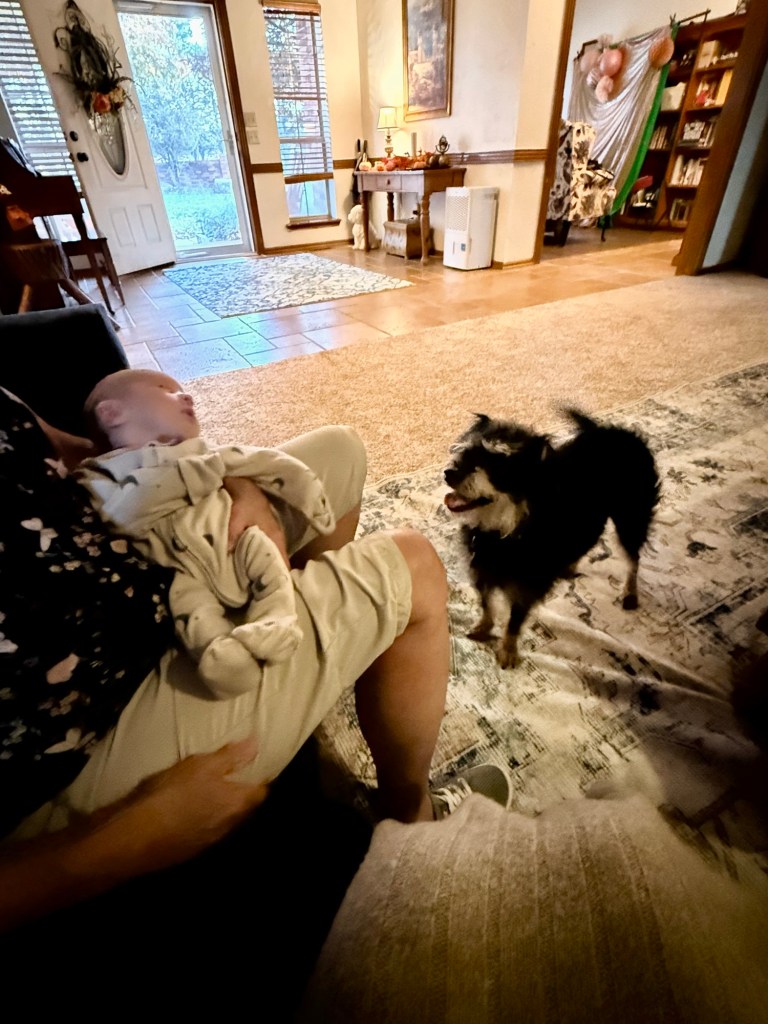
    Jasper checking out Sonnya’s 3 week old grandson.

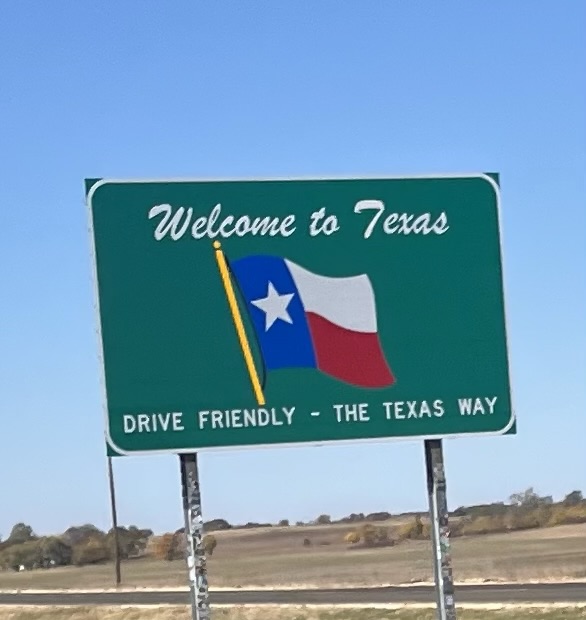
    This morning we left Oklahoma City and drove I 40 through the Texas panhandle to Palo Duro Canyon State Park south of Amarillo.

    There was nothing real special about the drive. Thankfully, we had downloaded a CJ Box book, and listen to that.

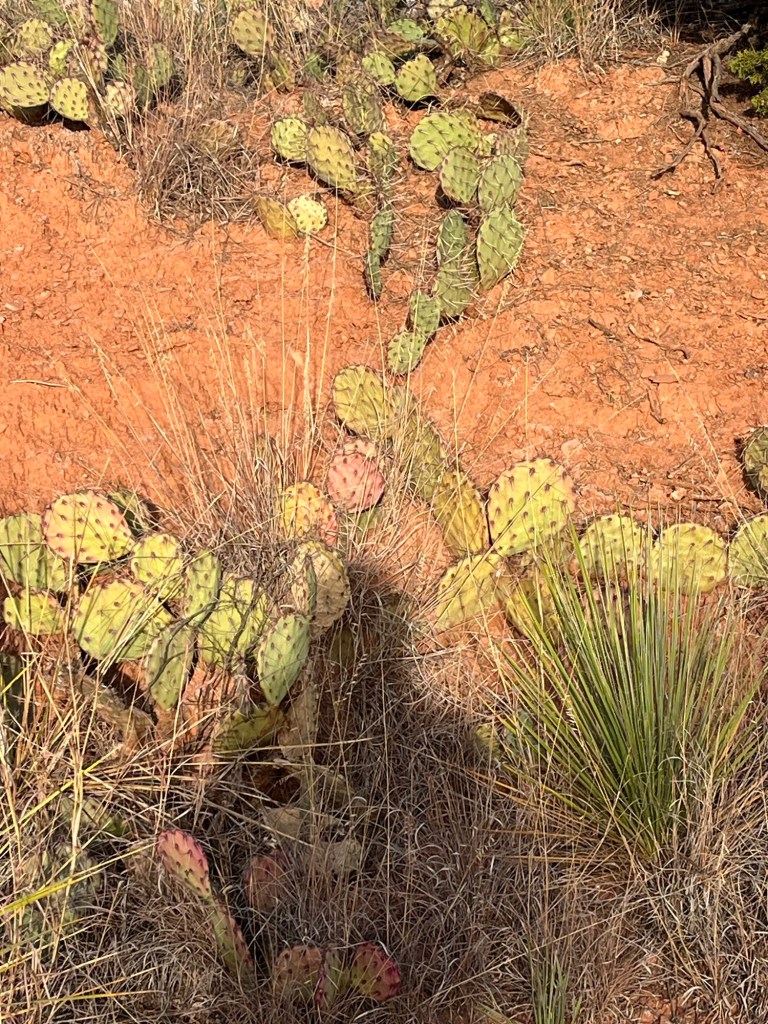
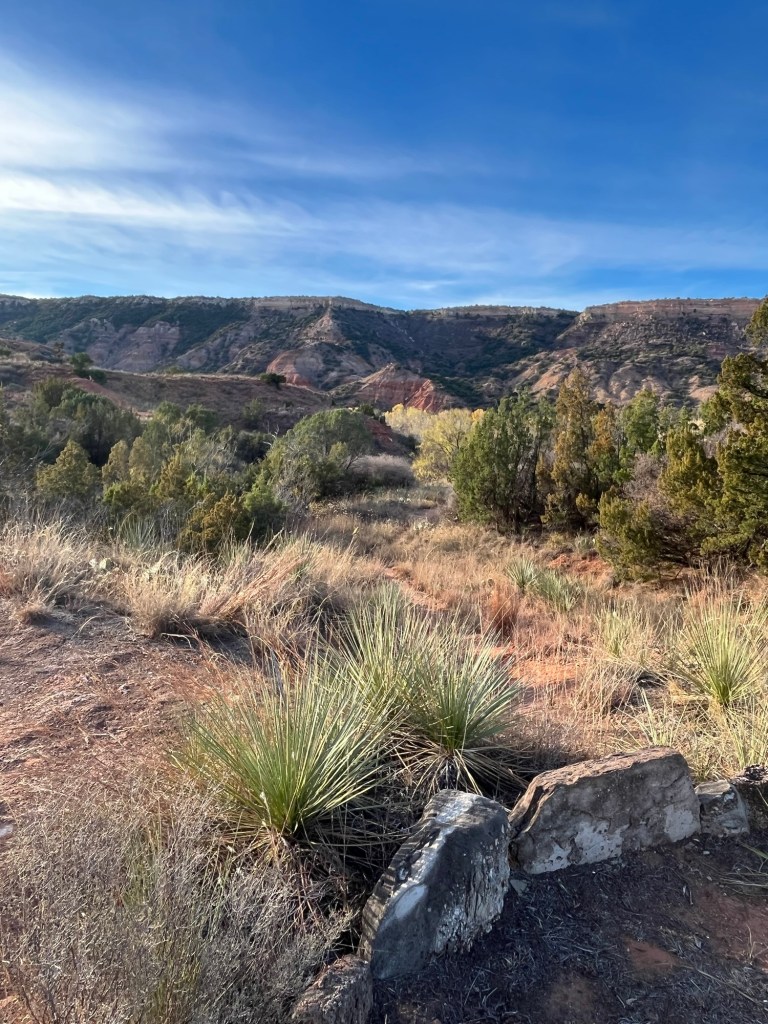
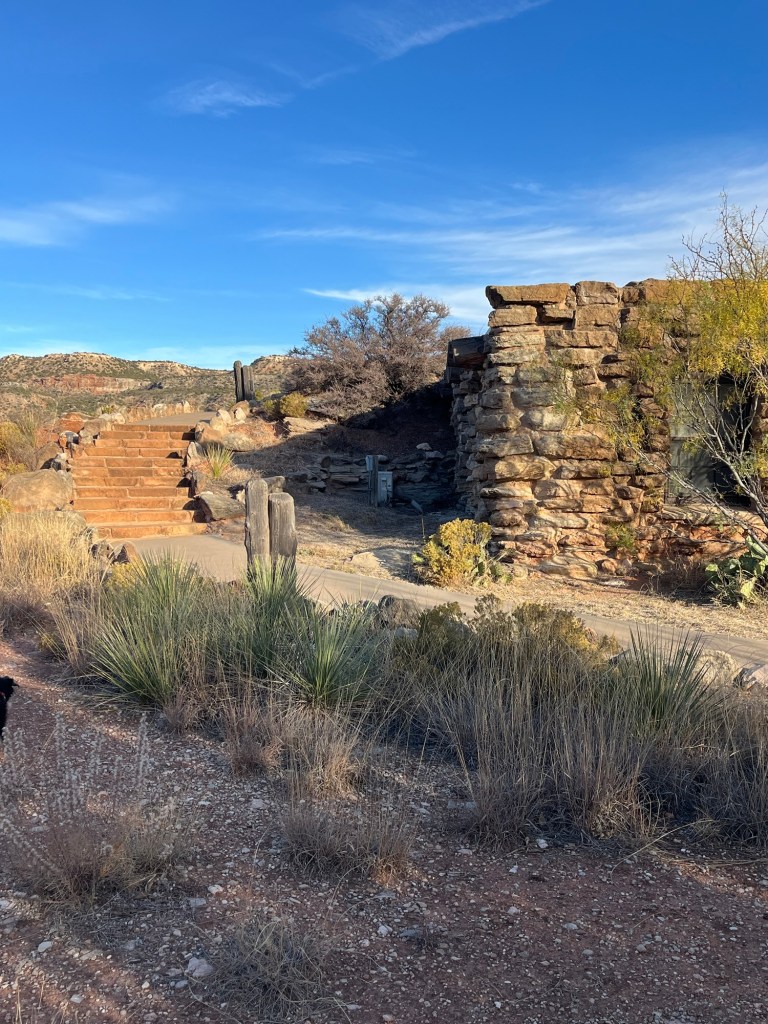
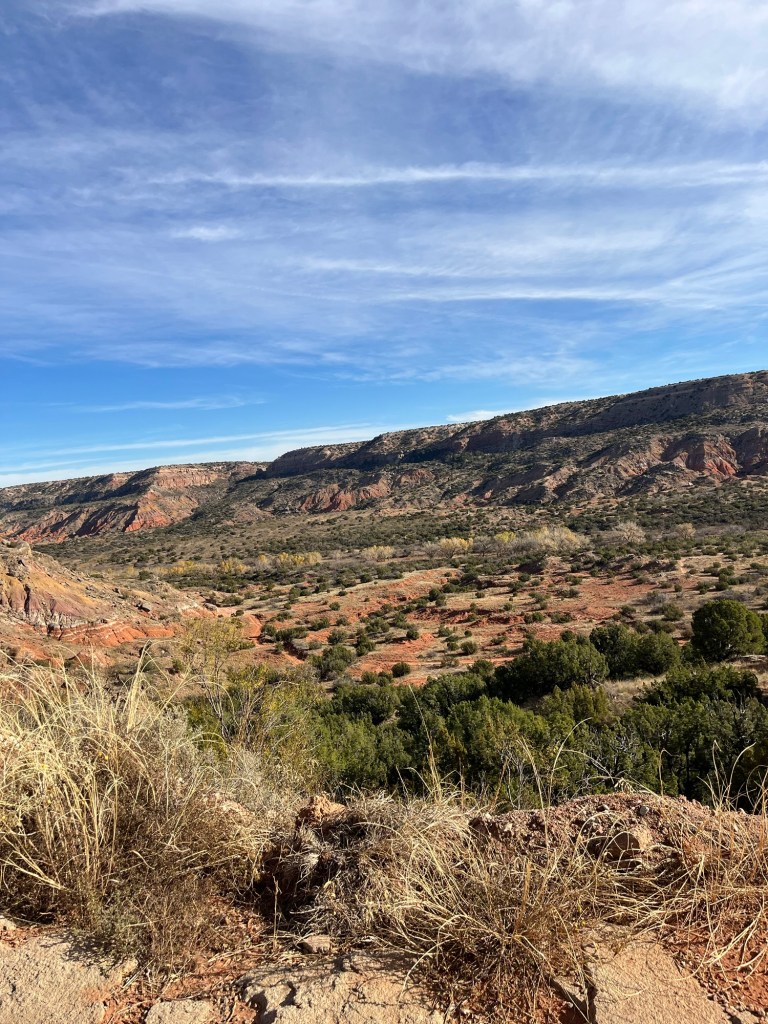
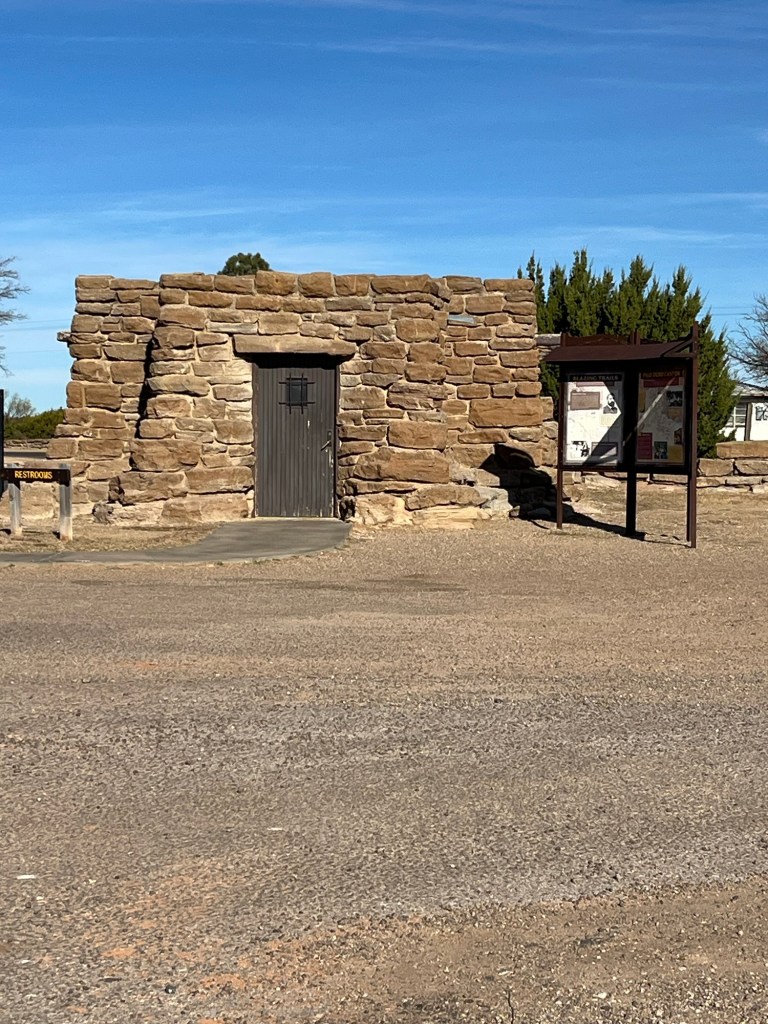
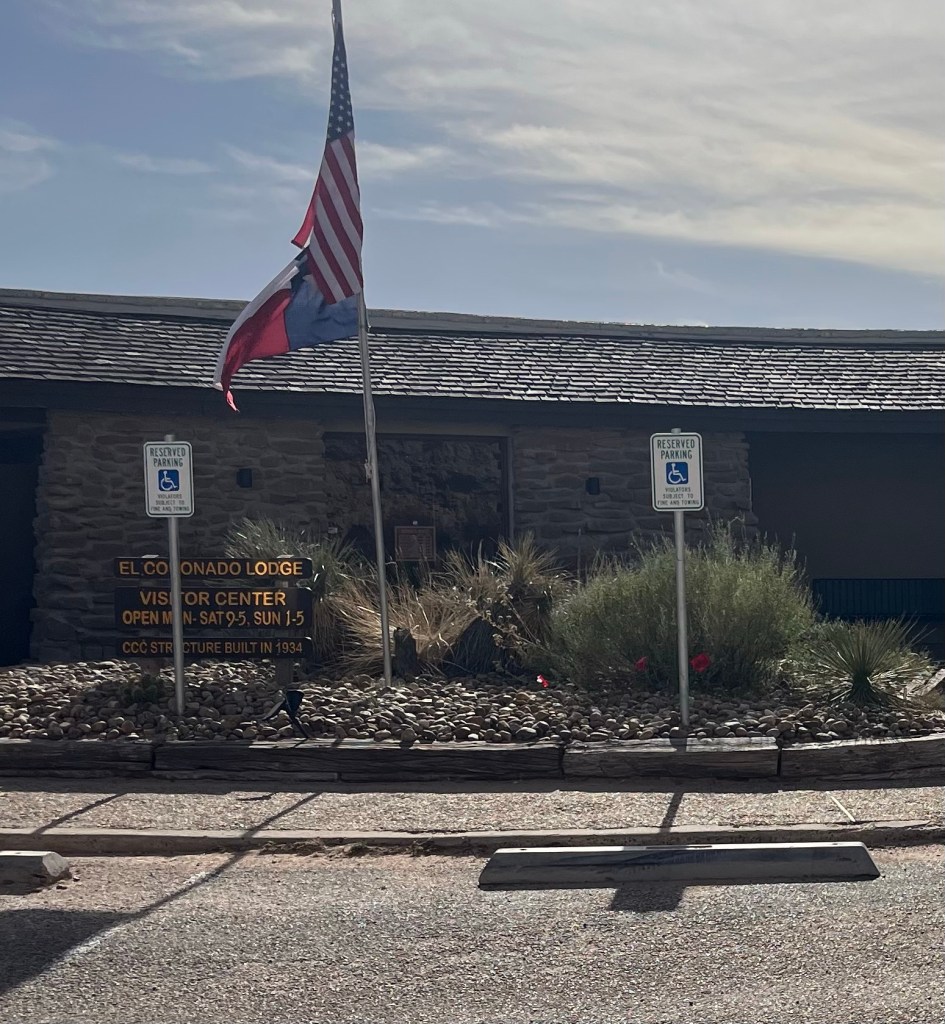
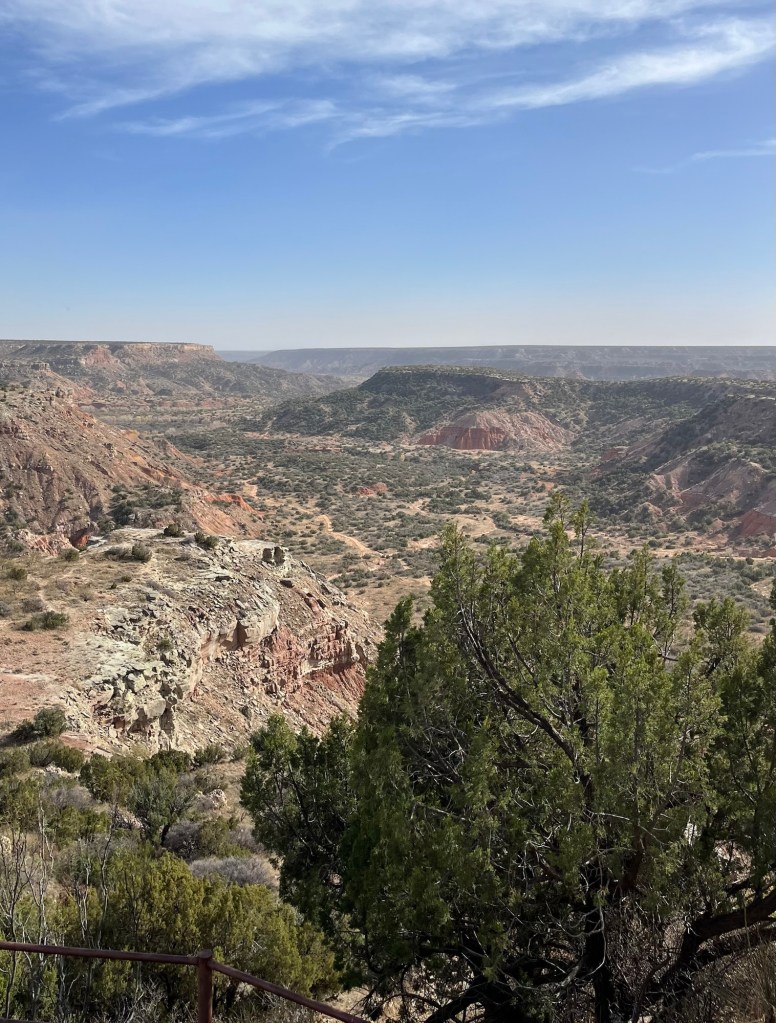
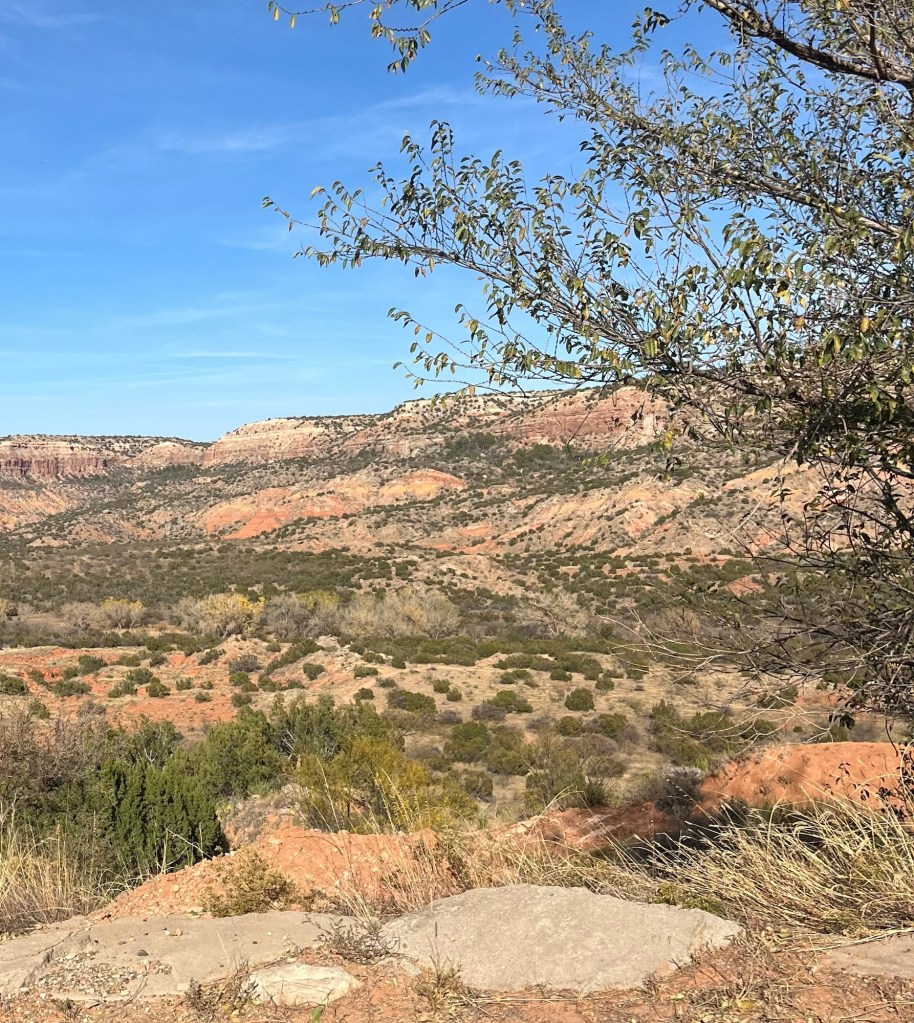
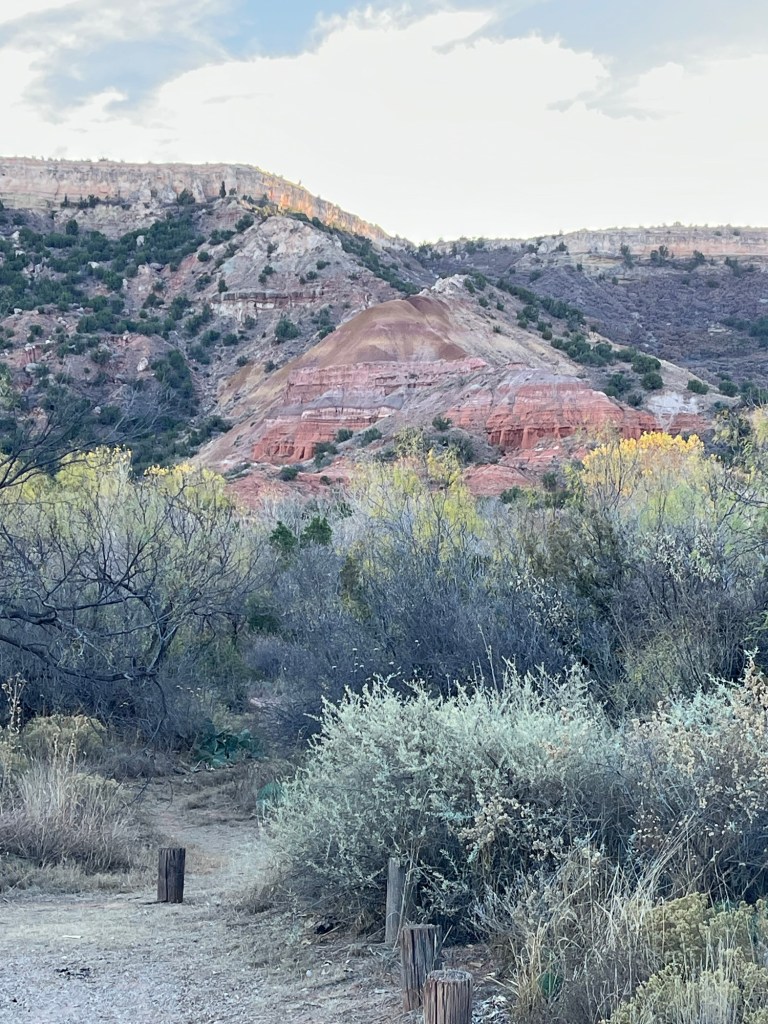
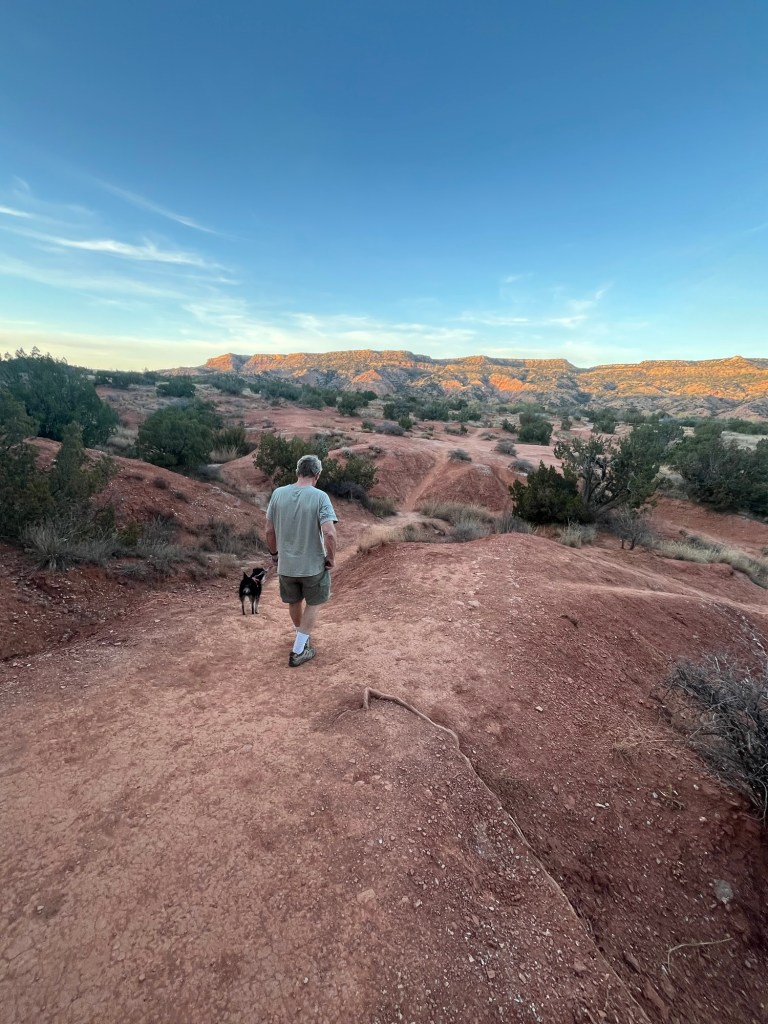
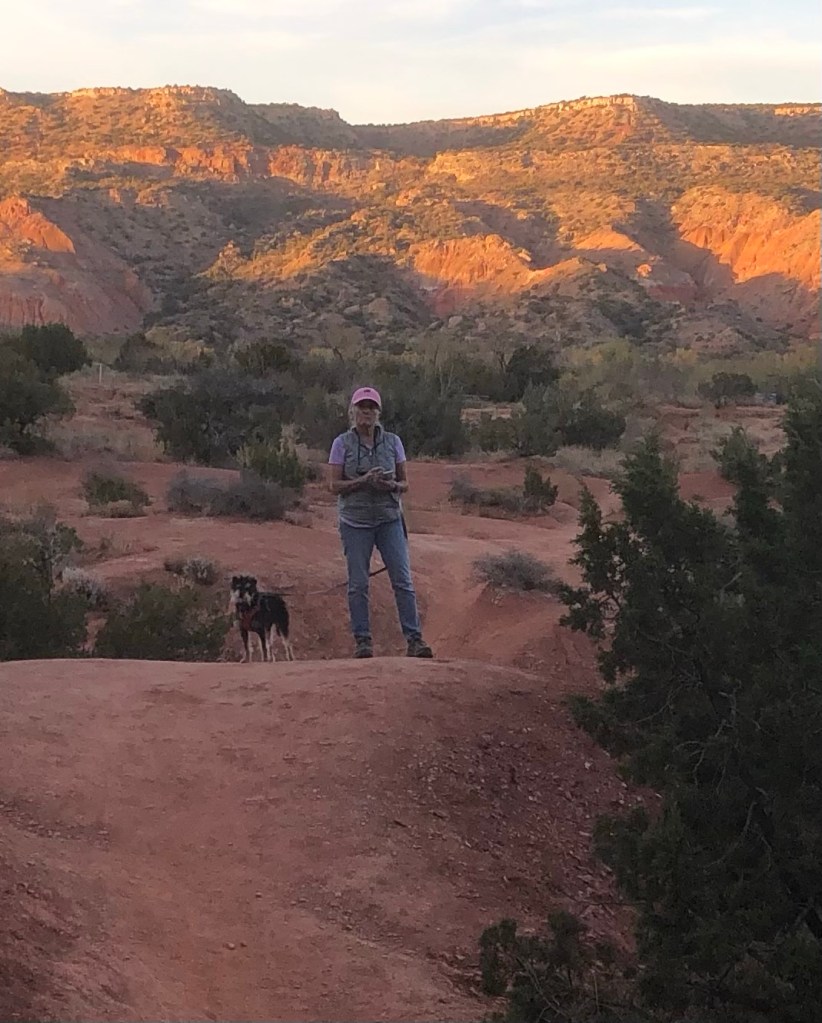
    Palo Duro Canyon is beautiful. Many of the park structures were built in 1934 by the Civilian Conservation Corps. It is like camping at the bottom of a smaller Grand Canyon. Look at how pretty it is. We took a hike before dinner.
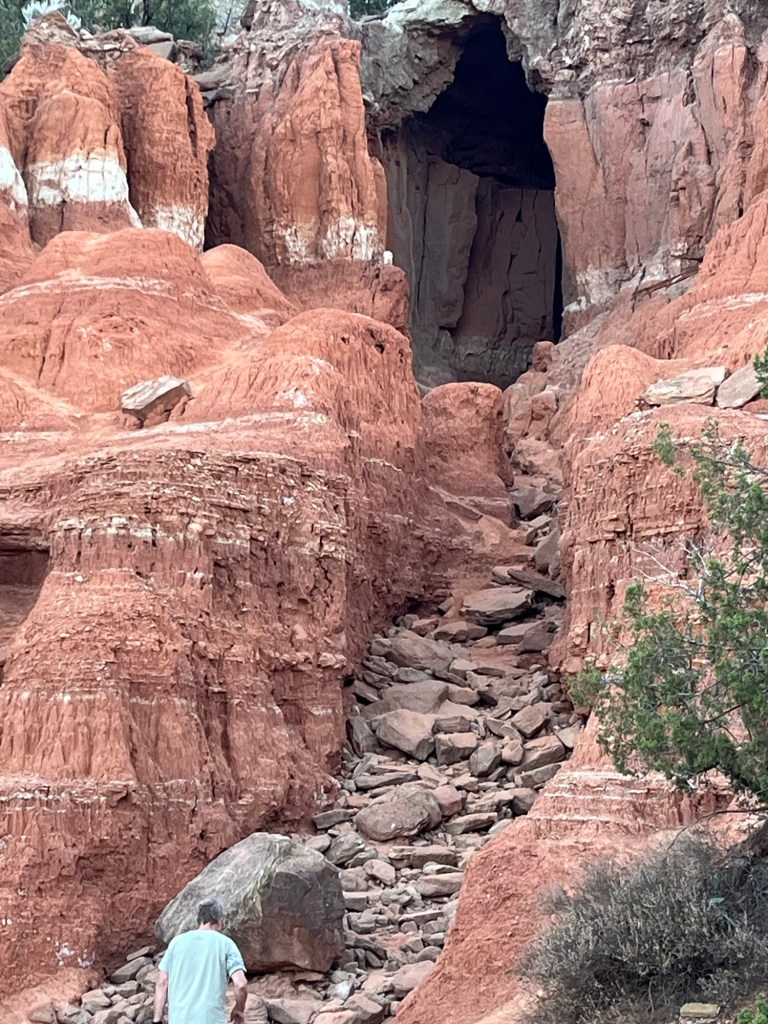
    A large cave in the canyon wall
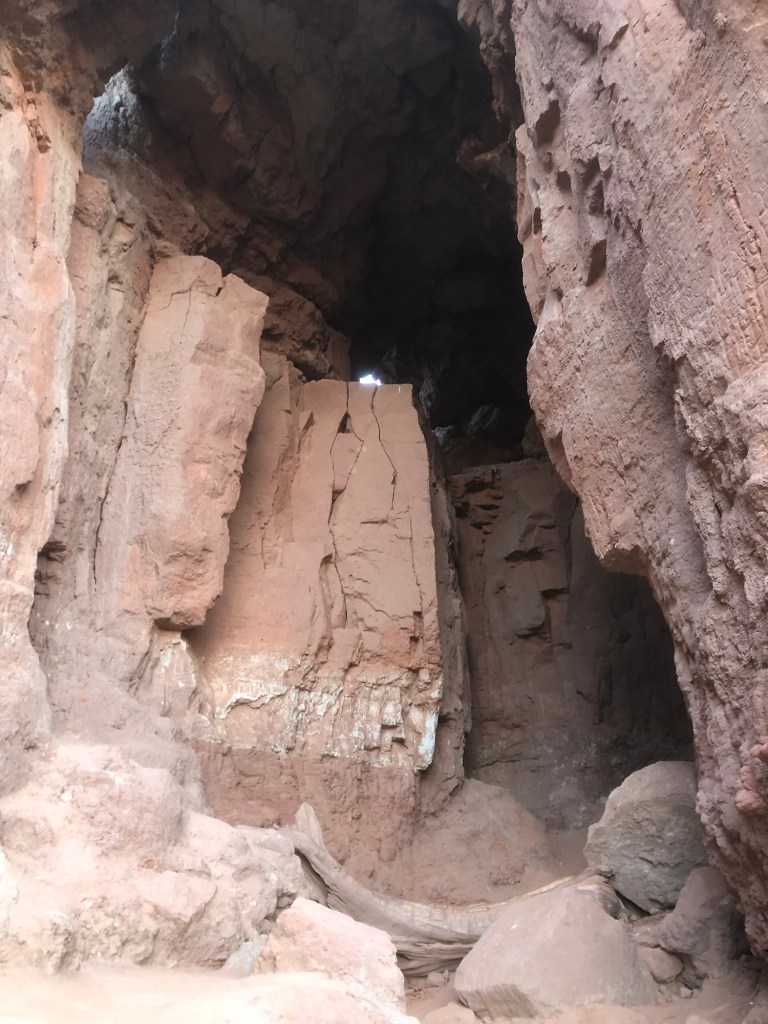
    Inside the cave
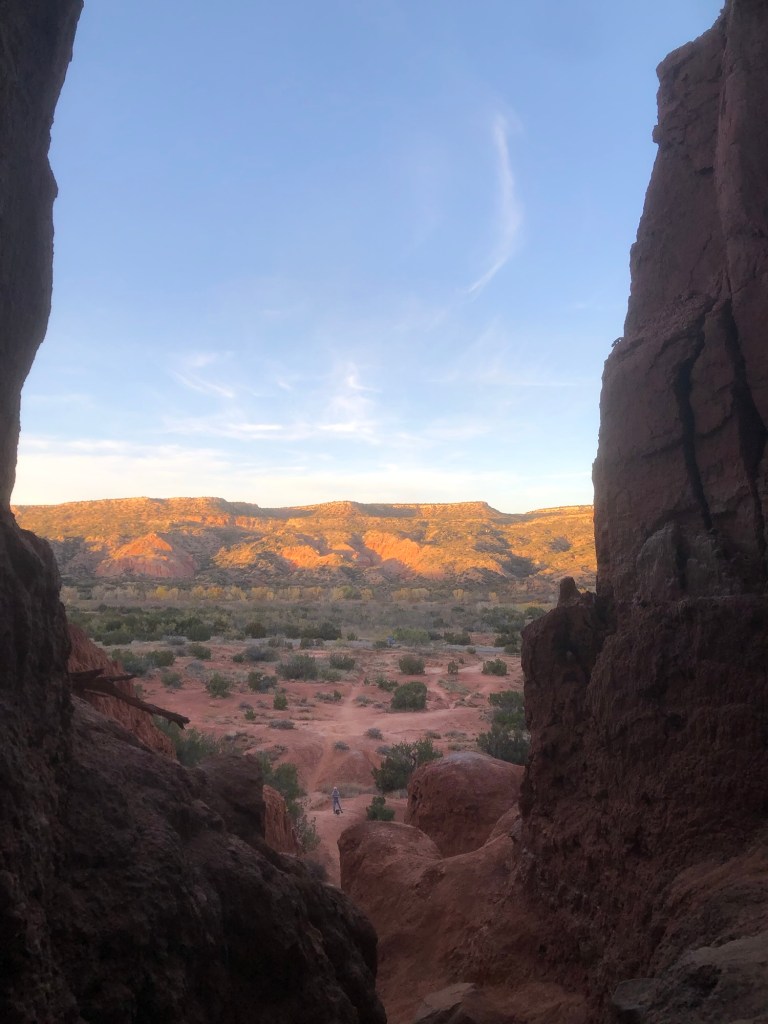
    View from the cave across the canyon floor

    We had stopped at the visitor center on our way in and learned that Isabel Robinson came to the West Texas State Teachers College in 1927. She became head of the art department and in 1936 created the Palo Duro School of Art. The school flourished in the canyon from 1936 to 1941. Students stayed in tent cottages on the Mesa.

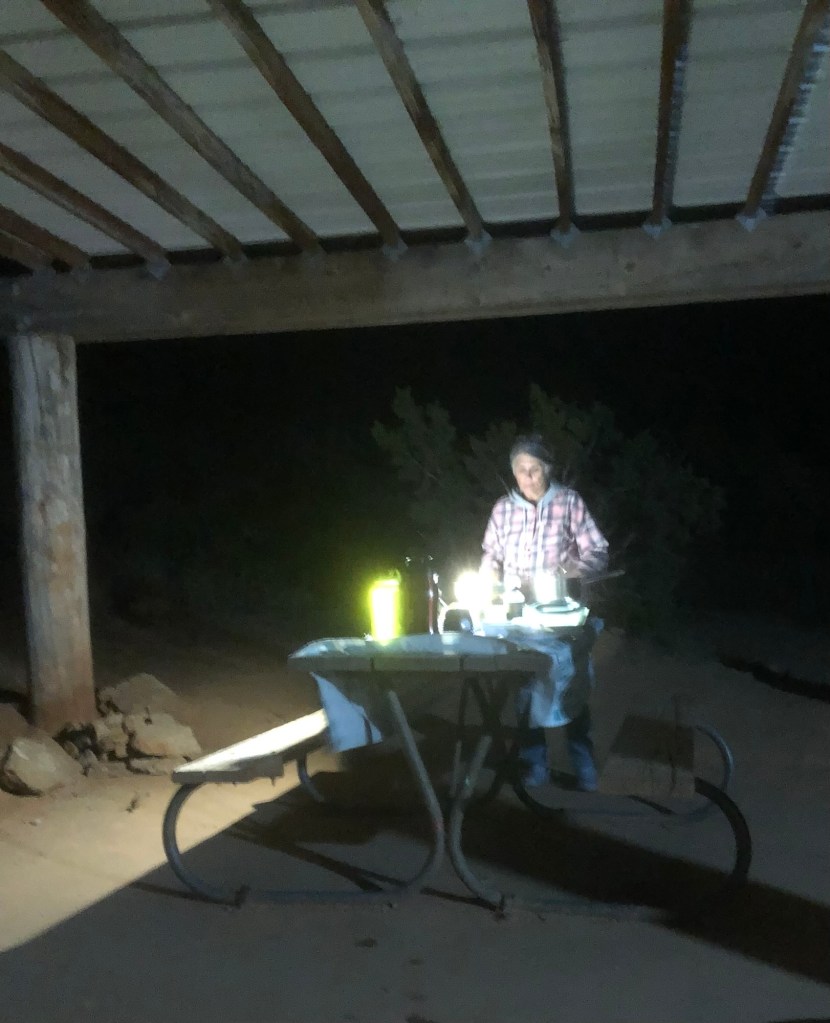
    Cooking dinner.